
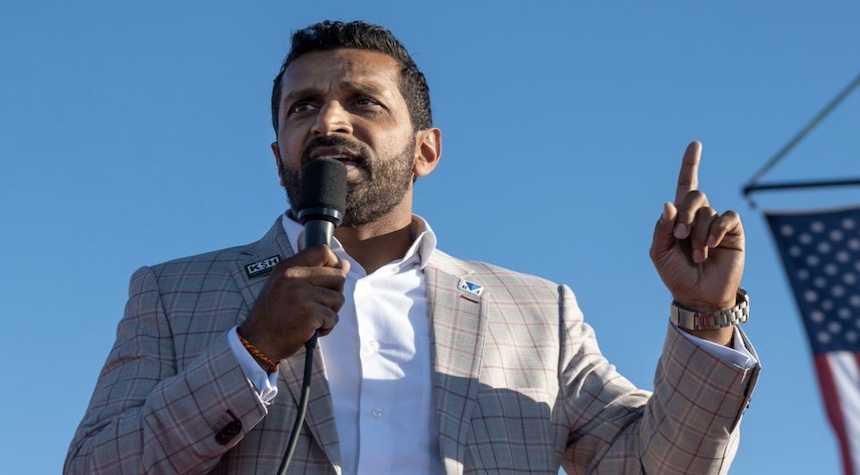
Kash Patel, the current Director of the FBI, has raised serious questions about the operations of the agency under the tenure of former Director James Comey. He insinuates that during Comey’s time, the agency functioned independently from the Trump Department of Justice, exercising autonomy in selecting cases for prosecution and controlling how those decisions were communicated to the public.
In a recent interview with ‘Sunday Morning Futures’, Patel discussed the FBI’s investigation into New York Attorney General Letitia James, who is facing allegations of mortgage fraud. He asserted that a bias was evident in the agency’s Crossfire Hurricane investigation, an operation designed to probe any potential Russian influence on then-President Donald Trump.
According to Patel, the FBI ‘hijacked the constitutional responsibility of the Department of Justice and the Attorney General.’ He further claimed that Comey and others within the agency made unilateral decisions on which cases to prosecute. He pointed to the investigation into Hillary Clinton as an example of this alleged overreach, although he failed to clarify the specifics of his references.

Patel argued that prosecutorial decisions are not within the purview of the FBI, but rather the Department of Justice. ‘We don’t decide prosecutions,’ he stated emphatically, insisting that such responsibility lies with the Attorney General and the Department of Justice.
Further in the interview, Patel promised a ‘wave of transparency’ for the agency, hinting at new details from the Crossfire Hurricane investigation to be released in the upcoming weeks.
In a related development from 2022, the Democratic National Committee and the 2016 Clinton Campaign agreed to pay a $113,000 fine to the Federal Election Commission. This penalty was levied for concealing their involvement in commissioning the Steele Dossier, a controversial report asserting that Trump had been compromised by Russia.
This raises important questions about the integrity and independence of our investigative agencies. The significance of this should not be overlooked. These agencies must retain public trust by upholding their responsibilities without bias, ensuring the enforcement of laws is fair, impartial, and transparent.