
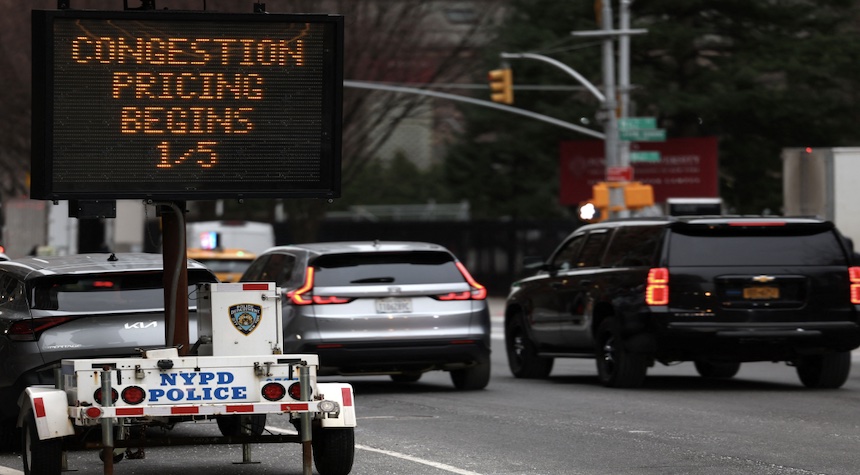
Reports from New York indicate that a federal judge has issued a temporary restraining order, halting the Trump administration’s intent to withhold federal funds amidst a dispute over the state’s congestion pricing system.
The Metropolitan Transportation Authority (MTA) had appealed to U.S. District Judge Lewis Liman to prevent the Transportation Department from acting in retribution against the state, according to reports by WABC. Both parties were allocated 45 minutes to present their respective arguments before the judge decreed the temporary restraining order to be in effect until June 9, as reported by CBS News.

Transportation Secretary Sean Duffy had threatened to hold back federal sanctions or funds for other transportation programs in New York, should the congestion-pricing program not cease. Duffy has given the state multiple deadlines to halt the program. The most recent of these deadlines, May 21, went unheeded by New York in its decision to continue with congestion pricing.
The MTA, in a response last week, communicated to Duffy that the congestion pricing system is within legal confines and that he does not possess the authority to terminate it. This development follows earlier reports that New York inaugurated its pioneering program in January, imposing a $9 toll on most passenger vehicles during peak hours for entry into Manhattan south of 60th Street. The initiative was undertaken in an effort to reduce congestion and generate funds to enhance mass transit.

Data from a Siena College poll in March found that New York Gov. Kathy Hochul’s congestion tax has seen an increase in support in recent months. 42% of New York City voters back the program, with 35% expressing opposition, and 16% self-identifying as “in the middle”. This is a considerable shift in public opinion compared to December’s numbers, when only 32% supported the program, with 56% against it.
The temporary restraining order will remain in place until June 9. Meanwhile, both the federal administration and the state of New York continue to grapple with the contentious issue of congestion pricing. The significance of this should not be overlooked. This raises important questions about infrastructure funding, state autonomy, and the public’s view on such measures. We’ll continue to follow this story as it unfolds.