
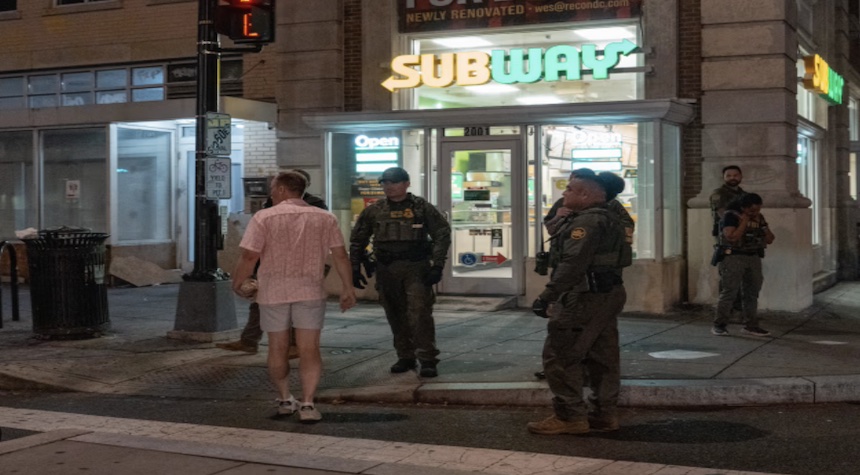
A grand jury in Washington, D.C., has reportedly turned down the Justice Department’s proposal for felony assault charges against a former DOJ paralegal, who allegedly attacked a Border Patrol agent in the city using a Subway sandwich.
The prosecutors now have three potential courses of action: they can retry their case, demote their charges to a misdemeanor, which would not necessitate an indictment, or entirely abandon the case, as reported by The New York Times.
There is a legal axiom often reiterated in law schools: ‘You can indict a ham sandwich.’ However, in this instance, the D.C. grand jury has declined to make a federal case out of an incident involving a Subway sandwich and a former DOJ staffer.
Sean C. Dunn, 37, was charged earlier this month with throwing a submarine sandwich at an agent patrolling near the intersection of 14th and U Streets. Prosecutors assert that Dunn yelled, ‘I don’t want you in my city!’ and labeled the officers as ‘fascists’ before the incident.

Alan Dershowitz, a well-known legal mind, has long claimed that grand jury indictments are typically easy to obtain. However, he has also argued vehemently that an extreme left-leaning bias in Democratic-controlled areas such as D.C. renders it impossible for President Donald Trump to receive impartial decisions.
This ‘Subway setback’ occurs amid a sequence of hindrances led by the left against the U.S. attorney’s office in D.C., which had been pursuing cases linked to Trump’s decision to deploy National Guard troops and federal agents onto city streets. In recent days, prosecutors have been compelled to downgrade charges in a different assault on an FBI agent and drop a gun-possession case following a magistrate’s discovery of constitutional violations.
Also Read: Pentagon Moves to Protect D.C.: Hegseth Signs Order for Armed Guard
Legal analysts noted the rarity of prosecutors failing at the indictment stage, given that defendants are not permitted to argue their side in front of grand jurors and prosecutors control the presentation of evidence. Dunn is expected in federal court next week for a preliminary hearing to determine probable cause.