
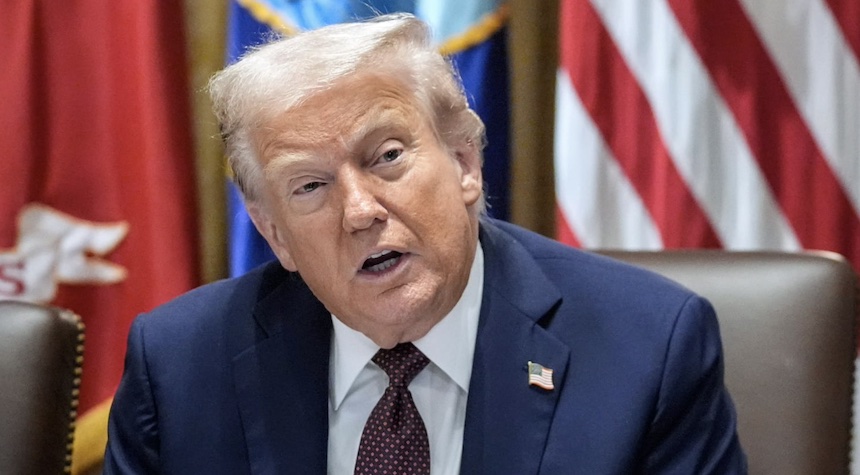
President Donald Trump has hinted at a potential move to unilaterally end mail-in voting via executive order. However, this move could face resistance within his own party, according to reliable sources from NBC News.
Data reveals that over 30% of the electorate voted by mail in at least 14 states and the District of Columbia in the previous election. Interestingly, Trump emerged victorious in half of these states, the majority of which have Republican leaders at the helm of their election machinery.
You May Also Like: Trump Signs Order Requiring ‘Classical’ Design for Federal Buildings
“My view on vote-by-mail is that it should be permissible,” stated Michigan House Majority Leader Bryan Posthumus, a Republican who previously endorsed Trump. He continued, “However, as it stands now, especially in Michigan, it bears the highest risk for fraud.” Posthumus has proposed amendments to the state constitution to necessitate proof of citizenship for voter registration and a photo ID for casting a vote.

Posthumus’s view is shared by nearly a dozen other Republican officials nationwide. While agreeing with Trump’s concerns and advocating changes to mail-in voting, they question the legality and appropriateness of an outright ban. They also express concerns about potential implications for overseas military voters and Republican candidates in states where mail-in voting is popular.
Paul Dame, chair of the Vermont Republican Party, opined, “As Trump often does, sometimes he overstates his case. I don’t think anyone supports a complete elimination. That would disenfranchise men and women overseas. I’m sure that’s not his intention.”
This development follows earlier reports that, should Trump sign an executive order banning mail-in voting, numerous political and legal issues would arise. The Constitution empowers each state to decide the “times, places, and manner” of House and Senate elections, a fact that NBC News emphasized. Furthermore, overriding these state-level election laws would require laws passed by both the President and Congress, an endeavor that could prove challenging for Trump and his allies, given the Democratic power to block legislation in the Senate.