
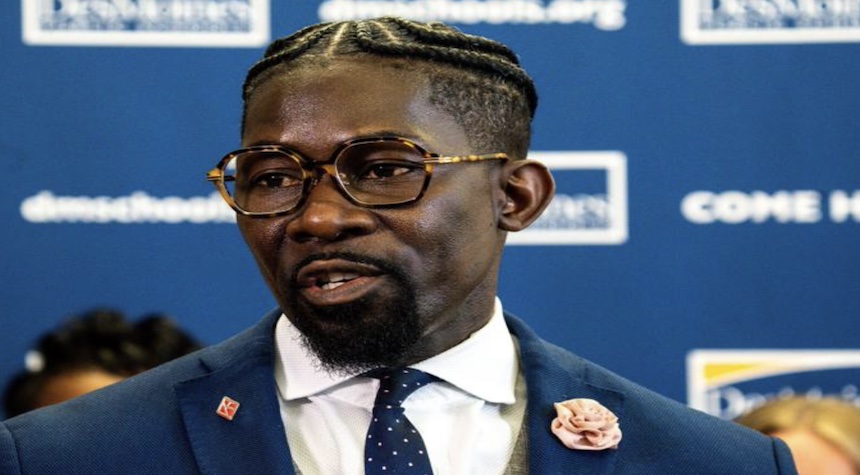
Ian Roberts, superintendent of the Des Moines Public Schools in Iowa, tendered his resignation on Monday following his arrest last Friday by Immigration and Customs Enforcement on a federal deportation order. Legal representation for Roberts, a native of Guyana, has stated he did not wish to detract from the education of the district’s students while he contests the charges.
Roberts’ legal counsel is attempting to obtain a stay of deportation and reopen the case. However, federal officials have underscored that Roberts lacked the necessary authorization to live or work in the United States. Moreover, Roberts is facing scrutiny over prior weapons charges and arrests that were not fully disclosed during his hiring process. This raises important questions about the thoroughness of employment verification procedures.
You May Also Like: Trump Labels Democrats ‘Deranged’ as Government Shutdown Nears
Roberts’ resignation coincides with the Justice Department’s Civil Rights Division initiating an investigation into the Des Moines Public Schools. The investigation aims to determine whether the district has violated federal law through race-based employment practices. According to reliable sources, the probe will scrutinize the district’s recruitment, hiring, and retention strategies for potential discrimination on the basis of race, color, or national origin.

The evidence suggests that the district has specific targets for increasing the proportion of teachers of color and collaborates with local universities to recruit minority educators. Harmeet K. Dhillon, Assistant Attorney General, has declared such policies unlawful, stating they contradict federal anti-discrimination laws and compromise educational priorities.
Thus, the Justice Department is investigating allegations that Des Moines Public Schools may be guilty of employment practices that discriminate against employees and job applicants based on race, color, and national origin. The significance of this should not be overlooked, as the issue is part of an ongoing national debate about the balance between affirmative action and equal opportunity.
This development follows earlier reports of the DOJ probing multiple school districts for alleged discriminatory employment practices, underscoring the urgency of addressing these systemic issues in our educational institutions. Such investigations continue to raise important questions about the intersection of diversity, equity, and inclusion initiatives and federal anti-discrimination laws in our schools.