
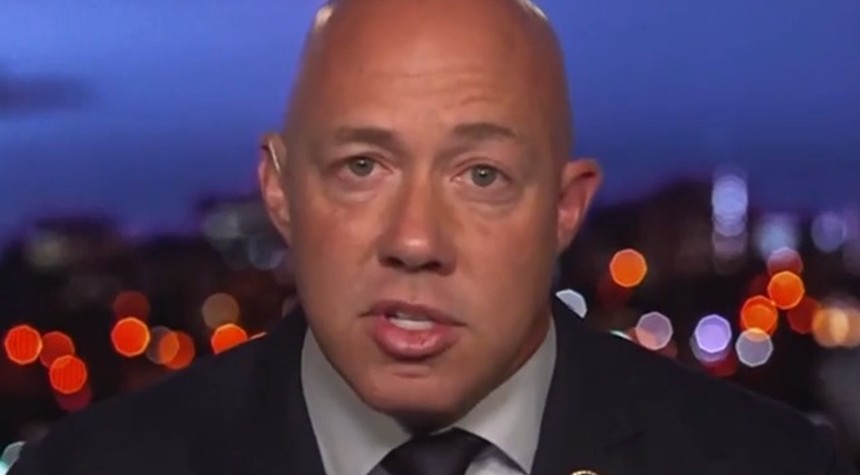
House Foreign Affairs Committee Chairman Brian Mast delivered a scathing assessment of recent videos produced by six Democratic lawmakers, arguing their content constitutes sedition under the Uniform Code of Military Justice.
The Florida Republican, speaking during a Sunday evening broadcast, did not mince words about what he views as a calculated attempt to undermine military cohesion and discipline. The videos in question feature lawmakers encouraging service members to disobey what they characterize as illegal orders from the Trump administration.
Here are the facts. Mast, who lost both legs while serving as an Army bomb technician in Afghanistan, recently returned from the Gulf region where he met with numerous service members. According to the chairman, morale under the current administration stands remarkably high, with many troops expressing renewed pride in their service. Several service members reportedly told Mast they had reconsidered plans to leave the military specifically because of the change in leadership.
The contrast between Mast’s firsthand observations and the narrative pushed by these six lawmakers could not be starker.
Arizona Senator Mark Kelly defended his participation in the videos, claiming he had “given too much to this country to be silenced by bullies who care more about their own power than protecting the Constitution.” This statement requires scrutiny. Kelly positions himself as a defender of constitutional principles while simultaneously encouraging military personnel to make individual determinations about order legality, a framework that would functionally dissolve the chain of command.
Mast identified the fundamental problem with these videos. Not a single participating lawmaker provided concrete examples of illegal orders. Not one offered guidance about the serious legal consequences service members face for disobedience, including potential court-martial and imprisonment at Fort Leavenworth. The omission appears deliberate.
“They wanted one thing and one thing alone,” Mast explained. “They were trying to create revolt within the United States Armed Forces, which absolutely rises to the level under UCMJ for sedition.”
This assessment deserves serious consideration. The Uniform Code of Military Justice defines sedition as conduct that causes or attempts to cause insubordination, disloyalty, mutiny, or refusal of duty in the armed forces. When sitting members of Congress produce coordinated messaging encouraging service members to independently evaluate and potentially disobey orders, without providing specific legal frameworks or examples, the logical conclusion points toward an attempt to sow discord and undermine military effectiveness.
The timing matters. These videos emerged as the Trump administration implements significant policy changes across government agencies, including the Department of Defense. Rather than engaging through proper legislative channels or oversight mechanisms, these lawmakers chose to appeal directly to service members, effectively bypassing the constitutional structure they claim to protect.
Mast’s military background and sacrifice lend considerable weight to his analysis. Unlike the lawmakers he criticizes, he understands intimately the importance of unit cohesion, clear chains of command, and the devastating consequences when political considerations infiltrate military decision-making.
The question now becomes whether these actions will face any accountability. If members of Congress can openly encourage military insubordination without consequence, the precedent threatens the fundamental civilian-military relationship that has sustained American democracy for nearly 250 years.
Related: Schools Spend Trillions on Education While Test Scores Reach Historic Lows