
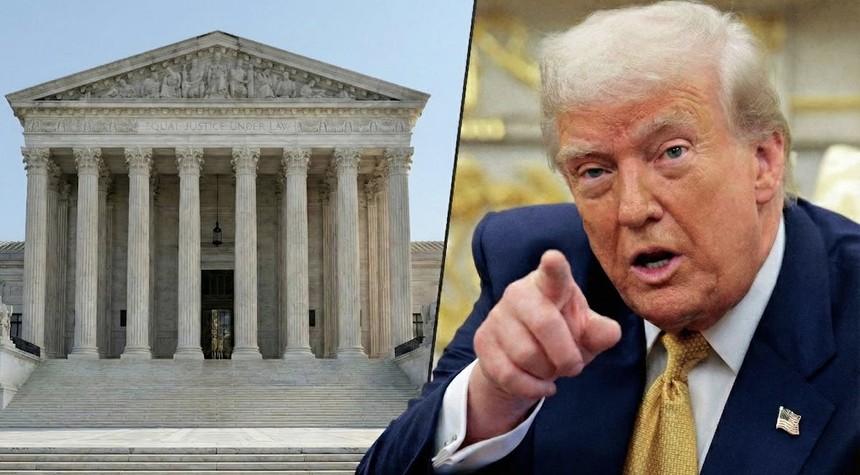
The Supreme Court announced Friday it will decide whether President Donald Trump’s executive order ending birthright citizenship for children of illegal immigrants passes constitutional muster, setting up what may be the most significant interpretation of the 14th Amendment in modern history.
The facts are straightforward. Upon returning to office, Trump signed an executive order preventing automatic citizenship for children born in the United States to parents who are either in the country illegally or on temporary visas. The order immediately triggered multiple lawsuits from opponents claiming it violates the 14th Amendment’s Citizenship Clause, which states that all persons born in the United States are citizens.
Here is where the legal analysis becomes critical. The 14th Amendment was ratified in 1868, primarily to ensure citizenship for freed slaves following the Civil War. The question now before the Court is whether the framers of that amendment intended for it to apply universally to all births on American soil, or whether the phrase “subject to the jurisdiction thereof” creates exceptions for children whose parents owe allegiance to foreign nations.
The Trump administration’s argument rests on a textualist reading of the amendment. The Justice Department has maintained that lower court decisions “confer, without lawful justification, the privilege of American citizenship on hundreds of thousands of unqualified people.” This is not mere rhetoric. The administration contends that the policy represents a matter of “prime importance” to border security and national sovereignty.
Lower courts initially blocked the executive order, prompting the administration to petition the Supreme Court in September to take up the case. In June, the justices ruled 6-3 along ideological lines to allow Trump to attempt implementation in certain jurisdictions, though that decision deliberately avoided addressing the constitutional merits of birthright citizenship itself.
The Court is expected to issue its ruling in late June or early July, a timeline that underscores the urgency of the matter. At stake is not simply one executive order, but the interpretation of a constitutional provision that has governed citizenship policy for over 150 years.
The practical implications are enormous. Current immigration policy has created a system where illegal entry into the United States can result in automatic citizenship for any children born here, regardless of the parents’ legal status. Critics of this interpretation argue it incentivizes illegal immigration and undermines the rule of law. Supporters counter that the 14th Amendment’s language is unambiguous and that overturning longstanding precedent would create chaos.
This case represents a fundamental question about American sovereignty and constitutional interpretation. Does the United States Constitution require that children born to foreign nationals who are in the country temporarily or illegally automatically become citizens? Or does the jurisdiction clause provide room for reasonable restrictions based on parental citizenship status?
The Supreme Court will now answer these questions, and its decision will reverberate through immigration policy for generations. The justices must determine whether the plain text of the 14th Amendment supports the current interpretation or whether a more nuanced reading is constitutionally required.
Related: Trump Administration Demands Allies Increase Defense Spending to Counter China Threat