
## Freedom Finds Its Champion
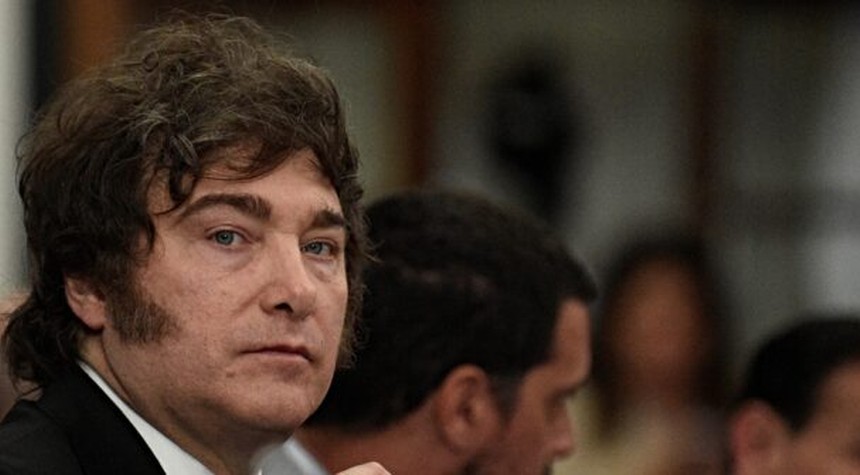
There’s something refreshing about a leader who calls socialism what it actually is: cancer. Not a “policy difference” or an “alternative economic model.” Cancer. That’s Javier Milei, Argentina’s libertarian president, and he’s not just talking tough for the cameras. He’s building something real.
In a preview clip from his upcoming CNN en Español interview with journalist Andrés Oppenheimer, Milei dropped a bombshell that should have freedom lovers everywhere paying attention. He’s actively working to establish a regional bloc of ten Latin American countries united by one simple principle: standing up to socialism in all its destructive forms.
“We haven’t named it yet, but there is already a group of ten countries working on it, and we will continue to move forward,” Milei explained. The full interview airs January 11, but what we’ve seen already tells you everything you need to know about where this is headed.
## Why This Matters Beyond Borders
Here’s the thing about socialism. It doesn’t stay contained. It spreads like the disease Milei accurately describes, jumping from one nation to another, promising utopia and delivering poverty. For decades, Latin America has been the testing ground for every flavor of leftist ideology imaginable. Venezuela’s collapse wasn’t a bug in the system. It was the system working exactly as designed.
Milei isn’t just talking about old-school Marxism either. He’s calling out what he terms “socialism of the 21st century” and “woke socialism.” Smart. Because the collectivist impulse doesn’t die; it just rebrands. Yesterday’s revolutionary becomes today’s diversity consultant, but the goal remains identical: control through collective identity, destruction of individual liberty, and the steady march toward government dependency.
The Argentine president told Oppenheimer that the region appears to have “awakened from the nightmare of Socialism of the 21st century.” Look at the electoral map. He’s not wrong. Right-leaning governments have been winning across Latin America, and it’s not some random coincidence or political accident.
## The Pattern You’re Not Supposed to Notice
People get tired of being poor. Revolutionary rhetoric sounds exciting until your currency becomes worthless and you’re eating zoo animals to survive. That’s not hyperbole about Venezuela. That actually happened.
What Milei understands, and what makes him dangerous to the international left, is that ideas have consequences. Free markets create prosperity. Limited government protects liberty. Traditional values provide social stability. These aren’t abstract concepts or ideological preferences. They’re observable realities that play out across generations and continents.
His proposed bloc represents something genuinely new in regional politics. Not another bureaucratic organization designed to shuffle papers and justify diplomatic junkets, but an ideological alliance built around defending freedom. That’s the part that should worry every socialist from Caracas to Washington.
## Building Coalitions That Actually Mean Something
The specifics matter here. Ten countries isn’t a majority of Latin America, but it’s a substantial coalition. Milei didn’t name which nations are involved, probably for good reason. Building something like this requires discretion until the foundation’s solid. Announce too early and you give opponents time to sabotage.
What makes this particularly interesting is the timing. Global institutions have spent decades pushing Latin America leftward through a combination of academic influence, NGO pressure, and outright interference. The idea that a counter-movement could emerge organically, led by someone as unconventional as Milei, represents a genuine threat to that established order.
You know what? Good. The established order deserves threatening.
## The Fight Continues
Milei’s not naive about the opposition he’ll face. Calling socialism cancer doesn’t win you friends at international summits or in faculty lounges. But it does clarify where you stand, and clarity matters in politics. Especially now, when so many leaders specialize in saying nothing with maximum words.
Whether this ten-country bloc succeeds remains uncertain. Building coalitions is hard. Maintaining them across different national interests and political pressures is harder. But the attempt itself signals something important: the fight for freedom in Latin America isn’t over. Not by a long shot.
And that’s worth watching.
Related: Spanberger Picks Jasmine Crockett’s Brand Guru to Run Virginia’s Diversity Office