
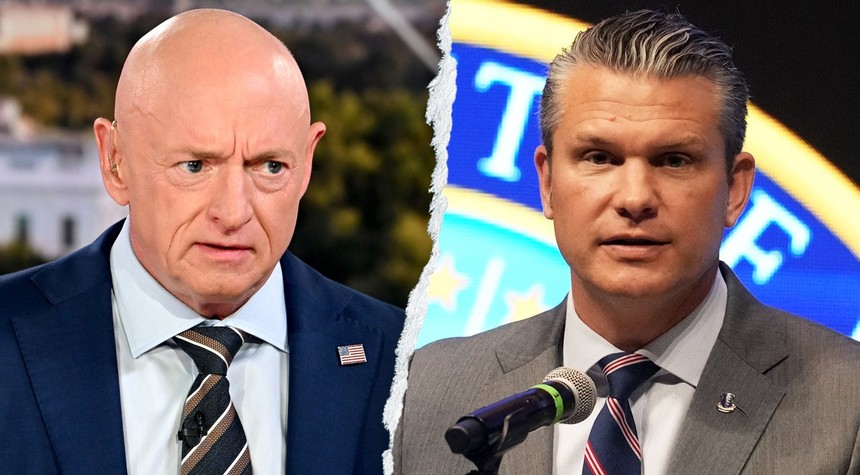
Secretary of War Pete Hegseth has escalated the investigation into Arizona Senator Mark Kelly, directing a comprehensive review of the retired Navy captain’s retirement rank and pay following what the department characterizes as “seditious statements” designed to undermine military operations.
The facts are straightforward. Six weeks ago, Kelly joined five other congressional Democrats in releasing a video that explicitly urged active-duty service members to refuse what they deemed “illegal orders.” This was not a theoretical discussion of military law. This was a sitting senator, still drawing a military pension, actively encouraging troops to second-guess their chain of command.
Here is what matters: Kelly remains subject to military justice. The Uniform Code of Military Justice does not simply evaporate when an officer retires. Kelly knows this. As a former Navy captain, he understands that accepting retirement pay means accepting continued accountability to military law. His Senate seat provides no shield from these obligations.
Hegseth has now formalized consequences. Secretary of the Navy John Phelan has been directed to review Kelly’s retirement rank and provide a recommendation within 45 days. The potential outcomes are significant. If Kelly’s retirement rank is downgraded, his pension decreases accordingly. This is not symbolic punishment. This affects his financial compensation directly.
Additionally, Kelly will receive a formal censure letter detailing what Hegseth describes as the “totality of Captain Kelly’s reckless misconduct.” Such letters serve multiple purposes. They create an official record of wrongdoing in the service member’s permanent file. They establish precedent for future disciplinary action. They send an unmistakable message that certain conduct will not be tolerated.
The logic here is ironclad. Military discipline depends on respect for the chain of command. When a retired officer with ongoing ties to the military actively encourages subordination, he strikes at the foundation of military effectiveness. Kelly’s video was not protected political speech. It was a retired officer leveraging his military credentials to undermine current operations.
Kelly has attempted to dismiss the investigation, claiming his upbringing in a rough neighborhood made him “resilient” to such pressure. This response is revealing. The issue is not Kelly’s personal toughness. The issue is whether a retired officer receiving military benefits can publicly encourage active-duty personnel to disobey orders without consequence.
The Department of War has made clear that Kelly’s status as a sitting senator “does not exempt him from accountability.” This is the correct position. If retired officers can use their military credentials to undermine current operations without repercussion, the precedent becomes catastrophic. Every retired officer with a political axe to grind could claim immunity based on subsequent civilian employment.
Kelly has been notified of the basis for these actions and has 30 days to submit a response. The department has indicated that further violations could result in additional consequences. This is appropriate due process while maintaining the seriousness of the charges.
The broader principle transcends Kelly himself. Military discipline cannot be optional. The chain of command cannot be subject to political whims. When retired officers still receiving military compensation actively work to undermine these principles, consequences must follow. Hegseth is enforcing standards that have existed for generations. The only question was whether those standards would be applied equally, regardless of political position.
The answer, apparently, is yes.
Related: The Left’s Split Over Maduro Shows How Far They’ve Drifted From Reality