
When Religion Becomes Policy
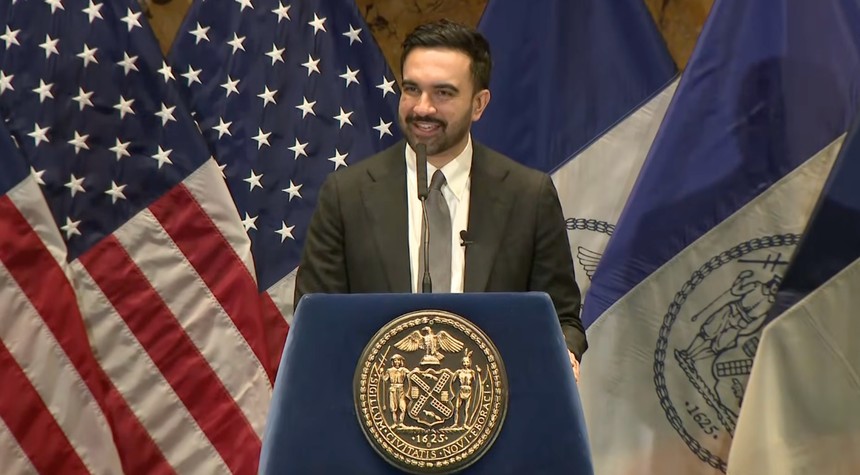
Mayor Zohran Mamdani stood before New York City’s Interfaith Breakfast last week and did something remarkable. He didn’t just criticize immigration enforcement. He baptized illegal immigration as a religious sacrament.
Using the Islamic concept of hijra, the Prophet Muhammad’s migration from Mecca to Medina, Mamdani recast America’s immigration debate as a theological imperative. Federal agents enforcing duly passed laws? They’re now committing sins against sacred hospitality. The Constitution? Apparently secondary to prophetic example.
“Islam is a religion built upon a narrative of migration,” Mamdani declared. “The story of the Hijra reminds us that Prophet Muhammad was a stranger too, who fled Mecca and was welcomed in Medina.”
Fine. That’s his faith, and he’s entitled to it. But here’s where things get dicey. He then universalized this religious narrative into binding civic duty for all New Yorkers, regardless of their beliefs. “The obligation is upon us all to look out for the stranger.”
Not some of us. All of us. Your Christian, Jewish, Hindu, Buddhist, or secular beliefs don’t matter. You’re now religiously obligated to oppose immigration enforcement because Islam says so.
The Inversion Nobody’s Talking About
This is textbook moral inversion. Federal officers executing lawfully issued warrants become “masked agents” visiting “terror upon our neighbors.” Never mind that these officers are enforcing laws passed by elected representatives. Never mind that every sovereign nation on Earth controls its borders.
According to Mamdani, there’s “no reforming something so rotten and base.” The system itself is irredeemable.
You know what’s fascinating? This exact framing appears in the Muslim Brotherhood’s strategic documents on tamkeen, the gradual process of institutional entrenchment. The idea is simple: recast your political objectives as moral imperatives that transcend secular law. Make opposition seem cruel, backwards, or bigoted. Frame compliance as compassion and resistance as hate.
It’s brilliant rhetoric, honestly. Who wants to be the person attacking “the stranger”? Who wants to seem heartless?
But here’s the thing. America already is remarkably compassionate. We accept more legal immigrants than any nation on Earth. We’ve granted asylum to millions fleeing genuine persecution. We’ve built entire systems around orderly, legal migration.
What we don’t accept, and what no functioning nation can accept, is the premise that our immigration laws are negotiable based on whoever’s currently invoking religious authority.
The Sovereignty Question
Let’s get blunt. Mamdani’s argument requires believing that religious doctrine supersedes constitutional law. That Islamic teachings on hospitality override Congress’s authority to set immigration policy. That local officials can nullify federal enforcement because a 7th-century migration story demands it.
This isn’t governance. It’s theocracy with progressive window dressing.
And before anyone screams about religious freedom, understand this: nobody’s stopping Mamdani from personally welcoming strangers. Nobody’s preventing him from sponsoring refugees through proper legal channels. Nobody’s outlawing charity or compassion.
What he wants is different. He wants to impose his religious interpretation on everyone else, using city resources and political power to obstruct federal law.
Imagine if a mayor invoked biblical law to justify defying federal civil rights statutes. Or cited Hindu scripture to block enforcement of labor regulations. We’d rightfully call that unconstitutional overreach.
The same principle applies here.
Where This Leads
Mass migration isn’t automatically virtuous just because someone wraps it in religious language. Borders aren’t inherently immoral. Enforcement isn’t terrorism.
Real compassion means distinguishing between genuine refugees and economic migrants. It means protecting American workers whose wages get undercut. It means ensuring public resources aren’t overwhelmed. It means, yes, sometimes saying no.
Mamdani’s framing eliminates all these distinctions. Everyone’s a stranger deserving unconditional welcome. Every deportation becomes persecution. Every enforcement action transforms into religious violation.
This absolutism serves nobody well. Not immigrants trapped in legal limbo. Not citizens watching their communities change beyond recognition without consent. Not the rule of law that makes civil society possible.
When mayors start preaching migration as sacred duty, we’ve left the realm of policy debate. We’re in something else entirely. Something that treats sovereignty as sin and borders as blasphemy.
That’s not pluralism. That’s not tolerance. That’s one faith tradition demanding everyone else comply with its vision of justice, regardless of law, regardless of consent, regardless of consequence.
And honestly? That should concern everyone, regardless of where you stand on immigration. Because once we accept that religious doctrine trumps constitutional authority, we’ve opened a door that swings both ways.
Related: The Worst Among Us Get Arrested While Congress Debates Whether ICE Should Wear Masks