
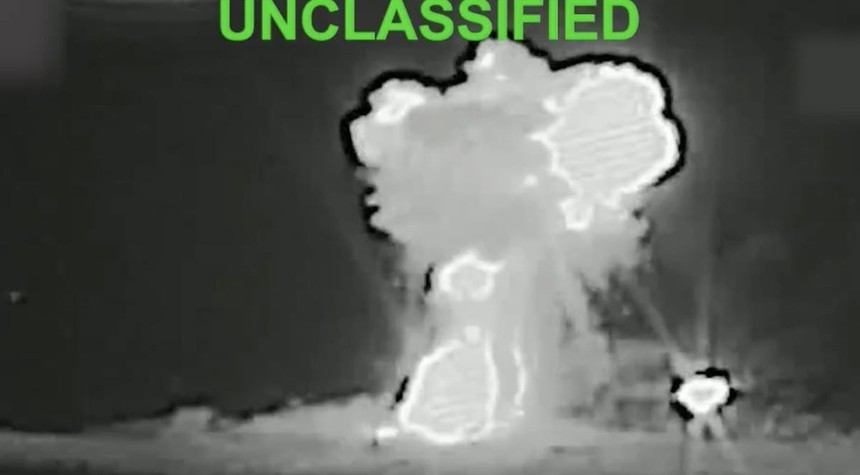
The Iranian regime woke up this week to discover their naval presence in the Gulf of Oman had been reduced to zero. Not diminished. Not damaged. Zero.
U.S. Central Command released footage Monday showing American forces systematically dismantling Iran’s fleet of eleven warships that had been operating in international waters. The video isn’t subtle. Missiles streaking across the frame, impacts lighting up the sea, Iranian vessels disappearing beneath the waves. It’s the kind of clarity that transcends diplomatic language and speaks in a dialect every hostile actor understands.
For decades, Iran has treated the Gulf of Oman like their personal playground. They’ve harassed commercial shipping, threatened international vessels, and generally behaved like the neighborhood bully who never got checked. The regime’s Islamic Revolutionary Guard Corps has made a career out of provocations, seizing tankers, planting mines, and turning one of the world’s most critical shipping lanes into a zone of perpetual anxiety.
That ended two days ago.
CENTCOM’s statement couldn’t have been clearer. “The Iranian regime has harassed and attacked international shipping in the Gulf of Oman for decades. Those days are over.” There’s something refreshing about that kind of directness. No hedging, no equivocation, no carefully worded diplomatic dance that leaves everyone wondering what actually happened. Just a simple declaration backed by overwhelming force.
You know what’s really at stake here? It’s not just about punishing bad behavior, though that matters. Freedom of maritime navigation has been the backbone of global commerce for more than eighty years. American naval power has guaranteed that ships can move goods from one side of the planet to the other without fear of pirates, tyrants, or third-rate regional powers deciding to play traffic cop. That system has created prosperity on a scale human history had never seen before.
The Iranian regime apparently thought America had gone soft. Maybe they read too many articles about endless diplomatic negotiations and nuclear deals that never quite delivered. Maybe they mistook patience for weakness. It’s an old mistake, but people keep making it.
Here’s the thing about strength. Real strength doesn’t need to constantly prove itself, but when challenged, it responds with devastating efficiency. The U.S. military didn’t spend weeks telegraphing this operation. They didn’t form a committee to study the problem. They identified a threat to international commerce and eliminated it.
Some folks will wring their hands about escalation. They’ll worry about regional stability and diplomatic fallout. But stability built on appeasing aggressors isn’t stability at all. It’s just delayed conflict, and usually more costly when it finally arrives. Iran has spent years testing boundaries, and every time the international community responded with sanctions and strongly worded letters, they learned they could push harder.
The Gulf of Oman matters because roughly a third of the world’s seaborne oil passes through the nearby Strait of Hormuz. When Iran threatens that passage, they’re not just harassing a few ships. They’re holding the global economy hostage. That’s not something any responsible superpower can tolerate.
This operation sends a message that resonates far beyond Tehran. To every regime that thinks American resolve has weakened, to every adversary calculating whether they can carve out their own sphere of lawlessness, the answer just got written in fire and seawater. The rules-based international order isn’t optional, and freedom of navigation isn’t up for negotiation.
Related: Rick Scott Calls Out Democrats for Their Convenient Memory on War Powers