
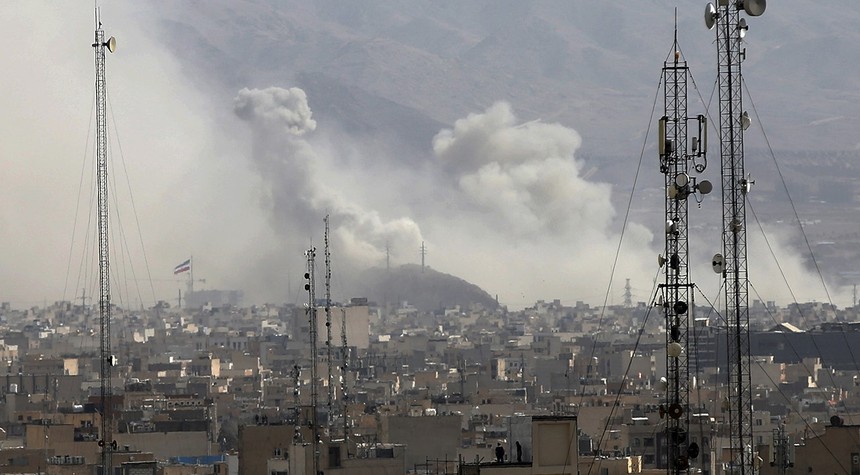
Saturday morning in Tehran didn’t start with coffee and newspapers. It started with the kind of wake-up call that costs tens of millions of dollars and arrives with the precision of a Swiss watchmaker wielding a sledgehammer. Israel hit Ayatollah Ali Khamenei’s compound in broad daylight, and the audacity alone is worth writing home about.
Here’s what makes this operation remarkable. We’re looking at a two-tier strategy that’s frankly brilliant in its simplicity. The expensive stuff went after the expensive targets. High-precision drones or manned aircraft, the kind that cost more than most people’s houses, zeroed in on leadership compounds with the sort of accuracy that would make a neurosurgeon jealous. Then you’ve got the cheaper alternative doing the heavy lifting everywhere else.
Cameron Chell from Draganfly explained it best. The U.S. deployed waves of lower-cost kamikaze drones to overwhelm Iranian defenses on land, air, and sea. These aren’t your hobbyist quadcopters. They’re one-way attack drones modeled after Iran’s own Shahed design, which is a delicious irony that shouldn’t be lost on anyone. Iran spent years perfecting these things, and now they’re getting a taste of their own medicine with American improvements.
CENTCOM made history here. Task Force Scorpion Strike used these drones in combat for the first time during what they’re calling Operation Epic Fury, which sounds like something from a Michael Bay movie but happens to be deadly serious. The official statement talked about “American-made retribution,” and you know what? Sometimes plain language works better than diplomatic doublespeak.
The timing couldn’t have been more calculated. Saturday morning during Ramadan, on Shabbat no less. A senior U.S. official called it a “wildly bold daytime attack” that caught Iran’s senior leadership completely off guard. You hit them when they think they’re safe, when the compound should be quiet, when defense systems might be running on weekend protocols. That’s not luck. That’s intelligence work and planning that took weeks or months.
Several top Iranian leaders were killed, including the commander of the Islamic Revolutionary Guard Corps. The IRGC isn’t some ceremonial outfit. These are the people who’ve been funding proxy wars, arming Hezbollah, and making life miserable for American interests across the Middle East for decades. Taking out their commander sends a message that resonates far beyond Tehran.
Let’s talk about the economics here because it matters. Precision strikes are expensive. We’re talking millions per operation when you factor in the hardware, the intelligence gathering, the coordination, the risk assessment. But pairing those costly assets with cheaper drones creates a force multiplication effect that’s hard to counter. The cheap drones overwhelm defenses and draw fire while the precision weapons do their surgical work. It’s brilliant resource management wrapped in explosive packaging.
Iran’s been playing this game for years, thinking asymmetric warfare only works in one direction. They send drones and missiles through proxies, they fund terrorism, they develop nuclear capabilities while the international community writes strongly worded letters. Saturday proved that asymmetric warfare cuts both ways when you’ve got the capability and the will to use it.
The broader implications here extend beyond one successful strike. This operation demonstrates that even heavily defended compounds in major capitals aren’t safe from coordinated attacks that blend high and low technology. That’s a deterrent message worth its weight in gold, or in this case, precision-guided munitions.
Traditional military doctrine says you don’t attack during religious holidays. You don’t strike in broad daylight when visibility works against you. You don’t announce your capabilities to the world. Saturday’s operation threw that playbook out the window, and sometimes that’s exactly what effective deterrence requires. Predictability is the enemy of strategic surprise, and Tehran got surprised in a way they won’t forget anytime soon.
Related: Senate Democrats Demand Answers on DACA Arrests While Dismissing Criminal History Data