
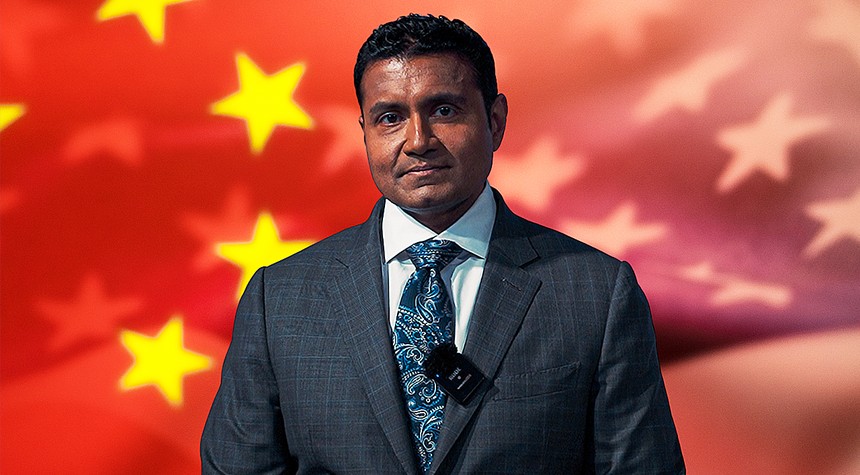
Here’s something that should keep you up at night. Shyam Sankar, the chief technology officer at Palantir, just told us that if we got into a serious fight with China tomorrow, we’d burn through our entire weapons stockpile in about eight days. Eight days. That’s barely enough time to get through a week’s worth of cable news cycles, let alone win a war against the world’s second largest economy.
This isn’t some doomsday prepper ranting on a podcast. Sankar knows what he’s talking about, and he’s sounding an alarm that most politicians would rather ignore because it makes them look incompetent. Which, frankly, they are when it comes to understanding modern warfare and industrial capacity.
The problem runs deeper than just having too few missiles sitting in warehouses. We’ve gotten the entire concept of deterrence backwards. For decades, American military strategy has focused on maintaining massive stockpiles of sophisticated weapons. The idea was simple enough. Show the world we have enough firepower to flatten any adversary, and they’ll think twice before messing with us. Sankar says that’s wrong, and Ukraine proved it.
When Russia invaded Ukraine, we watched the Ukrainians burn through ten years’ worth of weapons production in just ten weeks of fighting. Ten years in ten weeks. Let that sink in for a second. The stockpile didn’t matter because it evaporated faster than anyone predicted. What actually matters, according to Sankar, is the factory. It’s the ability to generate the stockpile, not the stockpile itself.
This is where America has lost its way. We’ve been producing weapons at such a pitiful rate that we’re not scaring anyone anymore. We’re precious about using what we have because we’re terrified we can’t replace it quickly enough. That’s not deterrence. That’s vulnerability dressed up in expensive camouflage.
Sankar draws a parallel to World War Two that should make every American uncomfortable. Germany built incredibly sophisticated weapons, far more advanced than what the Allies had in many cases. But they couldn’t build enough of them. America won that war through sheer industrial might, churning out planes and tanks and ships faster than the Germans could destroy them. We were the kings of mass production.
Now? The Chinese own that crown. They’re the best in the world at mass production, and we’ve become the Germans in this analogy. We make fancy, expensive systems in small numbers while China has rebuilt the industrial capacity we foolishly shipped overseas in pursuit of quarterly profits and cheap consumer goods.
This isn’t just about military hardware. It’s about the entire manufacturing base that supports national defense. We hollowed out American industry over the past forty years, telling ourselves that finance and technology were enough. We convinced ourselves that making things was somehow beneath us, that we could always just buy what we needed from someone else.
That someone else is now our primary geopolitical rival. How’s that for ironic?
Sankar believes artificial intelligence could help rebuild American manufacturing strength, and honestly, it better. Because right now we’re in a race where the other guy has a head start and we’re still tying our shoes. The question isn’t whether AI can help us outproduce China. The question is whether we have the political will to actually rebuild what we destroyed.
Eight days of weapons. That’s not a deterrent. That’s an invitation.
Related: Tennessee Library Director Gets Fired for Refusing to Hide Books from Kids