
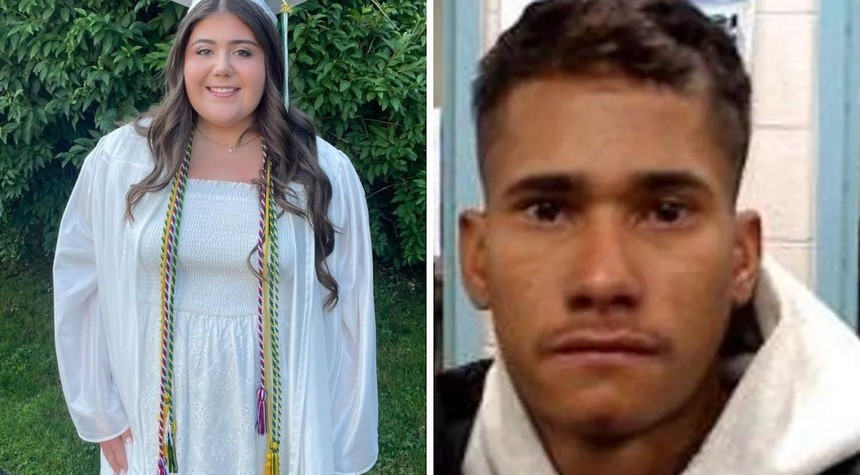
There’s something profoundly broken when a judge has to order an illegal immigrant accused of murdering an American college student to provide DNA evidence while his public defender argues about a bullet fragment lodged in the suspect’s nose. That’s where we are right now with the case of Jose Medina, and honestly, the whole situation reads like a dark parody of our justice system’s priorities.
Medina, a 25-year-old Venezuelan national who had no legal right to be in this country, now sits in custody facing murder charges for allegedly shooting and killing Sheridan Gorman. She was 18. A Loyola University student with her whole life ahead of her, walking with friends near a Rogers Park pier on March 19 when Medina allegedly stepped out and opened fire. Just like that. No warning, no provocation mentioned in the charges. She died at the scene while her friends escaped physically unharmed, though you can bet they’ll carry those psychological scars forever.
Wednesday’s court hearing focused on pretrial motions, and the judge ordered Medina to submit a buccal swab and fingerprints for Illinois State Police records. His public defender objected, naturally. That’s the job. But let’s zoom out for a second and acknowledge the elephant in the courtroom. This is precisely the kind of preventable tragedy that drives Americans absolutely mad about our border policies.
We’re told constantly that immigration enforcement is somehow cruel or unnecessary. That concerns about vetting and security are overblown. That sanctuary policies protect communities rather than endanger them. Then cases like this one land on the front page, and suddenly those abstract policy debates become viscerally real. An American teenager is dead, and the person charged with killing her shouldn’t have been here in the first place.
The charges against Medina read like a prosecutor’s nightmare and a defense attorney’s uphill battle. First-degree murder, attempted murder, aggravated assault, unlawful weapon possession at the state level. Federal prosecutors piled on with illegal firearm possession charges that carry up to 10 years. When you’re in the country illegally and you’re caught with a gun, federal law doesn’t mess around. Well, it’s not supposed to anyway.
Here’s where it gets even more surreal. Medina’s lawyer told the court that his client is suffering from a bullet fragment stuck in his nasal cavity, causing pain and visible distress. The defense wants surgical evaluation and possible removal. Apparently Medina was shot in Colombia before coming to the United States, and he’s still dealing with injuries from that incident. So we have an illegal immigrant who survived a shooting in his home country, made his way here through our porous border, allegedly acquired a firearm despite federal prohibitions, and then allegedly used it to murder an innocent college student.
The medical concerns raise questions about taxpayer-funded healthcare for criminal defendants, but that’s almost beside the point. The larger issue is accountability and consequence. Every policy choice has downstream effects. When we choose not to secure the border, when we choose not to enforce immigration law, when we choose to create sanctuary jurisdictions that actively obstruct federal authorities, we’re making a choice. And sometimes that choice costs American lives.
Chicago has been ground zero for these debates. The city’s sanctuary policies limit cooperation with Immigration and Customs Enforcement, making it harder to identify and remove criminal illegal immigrants before they commit violent crimes. Proponents argue these policies build trust with immigrant communities and encourage crime reporting. Critics point to cases exactly like this one and ask the obvious question: what about Sheridan Gorman’s safety?
The case continues to draw national attention because it crystallizes the stakes. This isn’t about statistics or policy papers. It’s about an 18-year-old woman who should be finishing her freshman year right now, making plans for summer break, figuring out her major. Instead, her family is navigating a criminal justice system while prosecutors build their case against the man accused of taking her life.
As the legal proceedings move forward, expect more pretrial motions, more evidentiary disputes, more procedural wrangling. That’s how the system works, and it needs to work properly even when the defendant is deeply unsympathetic. But while we ensure due process for the accused, we also need to ask hard questions about how we got here and what we’re going to do differently. Because the next Sheridan Gorman deserves better than our current approach.
Related: The FBI Finally Caught a Wanted Murderer Who Tried Running Over Federal Officers