
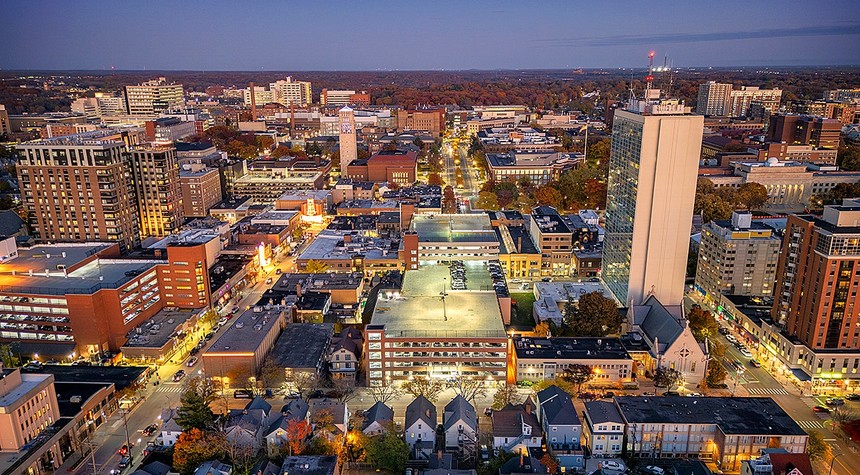
There’s a special kind of madness that takes hold when politicians care more about appearing virtuous than keeping people safe. Ann Arbor, Michigan just gave us a masterclass in exactly that brand of insanity.
The city spent $18,000 removing over 600 neighborhood watch signs because apparently those signs, which have stood for decades as simple reminders that communities look out for each other, are now considered racist. You read that right. Signs encouraging neighbors to watch out for crime are offensive.
Mayor Christopher Taylor, a Democrat naturally, explained in an official video set to music (because nothing says serious governance like a soundtrack) that neighborhood watch signs are “expressions of exclusion.” The City Council voted unanimously, 10 to 0, to yank every single sign down. Their reasoning? These signs supposedly reinforced “race-based hyper-vigilance” and made certain people feel unwelcome.
Let’s be clear about what’s happening here. This is what occurs when progressive ideology collides with basic common sense and ideology wins every time. The concept of neighbors looking out for each other, one of the most fundamental building blocks of civil society, is now being reframed as inherently suspicious and exclusionary. It’s backwards thinking dressed up in the language of inclusion.
Former Michigan GOP gubernatorial candidate Tudor Dixon called out this lunacy for what it is. She’s right to point out that Democratic leaders in blue cities like Chicago, Memphis, and Detroit aren’t paying enough attention to actual crime. Instead they’re focused on removing the very symbols that remind criminals someone’s watching. New York City Council member Vickie Paladino, a Republican, summed it up perfectly when she said they’re “just insane.”
The resolution passed by the City Council claimed these programs “were often rooted in assumptions about who did and did not belong in a neighborhood.” But here’s the thing about assumptions. Sometimes they’re based on behavior, not skin color. Criminals don’t belong in neighborhoods. That’s not racism. That’s reality.
Ann Arbor officials insisted the signs don’t reduce crime anyway, calling the neighborhood watch program “defunct” and claiming it emerged during a period of “national anxiety about crime and social change.” Well, newsflash: people are anxious about crime because crime is real. It happens. And when it does, communities that look out for each other fare better than those that don’t.
City Council member Jen Eyer doubled down on the absurdity, saying the program “hearkens back to a time when public safety was about exclusion, was about monitoring and surveilling who belonged in a neighborhood and who did not.” She wants visitors to feel like they belong. That’s lovely. But what about the residents who belong there permanently? Don’t they deserve to feel safe?
The money angle makes this even more ridiculous. The city couldn’t use street funding for non-traffic signs, and the police budget had no available funds, so they dipped into cash reserves. Eighteen thousand dollars that could have gone to actual crime prevention, community programs, or infrastructure improvements instead went to removing signs that offended someone’s sensibilities.
This is the natural endpoint of prioritizing feelings over function. When everything becomes about inclusion and belonging and making sure nobody ever feels uncomfortable, you end up with policies that actively make communities less safe. You know what makes people feel excluded? Getting robbed. Getting their car broken into. Watching their neighborhood deteriorate because nobody’s supposed to be watching anything.
Traditional values aren’t traditional because they’re old. They’re traditional because they work. The idea that communities should look out for themselves, that neighbors should know each other and watch for suspicious activity, that visible reminders of vigilance deter crime – these aren’t relics of a racist past. They’re practical applications of human nature and social cohesion.
Ann Arbor is a welcoming community, the mayor insists. They don’t want to push people away. But safety and welcome aren’t mutually exclusive unless you make them that way. A truly welcoming community is one where people feel secure, where families can raise children without fear, where small businesses thrive because customers aren’t afraid to walk the streets.
This whole episode reveals the fundamental disconnect between progressive governance and the people it’s supposed to serve. Real residents care about crime rates, property values, and whether their kids can play outside safely. City councils care about symbolic gestures that signal their moral superiority to other progressive enclaves.
The signs are gone now. Ann Arbor can pat itself on the back for being so inclusive and forward-thinking. And when crime inevitably continues or worsens, they’ll blame everything except their own foolish priorities. That’s how this game always plays out.
Related: The Biden DOJ Treated Christians Like Suspects and We Have the Receipts