
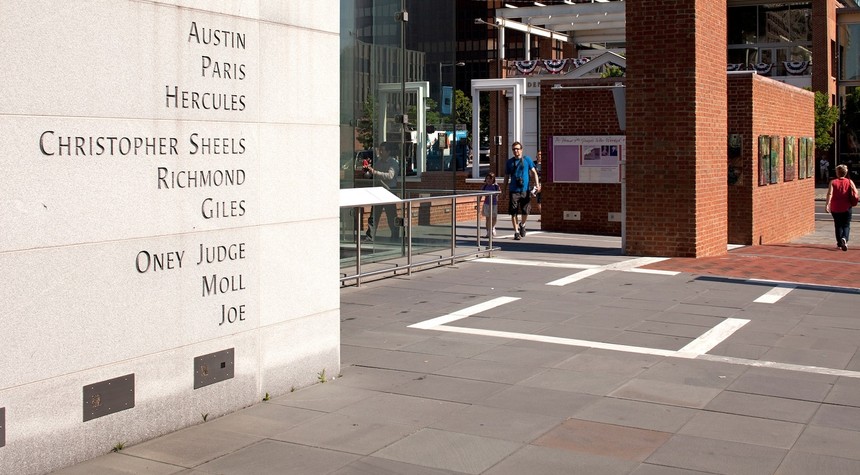
The Third Circuit Court of Appeals just handed the Trump administration a decisive victory in what’s become an increasingly contentious fight over how we tell the story of slavery at America’s founding. The unanimous ruling Thursday means the National Park Service can move forward with replacing panels at the President’s House in Philadelphia, a site where George Washington held nine enslaved Africans during his presidency.
Let’s be clear about what happened here. This isn’t about erasing history. It’s about who gets to control the narrative at federal sites, and whether local governments can tie the hands of federal agencies when it comes to managing national parks and monuments. The three-judge panel didn’t rule on whether the exhibit changes were good or bad. They ruled that a district court had no business telling the Interior Department how to run its facilities in the first place.
Philadelphia fought hard to keep those original panels up. The city secured a temporary win back in February when a district judge ordered NPS to restore the materials after they were removed in January. But that injunction was always on shaky legal ground. Federal jurisdiction matters, and the appeals court made it crystal clear that Philadelphia was fighting in the wrong arena.
The original exhibit honored the nine enslaved people who lived and worked at the site while Washington occupied the residence. Nobody’s disputing that these lives mattered or that their stories deserve to be told. The question is how we tell those stories and what context we provide. The National Park Service published proposed changes back in April, and according to the appeals court’s ruling, these new panels are “full of historical context” that highlight the significant events that took place at the President’s House and throughout Independence National Historical Park.
You know what strikes me about this whole situation? We’ve reached a point where adding historical context gets treated like a cover-up. The knee-jerk reaction from certain quarters is that any change to an exhibit about slavery must be an attempt to whitewash history. That’s not just unfair. It’s intellectually lazy.
Here’s the thing about history. It’s complicated, messy, and often uncomfortable. George Washington owned slaves. That’s an undeniable fact that should make every American grapple with the contradictions embedded in our founding. But Washington also led the Continental Army to victory against the world’s most powerful empire and set precedents as president that helped ensure the peaceful transfer of power for over two centuries. Both things can be true. Both things should be presented.
The federal government has every right to decide how to present history at sites it manages and funds. That’s not controversial. It’s basic governance. If we let every city with a national park site veto federal decisions about exhibits and interpretive materials, we’d have chaos. Imagine fifty different standards for how we tell American history depending on which city council or mayor happens to be in office at any given moment.
This case also touches on something deeper about our current moment. There’s this pervasive notion that acknowledging America’s achievements somehow diminishes the suffering of those who were enslaved, oppressed, or excluded from the promises of our founding documents. That’s a false choice. We can recognize both the revolutionary ideals that sparked a new form of government and the profound moral failures that coexisted with those ideals.
The appeals court didn’t weigh in on the content itself. They stuck to jurisdiction, which is exactly what courts should do. But the fact that NPS is adding more historical context rather than removing it entirely should tell us something. The agency isn’t trying to pretend slavery didn’t happen at the President’s House. They’re attempting to provide visitors with a fuller picture of what transpired at this historically significant location.
Philadelphia can appeal this decision, though the unanimous nature of the ruling doesn’t bode well for their chances. The city clearly feels strongly about preserving the original exhibit, and those concerns come from a genuine place. But feelings don’t override federal authority, and local preferences don’t trump jurisdictional boundaries.
What happens next remains to be seen. The Interior Department and Philadelphia haven’t commented yet on the ruling, which means we’re likely to see more legal maneuvering before this settles. But the trajectory is clear. The Trump administration will almost certainly get to implement its vision for how this site tells the story of slavery and the presidency.
This matters beyond one exhibit in Philadelphia. We’re watching a broader debate play out about who controls historical narratives, what role government should play in shaping those narratives, and whether adding context equals erasure. The answers to those questions will shape how future generations understand their country and its complicated past.
Related: Eleven Illegal Aliens Among Fifteen Arrested in Massive Welfare Fraud Scheme