
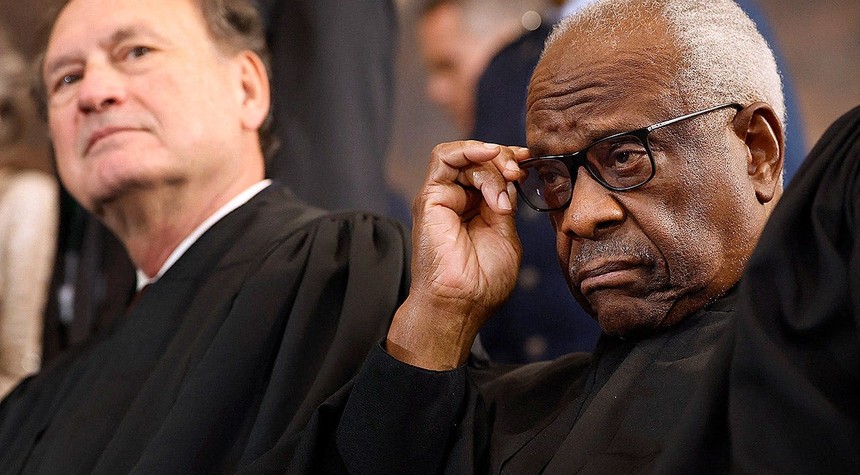
Justice Clarence Thomas just said what millions of Americans have been thinking for years. The Supreme Court’s got its priorities completely backwards, and he’s not afraid to call it out.
Thomas, joined by Justice Samuel Alito, tore into his colleagues after they vacated a lower court ruling in a Florida murder case. The issue? What Thomas called an “inconsequential foot fault” that wouldn’t have changed anything about the outcome. Gary Whitton, sitting on death row in Florida, wanted a new trial because a prosecution witness allegedly gave false testimony. Never mind that the evidence against him was overwhelming. Never mind that this technical error had zero impact on whether he actually committed the murder.
But here’s what really set Thomas off. It wasn’t just about this one case. It was about what the Court chose not to hear. Cases involving race discrimination. Free speech violations. Military families getting the short end of the stick. Real Americans facing real problems that the justices simply declined to address.
“It is unfortunate that the Court chose to intervene at the request of a convicted murderer to correct the Eleventh Circuit’s inconsequential foot fault,” Thomas wrote. Then he landed the punch. “What makes it even worse is that the Court does so even while it refuses to correct far more consequential errors for law-abiding citizens.”
You know what? He’s absolutely right. This is the kind of thing that drives regular people crazy about our justice system. We’ve created a legal framework where murderers get endless opportunities to relitigate their cases on technicalities while ordinary citizens who follow the rules can’t get their day in court. It’s backwards, and it undermines faith in the entire system.
Think about the message this sends. If you’re a law-abiding citizen whose rights got trampled, good luck getting the Supreme Court’s attention. But if you’re convicted of murder and can find some procedural hiccup in your trial, suddenly the nation’s highest court is all ears. That’s not justice. That’s bureaucracy masquerading as fairness.
The conservative principle here isn’t complicated. Justice should protect the innocent and punish the guilty. It shouldn’t exist primarily to give endless second chances to people whose guilt isn’t even in question. Yes, everyone deserves due process. Yes, procedural safeguards matter. But when those safeguards become more important than the actual truth, something’s gone terribly wrong.
Thomas has been making these kinds of pointed observations for years now, often standing alone or with just one or two colleagues. He’s willing to say the uncomfortable things, to challenge the legal establishment’s assumptions about which cases matter and which don’t. That takes courage in an institution that values collegiality and consensus.
The broader question is whether our judicial system serves the people who need it most. Right now, it seems designed to serve itself, to perpetuate endless litigation cycles that benefit lawyers and activists while leaving regular Americans frustrated and ignored. Thomas sees it. Alito sees it. The question is whether anyone else on that Court is paying attention.
Related: Bass Campaign Reaches for Trump Card Against Surging Pratt in LA Mayor’s Race