President Trump announced Thursday that Chris Klomp is his pick for deputy secretary of Health and Human Services, and the timing couldn’t be more fitting. While the Department of Justice just uncovered a staggering $6.5 billion healthcare fraud scheme, the administration is betting on fresh leadership to clean house and restore some semblance of fiscal sanity to a system that’s been bleeding taxpayer money for far too long.
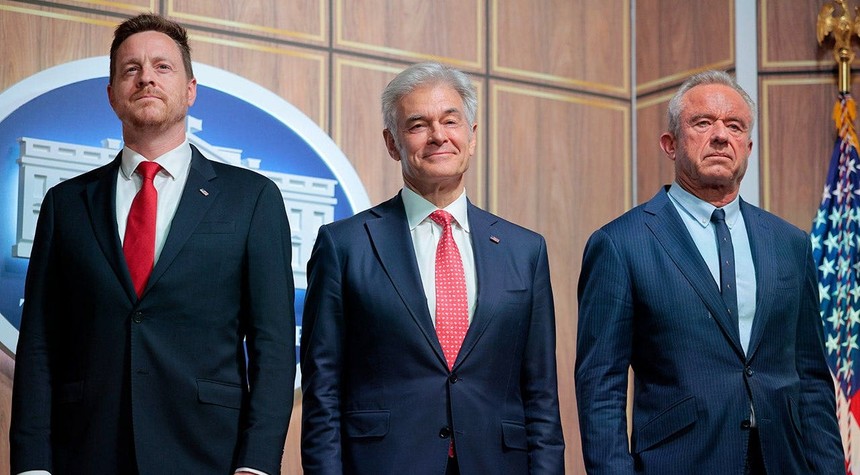
Trump made the decision alongside HHS Secretary Robert F. Kennedy Jr. and CMS Administrator Dr. Mehmet Oz. In his characteristic style, the president called Klomp “a potential STAR” whose rapid rise proves he’s earned the trust everywhere he goes. That kind of endorsement matters, especially when you’re talking about an agency responsible for managing over a trillion dollars in annual spending. We need people who understand that every dollar wasted on fraud is a dollar stolen from Americans who actually need care.
The $6.5 billion fraud case reads like a crime novel, except it’s real and it happened on our watch. Fraudsters bought luxury homes, expensive vehicles, and jewelry while hardworking Americans footed the bill through their taxes. It’s infuriating, honestly. These weren’t sophisticated criminal masterminds operating in the shadows. They were exploiting a system so archaic and inefficient that catching them was nearly impossible using traditional auditing methods.
Enter artificial intelligence. HHS Assistant Secretary for Financial Services Gus Chiarello is championing the use of AI to detect fraudulent patterns across the country, something that would’ve taken armies of auditors decades to accomplish manually. This isn’t about replacing human judgment. It’s about giving investigators the tools they need to spot anomalies before billions disappear into private bank accounts. The technology can analyze millions of transactions, flag suspicious activity, and connect dots that human eyes simply can’t see fast enough.
You know what’s remarkable? We’ve had the technology to do this for years, but government bureaucracy moves at the speed of molasses. While private sector companies have been using advanced analytics to prevent fraud, our federal agencies were still relying on methods that wouldn’t look out of place in the 1980s. That’s not just inefficient. It’s negligent.
Chris Klomp enters this landscape as someone Trump describes as a strong and inspiring leader and highly successful entrepreneur. The emphasis on entrepreneurship matters here. Government needs people who’ve built things, who understand efficiency not as a buzzword but as survival. Someone who’s run a business knows that waste isn’t just unfortunate, it’s fatal. That mindset needs to permeate HHS from top to bottom.
The broken healthcare system Trump referenced isn’t news to anyone paying attention. Americans spend more per capita on healthcare than any other developed nation, yet outcomes often lag behind. Part of that equation is the massive fraud and waste that siphons resources away from actual patient care. When criminals can steal $6.5 billion and buy mansions with taxpayer money, something is fundamentally wrong with our oversight mechanisms.
Klomp’s nomination signals a commitment to fixing those mechanisms. Working alongside Kennedy and Oz, he’ll be part of a team tasked with reimagining how HHS operates. That’s going to require courage because entrenched interests don’t surrender territory willingly. But if this administration is serious about defending taxpayer dollars and restoring integrity to federal healthcare programs, they’ll need people willing to challenge the status quo and implement real accountability measures.
The American people deserve better than a system where fraud thrives because nobody’s watching closely enough. They deserve leaders who treat public money with the same care they’d treat their own. With AI tools finally being deployed and new leadership committed to reform, maybe we’re finally turning a corner. But talk is cheap. Results are what matter, and the clock is ticking.
Related: Texas Congressman Sparks Fiery Debate Over Whether Your Tax Dollars Should Buy Soda