
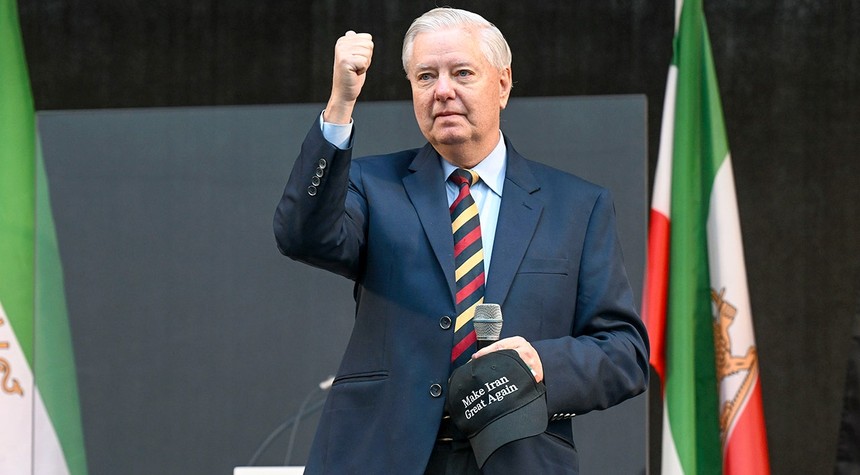
There’s something profoundly American about a man who feels unwell and decides he’s got one more thing to finish before he’ll see a doctor. That’s exactly what Lindsey Graham did in what turned out to be his final hours.
The South Carolina senator, who died suddenly at 71 after what’s being described as a brief and sudden illness, reportedly told someone he was feeling sick but refused to seek medical attention. Why? Because he had an appearance scheduled on Meet the Press. He’d wait until after that, he said. There was work to do first.
According to Axios, Graham spoke with President Trump and then told someone he wasn’t feeling right. When that person urged him to get help immediately, Graham brushed it off. He had a Sunday show appearance coming up. He’d deal with his health after that. His exact words, as reported, cut right to the heart of who this man was. “I can’t die now. I still need to do the Russia sanctions, get Iran sorted out and do Israeli-Saudi normalization.”
You know what strikes me about that statement? It wasn’t about legacy or headlines or getting one more moment in front of the cameras. It was about unfinished business. Real business. The kind that affects whether Americans stay safe and whether our allies can count on us.
Graham was preparing for his 64th appearance on Meet the Press. Think about that number for a second. Sixty-four times he showed up to make his case, to push his agenda, to argue for what he believed was right for this country. That’s not grandstanding. That’s commitment to the public square, to the exhausting work of persuading people that your vision matters.
The tributes have poured in from everywhere. Democrats like Chris Coons and Cory Booker. Foreign leaders like Netanyahu and Zelenskyy. That tells you something important. Graham didn’t just talk to people who agreed with him. He built relationships across lines that most politicians won’t even approach anymore. Was he always right? No. Did he change his mind sometimes in ways that frustrated people? Sure. But he stayed in the arena.
South Carolina now faces a special primary election to fill his seat, and Rep. Sheri Biggs is among those discussing what comes next. The mechanics of succession will play out according to law and custom. But replacing what Graham actually did, the relationships he maintained, the institutional knowledge he carried about foreign policy and national security, that’s not something you just slot in with a special election.
Graham understood something that Washington keeps forgetting. Foreign policy isn’t abstract. It’s not about think tank papers or academic theories. It’s about whether Iran gets a nuclear weapon. It’s about whether Russia faces consequences for aggression. It’s about whether Israel and Saudi Arabia can normalize relations in a way that reshapes the Middle East for generations.
Those were the things on his mind when he was feeling sick. Not his health. Not comfort. Work. Duty. The stuff that actually matters.
There’s a certain kind of person who puts the mission before everything else. We used to celebrate that instinct more than we do now. We used to understand that leadership sometimes means ignoring your own needs because other people are counting on you to show up. Graham embodied that old-fashioned sense of obligation right up until the end.
He died doing what he believed in. Not everyone gets that.
Related: While America Mourns Graham, a Democrat Ally Celebrates His Death