
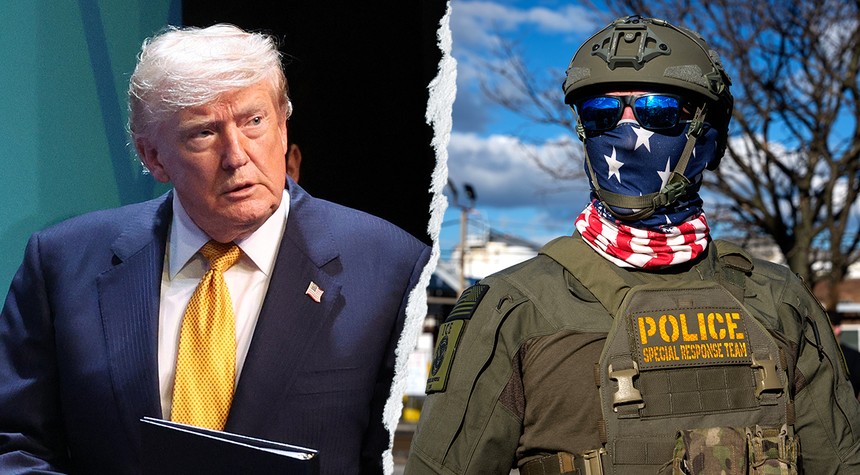
There’s something almost comedic about the whiplash here, except none of it’s funny when you’re talking about public safety. On Tuesday, the Department of Homeland Security announced that ICE agents nationwide should pause most vehicle stops. By Wednesday, President Trump was on social media telling them to forget all that and get back to doing their jobs. The whole episode lasted roughly 24 hours, which might be a record for policy reversal even in an administration that moves fast.
Trump’s reasoning was blunt and hard to argue with. “We CANNOT give up one of ICE’s most important and effective Crime fighting tools, THE TRAFFIC STOP!” he wrote. He’s right. You know what happens when you tell law enforcement they can’t make traffic stops? Criminals figure it out immediately. They adapt faster than bureaucrats can write memos. The president saw this policy shift for what it was: a gift to people who shouldn’t be here in the first place, especially those with criminal records.
The original pause came from DHS with what seemed like good intentions on paper. According to multiple ICE sources, agents were told to stop all vehicle stops except for targets with the most serious or violent criminal histories. The reasoning involved waiting for new training protocols from Secretary Markwayne Mullin. Training sounds responsible, doesn’t it? But here’s the problem with that logic. ICE agents aren’t rookies fresh out of the academy. These are federal law enforcement officers who’ve been conducting vehicle stops as part of immigration enforcement for years. The idea that they suddenly need remedial training before they can pull over a car feels less like genuine concern for best practices and more like someone got nervous about optics.
Todd Bensman, a former senior advisor to Tom Homan, appeared on Fox and Friends First to break down what really drives these situations. Sanctuary city policies, he explained, actively force ICE agents into riskier operations. When local jurisdictions refuse to cooperate with federal immigration authorities, when they won’t honor detainers or allow ICE access to jails, agents have no choice but to go out into the community. They have to conduct street operations and yes, vehicle stops. It’s not ICE choosing the hard way. It’s sanctuary cities forcing their hand.
The Radical Left Democrats, as Trump called them, would love nothing more than to see vehicle stops eliminated permanently. It fits perfectly into their vision of immigration enforcement that doesn’t actually enforce anything. But that’s not how this works when you’ve got someone in the Oval Office who campaigned explicitly on border security and public safety. Trump told ICE agents directly to “be judicious, fair and smart, and go back and do your very important job.” That’s the balance we should expect: effective enforcement conducted professionally.
The White House confirmed the reversal quickly, and honestly that’s how it should work. When a policy doesn’t make sense, when it actively undermines the mission, you don’t let it sit there doing damage just because some agency already announced it. You fix it. The whole incident reveals something important about how conservative governance should function. Limited government doesn’t mean ineffective government. It means government focused on its core constitutional responsibilities, and immigration enforcement absolutely falls into that category.
Vehicle stops aren’t some controversial tactic invented last week. They’re standard law enforcement procedure, used by every police department in America. ICE using them to apprehend individuals who are both in the country illegally and have criminal records isn’t overreach. It’s precisely what enforcement looks like in practice. The criminals Trump referenced in his post aren’t abstractions. They’re real people who’ve committed real crimes and are avoiding consequences by exploiting every gap in enforcement they can find.
This 24-hour policy cycle might seem chaotic from the outside, but it actually demonstrates something voters wanted: a president who pays attention and isn’t afraid to reverse bad decisions immediately. The administrative state moves slowly by design, building in delays and review processes that often serve no purpose except delay itself. Trump’s intervention cut through that, and ICE agents can now continue doing work that keeps communities safer. Sometimes the best policy is just letting competent people do their jobs without tying their hands.
Related: Democrats Block Defense Bill and Expose Their Own Contradictions