
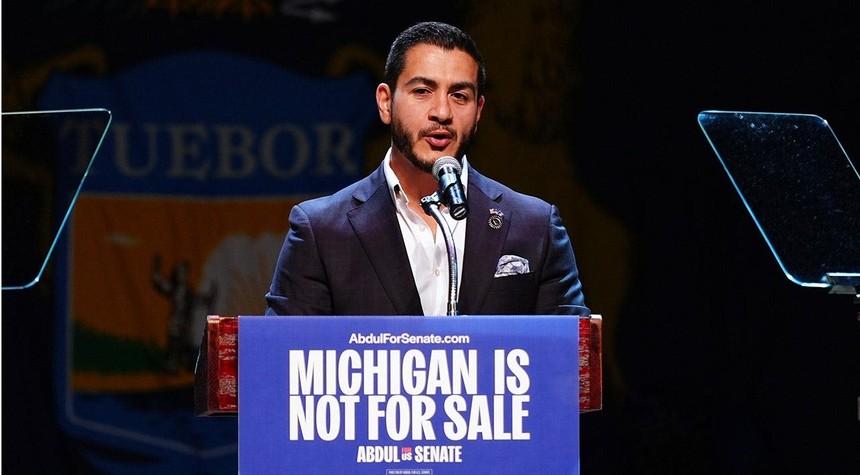
There’s something almost poetic about a politician who campaigns on getting money out of politics while quietly collecting six figures from an organization that multiple states have labeled a terrorist group. Almost poetic, if it weren’t so predictable.
Abdul El-Sayed, Michigan’s Democratic Senate nominee, has pocketed more than $115,000 from individuals tied to the Council on American-Islamic Relations. We’re not talking about casual members here. These are people who work for CAIR, used to work for CAIR, or sit in leadership positions making decisions for the organization. At least 41 of them opened their wallets for El-Sayed’s campaign, according to a review by Digital.
The donor roster reads like a CAIR executive directory. National Board Chair Manal Fakhoury cut a check. So did national Board Treasurer Eyas Abdeen and national Vice Chair Emad Sabbah. Then there’s Jukaku Tayeb, a CAIR-Michigan board member who happens to be El-Sayed’s father-in-law. Tayeb didn’t just contribute to the campaign itself. He’s been one of the biggest financial backers of the super PAC supporting his son-in-law’s political ambitions.
Here’s where it gets interesting. Tayeb also sits on the founding committee of the Islamic Society of North America, a group with documented links to Hamas and Muslim Brotherhood funding. The Washington Free Beacon first reported that connection, and it’s not exactly the kind of association that inspires confidence in moderate voters.
Now, CAIR defenders will rush to remind you that the organization hasn’t been designated as a terrorist group by the federal government. Fair enough. But the United Arab Emirates did designate it as such. So did Florida. Texas just joined them. When multiple governments start using the same language about your organization, maybe there’s a pattern worth examining.
The irony cuts deep when you remember El-Sayed has made campaign finance reform a centerpiece of his pitch to voters. Getting money out of politics sounds great on a stump speech. It plays well with progressives who are genuinely tired of special interest influence. But what does it mean when the candidate saying those words is bankrolled by over 100 grand from a single ideological network?
You know what this reminds me of? Every other political campaign that talks about purity while practicing pragmatism. The difference is most candidates don’t accept money from organizations with terror designations while they’re preaching about cleaning up Washington.
This isn’t about religious discrimination or targeting Muslim Americans. That’s the reflexive defense you’ll hear, and it’s designed to shut down legitimate questions. But Americans have every right to ask who’s funding their candidates and what those donors might expect in return. That’s not bigotry. That’s basic civic responsibility.
The timing matters too. Governor Greg Abbott in Texas recently declared CAIR and the Muslim Brotherhood as terrorist organizations. He’s also investigating Sharia courts operating in the state. Representative Chip Roy has been vocal about these moves, and whether you agree with the designations or not, they represent a growing skepticism about CAIR’s role in American politics.
El-Sayed’s campaign contributions don’t exist in a vacuum. They’re part of a larger conversation about foreign influence, ideological networks, and the extent to which American politicians should accept money from groups with questionable international connections. These are legitimate concerns that deserve more than dismissive accusations of Islamophobia.
The Democratic Party has been wrestling with its own internal debates about accepting money from certain pro-Israel groups like AIPAC. Some progressive candidates have sworn off those donations entirely, calling them corrupting influences. Yet here’s El-Sayed, collecting from CAIR-linked individuals without apparent hesitation. The inconsistency is glaring.
At some point, voters need to decide whether campaign finance rhetoric means anything or if it’s just another empty promise politicians make when the cameras are rolling. El-Sayed can’t have it both ways. He can’t position himself as the reformer who’ll clean up politics while building his war chest from sources that raise serious red flags.
Related: DOJ Secures Agreement From Connecticut Children’s Hospital to End Trans Procedures on Minors