
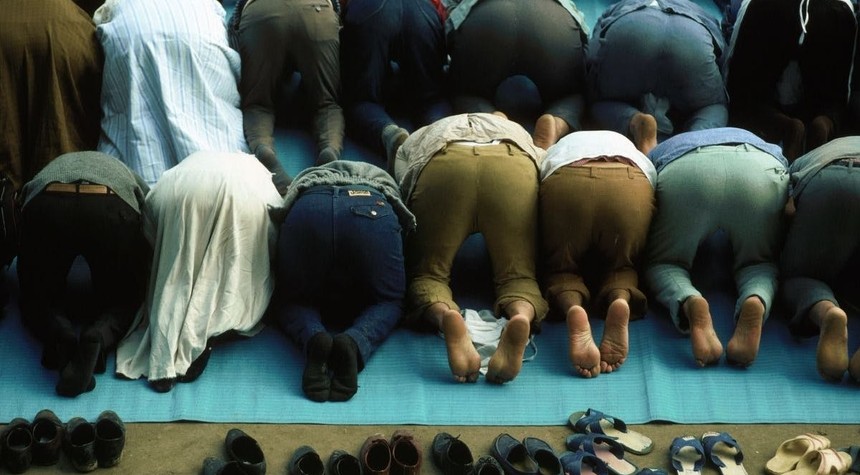
Dallas Fort Worth International Airport is about to spend $300,000 installing Islamic foot washing stations in its bathrooms, and the timing couldn’t be more awkward for Texas officials who just shut down a massive Muslim-only development project outside the city.
The airport filed paperwork in late July outlining plans to add specialized foot-washing basins to men’s and women’s restrooms in Terminal D. Airport officials insist this is about safety, not religion. Muslim travelers have been washing their feet in regular bathroom sinks before prayers, leaving floors slick and dangerous. The new low-level basins are designed to keep water off the floor and prevent slip-and-fall incidents that could cost the airport far more than $300,000 in lawsuits.
Here’s the thing. The foot washing is part of Wudu, the ritual cleansing Muslims perform five times daily before prayer. It’s not optional for observant Muslims. They’re going to wash their feet somewhere, and apparently they’ve been doing it in ways that create genuine hazards. DFW already has ablution stations next to its interfaith chapel in the same terminal, so this isn’t exactly breaking new ground. Chicago O’Hare and other major airports have similar setups.
The project is privately funded, which means taxpayers aren’t footing the bill. Construction should wrap up by year’s end. Anyone can use the stations, though let’s be honest about who they’re primarily serving.
But contrast this accommodation with what’s happening just outside Dallas, and you start seeing why some Texans might feel whiplash. Governor Greg Abbott announced last year that Texas had completely halted construction on EPIC City, a planned community designed exclusively for thousands of Muslim residents where Islamic principles would govern everything from education to commerce to daily life.
Abbott didn’t just pump the brakes. He launched roughly half a dozen state investigations into the project, including criminal probes. The Justice Department got involved too after Senator John Cornyn pressed them to examine whether EPIC City violated the constitutional rights of Jewish and Christian Texans by excluding them from living there.
Cornyn called it what it looked like: a discriminatory religious settlement. He wanted answers about whether non-Muslim residents would receive equal protection under the law in a community explicitly organized around Islamic governance. Those are fair questions when you’re talking about American soil and American constitutional principles.
Texas Attorney General Ken Paxton opened his own investigation into communications between the East Plano Islamic Center, which was backing the project, and local officials in nearby towns. Paxton made clear that any public official supporting or coordinating with a development under investigation for potential state law violations needed those conversations scrutinized. He promised accountability for anyone who broke Texas law.
So Texas says no to an entire Islamic community but yes to Islamic foot baths at a public airport. You can see how that might look inconsistent, even if the situations are legally different. One involves creating a religiously segregated city that could exclude Americans based on faith. The other involves preventing wet bathroom floors.
The distinction matters. Accommodating religious practices in shared public spaces is different from building exclusive communities where one religion controls civic life. Americans have always figured out how to share space. We’ve never been comfortable with religious segregation written into city charters.
DFW serves travelers from everywhere. Muslims make up a portion of that traffic, and they have religious obligations that create practical problems when facilities don’t account for them. Installing foot baths where people are already washing their feet isn’t preferential treatment. It’s damage control.
But the optics are lousy when state leaders are simultaneously investigating whether Muslim groups are trying to create a parallel society with separate rules. Texas is drawing a line between accommodation and separation, between making room for religious practice and allowing religious law to supplant civil authority.
The question isn’t whether Muslims should be able to practice their faith. Of course they should. The question is whether that practice gets special infrastructure most Americans will never use, and whether approving that infrastructure while blocking Islamic community projects sends mixed messages about what Texas will and won’t tolerate.
Three hundred thousand dollars is real money, even if it’s private. Someone decided that investment made sense. Maybe it does from a liability standpoint. Maybe wet floors really are that dangerous. But don’t expect everyone to see it as purely practical when the same state government is treating Islamic community development as a potential criminal enterprise.
Related: This Surrogate Refused an Abortion and Now Texas Is Fighting for the Child