
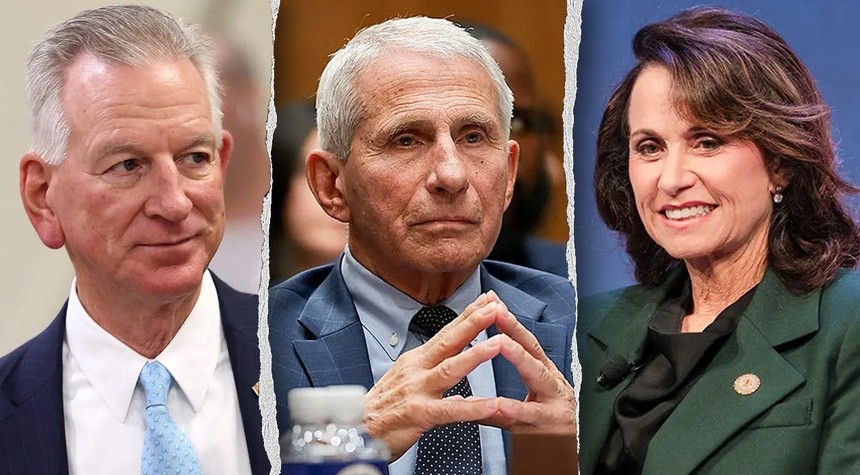
One hundred and eleven times. That’s how many times Dr. Anthony Fauci invoked his Fifth Amendment right against self-incrimination during last Wednesday’s Senate hearing. Not ten times. Not twenty. One hundred and eleven separate instances where America’s former top health official looked at elected representatives and essentially said, “I’m not talking.”
Louisiana Attorney General Liz Murrill isn’t buying it. She announced Saturday that her office will investigate Fauci, joining a growing roster of states refusing to let this chapter close quietly. And here’s the kicker that probably kept Fauci’s legal team up late: Biden’s pardon doesn’t mean squat when it comes to state prosecution.
You know what strikes me about this whole spectacle? The sheer audacity of invoking the Fifth that many times while simultaneously maintaining you did nothing wrong. It’s the legal equivalent of “I have nothing to hide” while boarding up every window in your house. The American people aren’t stupid. They understand what silence means when you spent years lecturing them from every television screen in the country.
Former federal prosecutor Jonathan Fahey has been dissecting Fauci’s testimony, and the questions weren’t exactly gotcha journalism. Lawmakers wanted answers about his personal diary and decisions made during the pandemic. Basic stuff for someone who wielded unprecedented power over American life for nearly two years. We’re talking about a man who influenced whether kids went to school, whether businesses survived, whether families could gather for Thanksgiving.
The Fifth Amendment exists for good reason. It protects citizens from government overreach and forced confessions. But when a government official uses it to avoid accountability for government actions, something feels fundamentally backwards. Fauci wasn’t some private citizen minding his own business. He was a public servant making public policy that affected every single American.
Louisiana’s move matters because it signals a shift in strategy. Federal pardons are nice shields, but they’re geographically limited. State attorneys general have their own jurisdictions, their own laws, their own grand juries. Biden can’t pardon away state crimes, and that’s not some technicality. That’s federalism working exactly as designed.
Think about the message Fauci’s silence sends. For years, he positioned himself as the voice of science, the expert everyone should trust without question. He dismissed critics, marginalized dissenting medical opinions, and cultivated an image of unimpeachable authority. Now, faced with basic questions about his decision-making process, he’s taking the Fifth like a mob accountant.
The irony cuts deep. This is the same man who demanded transparency from everyone else. Vaccine status? Public information. Medical decisions? Government business. Personal health choices? Not so personal anymore. But his diary entries and internal deliberations? Suddenly that’s sacred ground requiring constitutional protection.
Murrill’s investigation will likely focus on areas where federal and state interests diverge. Maybe it’s how pandemic policies were communicated to Louisiana officials. Maybe it’s funding mechanisms or research partnerships. The specifics matter less than the principle: state sovereignty means state accountability.
Senator Tommy Tuberville and others have backed this approach, understanding that accountability can’t stop at the Potomac River. Conservative principles have always emphasized that power closest to the people governs best. If Fauci made decisions affecting Louisianans, Louisiana has every right to ask questions.
What happens next will test whether our system still works. Can powerful bureaucrats simply refuse to answer for their actions? Does a federal pardon create an untouchable class? Or do states retain enough independence to pursue justice when Washington won’t?
Fauci’s 111 refusals might have seemed like smart lawyering in the moment. Legally defensible, tactically sound. But politically and morally, they read like an admission. Innocent people don’t hide behind constitutional protections designed for the accused. They explain, justify, and defend their choices.
Louisiana just called that bluff. Other states will likely follow. And all those Fifth Amendment invocations? They just became exhibits in a much larger case about power, accountability, and whether anyone in Washington still answers to the people they supposedly serve.
Related: Hunter Biden Says He’s Broke While Dodging a $17 Million Legal Bill