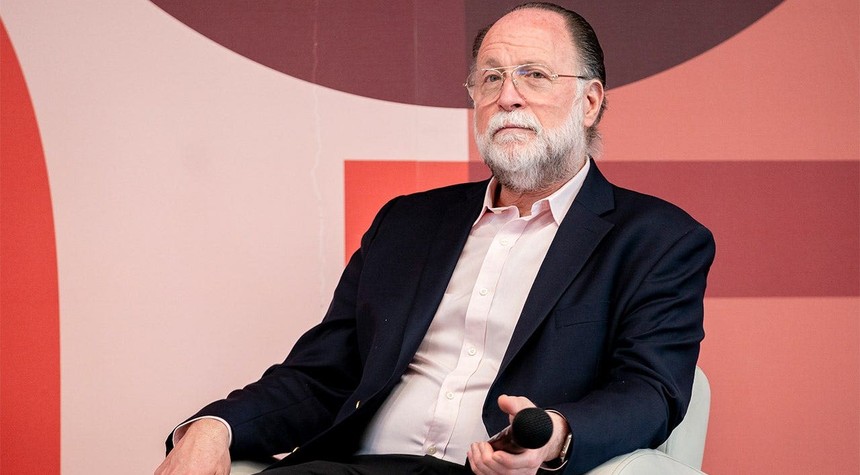
So let me get this straight. A Harvard professor writes an opinion piece trashing President Trump’s tariff policies for the Financial Times, and it turns out he couldn’t even be bothered to write the thing himself. Ricardo Hausmann, who presumably draws a six-figure salary to think profound thoughts at one of America’s most prestigious universities, decided to let artificial intelligence do the heavy lifting. The irony here is so thick you could cut it with a butter knife.
The Financial Times slapped an editor’s note at the top of Hausmann’s piece faster than you can say “academic integrity.” Their editorial code explicitly prohibits using AI in the writing process, which seems like a pretty reasonable standard when you’re publishing expert commentary that’s supposed to represent, you know, actual human expertise and analysis. The publication is now conducting an editorial review, which is corporate speak for “we’re figuring out how badly this makes us look.”
Here’s what really gets me. These are the same folks who lecture the rest of us about the dangers of automation and job displacement. Democratic Representatives Greg Casar, Valerie Foushee, and Sara Jacobs are literally proposing new taxes on AI to fund employment programs for workers who might lose their jobs to machines. Meanwhile, a Harvard professor is already outsourcing his own thinking to the very technology they want to regulate and tax. The contradiction writes itself.
Hausmann’s piece carried the headline “Trump is taxing the dark matter that pays America’s way,” which sounds like exactly the kind of overwrought metaphor an AI would generate when you ask it to sound intellectual. Dark matter? Really? We’re comparing trade policy to theoretical physics now? This is what happens when you let algorithms craft your arguments instead of doing the hard work of clear, honest analysis.
The academic establishment has spent years positioning itself as the arbiter of truth and expertise. They’ve built entire careers on the premise that their credentials and rigorous thinking make them uniquely qualified to guide public policy. But when push comes to shove, some can’t even write their own opinion pieces without artificial assistance. It raises an uncomfortable question about what exactly we’re paying for when we fund these institutions.
Trump’s tariff policies deserve serious analysis and debate. There are legitimate arguments on both sides about trade strategy, economic sovereignty, and America’s competitive position in global markets. But that debate requires actual human thought, not condensed AI summaries that parrot conventional wisdom dressed up in academic language. If you’re going to critique the president’s economic agenda, at least have the intellectual honesty to formulate your own arguments.
The Financial Times deserves credit for catching this and being transparent about it. Too many publications would’ve quietly swept it under the rug to protect their contributor and avoid embarrassment. But this incident reveals something bigger about the state of our intellectual class. They’re quick to demand accountability from everyone else while cutting corners themselves.
This isn’t just about one professor or one article. It’s about trust, credibility, and whether our institutions still mean what they claim to mean. When the experts can’t be bothered to do their own work, why should anyone listen to their conclusions? The answer is they shouldn’t, at least not without serious scrutiny.
Related: DSA Leader Praises Chinese Communism and Vows to Push Socialism Across America