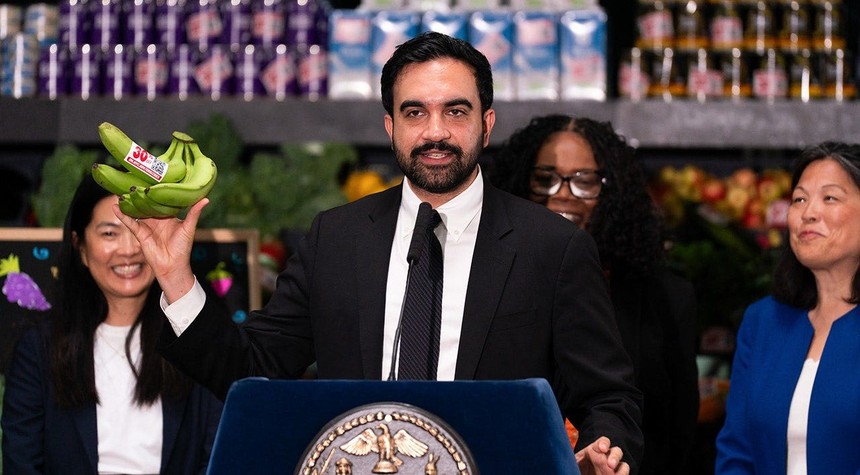
Here’s the beautiful irony of Zohran Mamdani’s city-owned grocery store scheme. New Yorkers will pay once to subsidize municipal stores selling groceries 30% below market rates. Then they’ll pay again to help private grocers compete against the government-funded behemoth the city just created. You can’t make this stuff up.
The mayor’s administration is eyeing tax breaks, incentives, and zoning benefits to help independent grocers stay afloat while simultaneously rolling out stores that get free or dirt-cheap real estate, city-funded buildouts, and operating subsidies. It’s government creating a problem and then charging you to solve it. Classic bureaucratic theater, except this time your wallet gets hit from both sides.
Adam Lehodey from the Manhattan Institute nails it when he calls those promised 30% savings an illusion. New Yorkers aren’t getting a discount. They’re just paying through a different mechanism, one that’s conveniently hidden in tax dollars instead of appearing on their grocery receipts. The price doesn’t magically disappear because the government waves a wand over it.
Think about what happens when you artificially slash prices that far below market rates. You’re not just offering affordable groceries anymore. You’re creating arbitrage opportunities for anyone smart enough to buy low and resell elsewhere. Shortages become inevitable because when something costs 30% less than it should, people buy more than they need. Basic economics doesn’t stop applying just because a politician decides it should.
The grocery business runs on margins so thin you could read through them. We’re talking 2% profit margins in many cases. E.J. Antoni from the Heritage Foundation points this out perfectly. A 30% discount in an industry with a 2% margin isn’t charity. It’s a guaranteed loss that taxpayers cover. Meanwhile, the mom and pop bodega down the street that’s been serving the neighborhood for decades? They’re supposed to compete against subsidized prices while operating in the real world where rent, utilities, and payroll actually cost money.
The New York City Economic Development Corporation insists these municipal stores will generate foot traffic that benefits nearby businesses. Right. Because nothing helps your corner store quite like a government-subsidized competitor selling the same products for 30% less a block away. That’s the kind of logic that only works in PowerPoint presentations to city council members who’ve never run a business.
What really gets me is the underlying arrogance of the whole thing. Free markets have fed more people, created more abundance, and delivered more genuine affordability than any centrally planned system in human history. But Mamdani apparently thinks he’s smarter than centuries of economic reality. He’s going to show us how government can run groceries better than the private sector, despite zero evidence that municipal enterprises operate more efficiently than their private counterparts.
This isn’t about helping struggling New Yorkers afford groceries. If it were, the city would focus on reducing the regulatory burdens and tax pressures that drive up costs for existing grocers. They’d make it easier for businesses to operate, not harder. They’d trust market competition to drive prices down instead of creating a parallel system that guarantees losses.
The real kicker? When these city-run stores inevitably run into financial trouble, guess who’s on the hook. Not Mamdani. Not the bureaucrats at EDC. The same taxpayers who funded them in the first place. The losses get socialized while politicians claim credit for the “savings” they delivered.
Government has legitimate roles to play. Ensuring fair weights and measures, preventing fraud, maintaining food safety standards. Those are proper functions. Running grocery stores to undercut private businesses isn’t one of them. It’s expensive theater that sounds compassionate but delivers the opposite of what it promises. You want affordable groceries? Get government out of the way and let competition work. That’s how prices actually come down without someone else footing the bill.
New York’s independent grocers and bodegas have weathered plenty of storms. But competing against an opponent that doesn’t need to turn a profit and gets subsidized land and buildouts? That’s not competition. That’s elimination disguised as assistance. And when those neighborhood fixtures close their doors, no amount of municipal stores will replace what gets lost.
Related: Abbott Takes DFW and Houston Airports to Federal Court Over Muslim Foot Baths