Here’s what nobody wants to admit out loud. The affordability crisis crushing American families right now isn’t some mysterious economic phenomenon that fell from the sky. It’s government-made, government-sustained, and it’ll only get fixed when we stop pretending regulations don’t have price tags.
Richard Stern at the Plymouth Institute for Free Enterprise said it plainly enough. “Yes, there’s an unaffordability crisis and it’s the government’s fault.” That statement anchors a new report from Advancing American Freedom, the conservative group Mike Pence founded after leaving office. The report lays out ten proposals to cut costs by slashing red tape and letting producers actually produce. Housing, energy, business costs. The whole spectrum of economic pain points keeping families up at night.
You know what’s interesting? The report reads like it was written by people who actually understand how markets work. Ease zoning restrictions so builders can build. Expand oil and gas access so energy gets cheaper. Overhaul Social Security and SNAP eligibility to reduce waste. These aren’t revolutionary ideas. They’re common sense wrapped in policy language.
But then we hit the awkward part. The part where conservative policy wonks have to tell a Republican president he’s wrong about two major pocketbook issues. Tariffs and credit card interest rates.
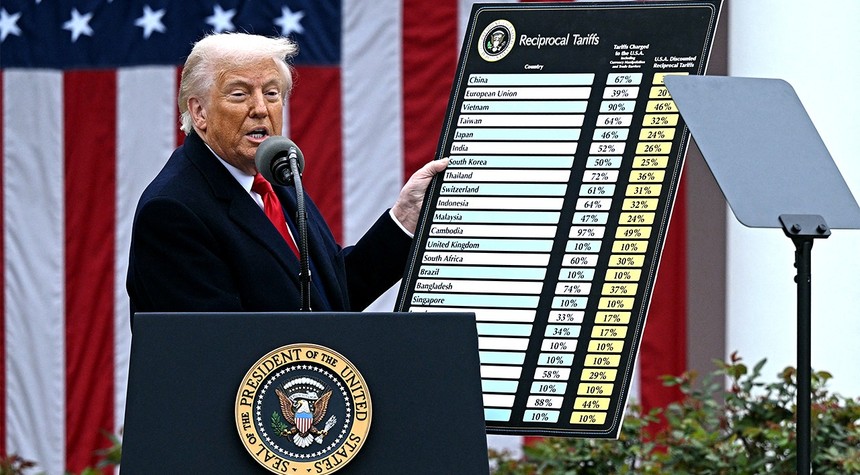
The report doesn’t tiptoe around Trump’s sweeping tariffs. It says what the data shows. They’ve raised prices on American consumers. They’ve strained our alliances. They’ve cost the economy nearly 900,000 jobs compared to what we expected. January’s tariff haul brought in $30.4 billion for Washington, up 242 percent from the year before. That’s not money appearing from thin air. That’s money extracted from Americans buying goods.
The authors want more tariff authority shifted back to Congress, which honestly makes sense if you believe in constitutional separation of powers. Executive authority over trade has bloated into something the founders never intended. But good luck making that argument stick in today’s Republican Party where Trump’s trade war has become almost theological.
Then there’s the credit card thing. Trump floated capping interest rates at 10 percent, which sounds great until you think about it for thirty seconds. The report warns this would make lending unprofitable for roughly 60 percent of Americans. Banks aren’t charities. If they can’t price risk, they simply won’t lend to risky borrowers. Suddenly millions of Americans who could get credit cards at higher rates get nothing instead.
Price controls don’t work. They never have. Diocletian tried it in ancient Rome and failed spectacularly. Nixon tried it in the 1970s and created shortages. But populist economics keeps rediscovering this mistake because controlling prices feels like helping people even when it hurts them.
Stern frames the whole affordability debate around whether Americans can still build better futures for their families. That’s the right question. Housing and energy costs have put sharp edges on that dream. When young couples can’t afford homes near their jobs, when families choose between heating and eating, something fundamental breaks in the social contract.
Zoning restrictions deserve special contempt here. Local governments have strangled housing supply with arbitrary rules that serve existing homeowners at the expense of everyone else. The National Association of Home Builders estimates regulations account for about 26 percent of new home prices. That’s not a rounding error. That’s $132,000 added to a median-priced home because some planning commission decided neighborhoods need “character.”
The report recommends limiting local zoning restrictions, streamlining approvals for projects that already meet rules, and tying $50 billion in annual federal housing aid to zoning reform. Use the money as leverage. States and cities that refuse to let builders build don’t get federal dollars. Simple.
Energy costs follow similar logic. We’ve made it nearly impossible to extract resources we have in abundance. Oil and gas sit under American soil while we import from countries that hate us. Environmental reviews stretch for years. Permits get denied for political theater. Meanwhile families pay more to heat homes and fill gas tanks.
The conservative movement faces a choice point here. Do we stick with free market principles even when they conflict with popular protectionism? Do we trust competition and production to lower costs, or do we embrace government intervention when it comes from our side?
These questions matter beyond policy papers. Midterms are coming. Voters are angry about costs. Both parties are scrambling to convince Americans they have answers. Democrats will promise more subsidies and redistribution. That’s their playbook. But if Republicans can’t offer a coherent alternative rooted in actual economic principles, we’re just arguing over which flavor of big government voters prefer.
The American dream isn’t dead but it’s gasping. Housing costs have pushed homeownership out of reach for millions of young families. Energy bills eat paychecks. Grocery prices keep climbing. People feel it every day in ways that statistics can’t capture.
Government created this mess through decades of accumulated regulations, restrictions, and interventions. Each one seemed reasonable in isolation. Collectively they’ve strangled the productive capacity that once made American prosperity feel inevitable. The solution isn’t more government trying to fix what government broke. It’s getting government out of the way and letting Americans build, produce, and compete again.
Related: Thirty Elite Universities Now Face Foreign Ties Audit or Lose Federal Cash