
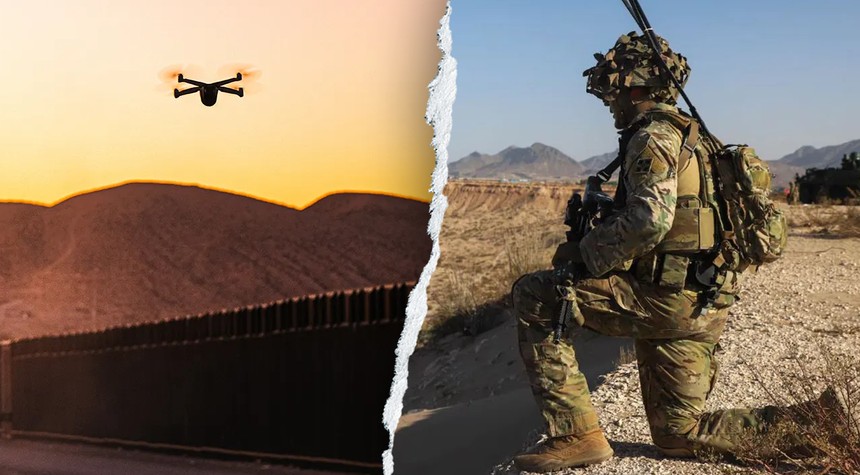
The Department of Homeland Security just admitted what border communities have known for months. Cartels are flying drones over American soil like they own the place, and for a while there, they pretty much did.
Between late August and last Thursday, federal agents detected 378 cartel drones buzzing along the southern border. That’s not a typo. Nearly 400 drones in just over a month. Seventy-five got turned back, fifteen were engaged (which is military speak for shot down or disabled), and exactly one was captured. The math isn’t encouraging when you realize how many made it through or simply weren’t counted.
This isn’t some abstract national security briefing buried on page seventeen. These are hostile aircraft operated by criminal organizations actively surveilling American personnel, mapping our defenses, and coordinating illegal crossings in real time. The cartels used to send guys with binoculars to watch Border Patrol movements. Now they launch drones that hover overhead, feeding live intelligence back to smuggling operations on the Mexican side.
Jeffrey Stalnaker, deputy chief patrol agent for Border Patrol, told reporters in Yuma that cartels primarily use these drones for reconnaissance rather than smuggling. They’re watching when soldiers and agents come into the field, tracking patterns, finding gaps. Then they exploit those windows to push drugs and people across the border between official ports of entry. It’s tactical warfare dressed up as immigration policy failure.
You know what bothers me most? We’re just now ramping up serious counter-drone measures after hundreds of incursions. The Department of War and DHS are finally deploying detection and interception technology, working with private companies to develop countermeasures. Better late than never, I suppose, but this should’ve been priority one years ago.
The military has spent the past three weeks in the Arizona desert outside Yuma testing new anti-drone equipment. Everything from specialized guns to drone-capturing nets to unmanned aerial vehicles designed to knock cartel drones out of the sky. Brigadier General Jason Rueschhoff says they’re developing capability at a pace that keeps ahead of the enemy. That’s reassuring until you remember the enemy has been operating freely for months while we figured out which contractor gets the lucrative defense deal.
DHS posted a defiant statement on X telling the cartels their drones are failing and their tactics are being exposed. Strong words. I hope they’re backed by stronger action because the cartels aren’t stupid. Federal officials admit cartel drone tactics are evolving rapidly. Some of these aircraft are known to carry lethal payloads in other contexts, though those haven’t shown up at the border yet. Yet is doing a lot of work in that sentence.
The FBI recently warned that battlefield-style drone attacks could reach American soil. It’s only a matter of time, they said. Well, guess what? Criminal syndicates are already operating military-grade surveillance over our territory. The gap between reconnaissance drones and weaponized ones isn’t as wide as we’d like to pretend.
This connects to a larger frustration about border security that transcends party talking points. We’ve spent decades arguing about walls and patrol numbers while cartels invested in technology that makes those debates feel quaint. They adapted. We debated. Now we’re playing catch-up with organizations that generate billions in revenue and treat innovation like a business imperative.
The Trump administration’s crackdown on illegal migration includes military patrols and aggressive enforcement, which explains why Joint Task Force Southern Border took down roughly 100 suspected cartel drones back in August alone. That kind of response requires resources, legal authority, and political will that fluctuates with whoever occupies the White House. Border security shouldn’t be a policy pendulum that swings every four years.
What happens when cartels start using swarming tactics with dozens of drones simultaneously? What happens when they figure out jamming or spoofing our detection systems? These aren’t hypothetical questions for some distant future. These are operational challenges our personnel face right now in places like Yuma and El Paso and Santa Teresa.
The stated goal is admirable. Hostile surveillance of American personnel ends here, according to DHS. I want to believe that. I want to see cartels lose their technological edge and retreat to whatever pre-drone operations looked like. But declarations without sustained funding, clear rules of engagement, and long-term strategy are just noise.
Three hundred seventy-eight drones in five weeks tells you everything about cartel capability and confidence. They’re not testing our defenses anymore. They’re operating despite them. The counter-drone technology being deployed now should’ve been standard equipment years ago, back when this problem was manageable instead of endemic.
Related: Obama Insists Government’s Never Been Cleaner as Democrats Campaign on Corruption Crisis