
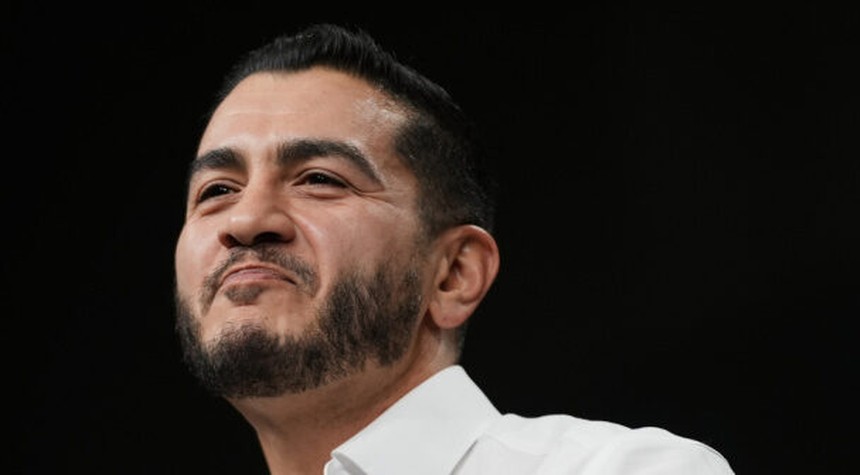
JD Vance isn’t pulling punches in Michigan, and honestly, why should he? The vice president stood before a rally crowd and did something that’s become almost radical in modern politics: he quoted a Democrat candidate’s own words back to him. The target was Abdul El-Sayed, and the issue is pretty straightforward. Either El-Sayed told the truth when he claimed to be an immigrant from North Africa, or he’s telling the truth now when his campaign insists he’s always been forthright about being Michigan born and bred.
You can’t have it both ways.
At the 2017 Michigan Democratic Party convention, El-Sayed told the Progressive Caucus he “may be an immigrant from North Africa.” That’s on video. It’s not a deep fake, not taken out of context, not a Republican fever dream. The man said the words. He also listed dual U.S. and Egyptian citizenship on his 2014 Columbia University résumé and claimed at a 2016 Detroit conference that he held “dual citizenship.” These aren’t off-the-cuff remarks at a backyard barbecue. These are formal settings where precision matters.
Now his campaign wants us to believe it was all just a big misunderstanding. Spokeswoman Roxie Richner says El-Sayed was “misinformed by a relative” and the whole thing was “an error based on what he was told by family members secondhand.” Think about that for a second. We’re supposed to accept that a highly educated physician and politician repeated false information about his own citizenship status multiple times across multiple years because a relative got it wrong?
The problem isn’t just the inconsistency. It’s what the inconsistency reveals about character and judgment. If El-Sayed genuinely believed he held Egyptian citizenship for years without bothering to verify something that basic about his own legal status, what does that say about his attention to detail? And if he didn’t believe it but said it anyway because it played well with certain audiences, what does that say about his honesty?
Vance framed this as a question of national loyalty, and the media will predictably howl about that phrasing. But stripped of the partisan noise, there’s a legitimate concern here. When you’re running for the United States Senate, voters deserve to know whether you’ve been straight with them about fundamental facts. The Senate race in Michigan could determine who controls the chamber, which means El-Sayed’s credibility isn’t just a state issue.
El-Sayed fired back by calling himself “a Wolverine, not a weasel” and insisting Republicans are cherry-picking his statements. That’s a clever line, the kind that gets applause at rallies. But clever doesn’t mean correct. The man’s own résumé contradicts his current claims. His own conference remarks contradict his current claims. His own convention speech contradicts his current claims. At some point, you run out of context to provide.
This whole episode gets at something bigger than one Senate race. We live in an era where politicians treat their own biographical details like rough drafts, subject to revision based on what polls well. Identity becomes performance art rather than fixed reality. The cultural left has spent years telling us that self-identification trumps objective facts in every other arena, so maybe we shouldn’t be surprised when that logic bleeds into campaign messaging.
Vance called El-Sayed “one of the craziest, one of the most far-left, and one of the most radical people running for high office in the history of the United States of America.” That’s campaign rhetoric doing what campaign rhetoric does. But the citizenship contradictions? Those are just facts doing what facts do: refusing to cooperate with whoever’s trying to spin them.
Mike Rogers, the Republican nominee Vance is stumping for, has to be pleased with how this is playing out. Every day Democrats spend explaining away their candidate’s past statements is a day they’re not making their case to voters. Every clarification that raises new questions is a gift to the opposition.
The El-Sayed campaign can insist until they’re blue in the face that Republicans are misrepresenting their candidate. But when the misrepresentation consists entirely of quoting the candidate verbatim, you’ve got a problem that no amount of damage control can fix. Voters tend to trust their own ears more than they trust campaign spokespeople.
Related: Ilhan Omar Grins Through Federal Investigation While Americans Deserve Real Answers