Here’s what should terrify every taxpayer in Minnesota: the state just passed a shiny new fraud prevention law, and when someone actually bothered to test it against real fraud schemes, it would have caught the theft only after the money was already gone.
Heidi Heino isn’t your typical political candidate throwing around accusations. She’s the Republican running for Minnesota’s 36th Senate District, and her day job involves underwriting, which means she actually knows how to spot financial red flags before the damage is done. So she did something novel. She took the state’s new Office of the Inspector General law and ran it through a stress test, checking whether it could have prevented the massive fraud schemes that have embarrassed Minnesota in recent years.
The results? Not great.
The Inspector General law creates an independent watchdog, establishes fraud prevention standards, and supposedly improves coordination across state programs. Sounds impressive on paper. But Heino discovered that when you test it against something like the Feeding Our Future scandal, where $250 million vanished from a child nutrition program during COVID, the law would have eventually found the fraud. Eventually. That’s the key word here. By the time this new system would have caught on, the money would already be halfway to someone’s offshore account, and taxpayers would be left holding yet another empty bag.
“Business does a lot with a little,” Heino told reporters. “Government does the opposite. They do a little with a lot of resources.” You know what? That’s not political spin. That’s observable reality for anyone who’s worked in both sectors.
Consider the numbers she used in her test. Feeding Our Future saw payments increase by 2,800 percent between 2020 and 2021. Twenty-eight hundred percent. That’s not a typo. Any private company with basic financial controls would have flagged that instantly. Someone would have been in an office within hours asking questions, demanding documentation, and signing off on whether this explosive growth was legitimate or suspicious.
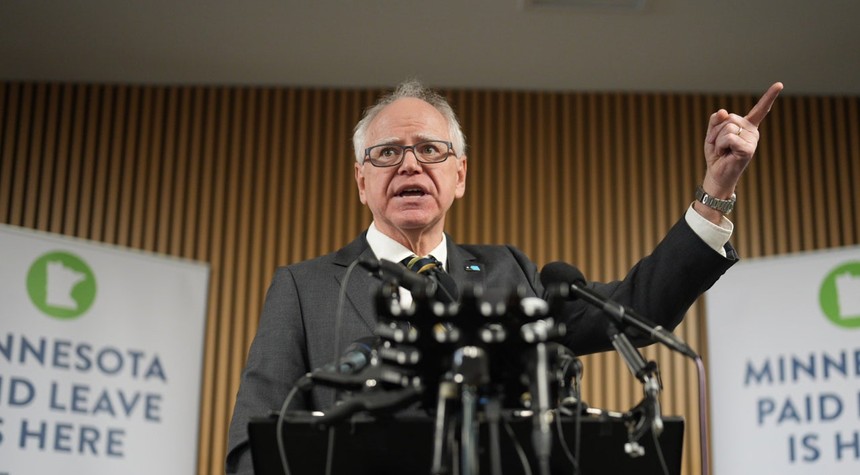
But Minnesota’s state systems let it sail through. And the new law Governor Tim Walz signed, the one supposedly designed to prevent exactly this kind of theft, still lacks the automatic triggers and extra safeguards needed when unusual patterns emerge.
This isn’t just about Feeding Our Future either. Minnesota has been bleeding money through fraud in childcare, autism services, housing programs, and disability services. It’s becoming a pattern, and patterns suggest systemic failure rather than isolated incidents. Republicans have pointed to leadership and oversight failures, while the Trump administration recently launched a federal anti-fraud task force led by Vice President JD Vance to address these nationwide problems.
Heino’s approach reveals something important about how fraud prevention should work. She applied basic underwriting principles to government spending. In the private sector, when something looks wrong, you investigate immediately. You don’t wait for annual audits or hope someone eventually notices. You build systems that automatically escalate suspicious activity before losses mount.
The frustrating part? These aren’t complicated solutions. Heino acknowledges that requiring extra paperwork or additional sign-offs might annoy people. Nobody loves bureaucracy. But here’s the trade-off: would you rather fill out an extra form or watch another quarter-billion dollars disappear into a criminal enterprise disguised as a charity?
The Feeding Our Future case is particularly galling because it allegedly stole from a program meant to feed children during a pandemic. That money was supposed to help families when they were most vulnerable. Instead, it reportedly funded personal real estate purchases, luxury cars, and other items that had nothing to do with child nutrition. The FBI raided the St. Anthony-based nonprofit, and one of the alleged conspirators was recently captured in Somalia after fleeing the country.
What Heino discovered through her stress test is that Minnesota’s new fraud prevention system is reactive rather than proactive. It will find fraud after the fact, which is better than nothing but far worse than prevention. In her world, the corporate world where money has consequences, you don’t get credit for discovering a loss after it’s already on the books. You get fired.
The question facing Minnesota voters isn’t whether fraud will happen. It will. The question is whether the state’s systems are designed to catch it early, when recovery is still possible, or late, when taxpayers just eat the loss and move on.
Right now, based on Heino’s analysis, Minnesota is still stuck in the late-detection model. The new Inspector General law represents progress, but it’s incomplete progress. It’s the legislative equivalent of installing a smoke detector that only goes off after your house has already burned down. Technically functional, but missing the entire point.
This matters beyond Minnesota too. States across the country face similar vulnerabilities as federal programs distribute massive amounts of money through state agencies. The COVID-19 pandemic exposed just how easy it is for organized criminals to exploit weak oversight systems. If Minnesota, with its new fraud prevention law, still can’t catch a 2,800 percent payment increase before the money disappears, what does that say about states without even these basic safeguards?
Heino’s stress test offers a blueprint for what real accountability looks like. Test your systems against known failures. Find the gaps. Fix them before the next scheme starts. It’s not glamorous work, but it’s necessary work, and right now, it’s work that apparently still needs doing in Minnesota.
Related: Trump’s DOJ Demands California Verify Citizenship of Thousands of Voters Before Midterms