
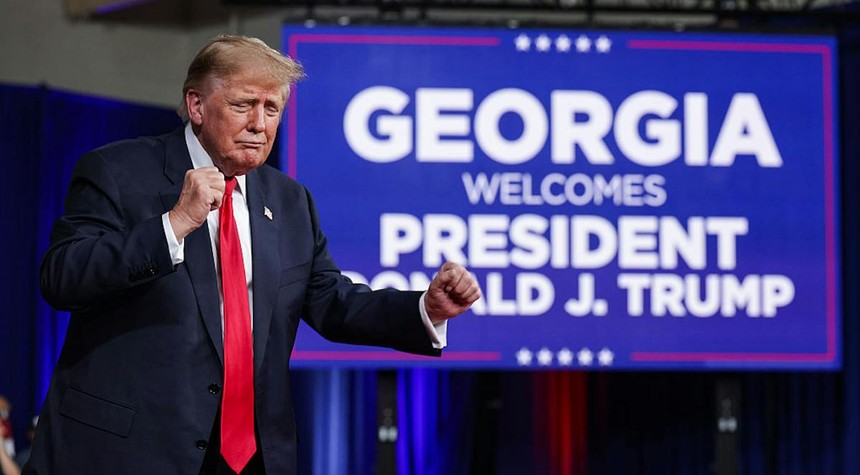
President Trump stood in Perry, Georgia last Saturday and dropped news that should make every economic skeptic rethink their position. Audi, the last major German automaker without American roots, is planting a $4 billion factory in Georgia. That’s 4,500 jobs that wouldn’t exist otherwise. That’s families with paychecks, communities with purpose, and another data point proving that economic nationalism isn’t just campaign rhetoric.
The president didn’t mince words about why this happened. Audi got tired of paying tariffs. Simple as that. When you make doing business overseas more expensive than building here, companies make the rational choice. It’s not complicated economics, though plenty of experts in their ivory towers made it sound impossible. Trump told them last year the deal was straightforward: build here, pay zero tariffs. Audi looked at their balance sheet, saw $1.4 billion slashed from 2025 profits because of tariff costs, and did the math.
You know what’s remarkable? This factory will pump out 200,000 vehicles annually once it gets rolling in the early 2030s. Construction starts in 2027, which means Georgia communities can start planning around real economic growth, not the vague promises politicians usually peddle. Trump called it the largest single investment in modern U.S. auto industry history. Whether that’s precisely accurate or slightly generous campaign talk, the core truth remains solid. This is massive.
Audi’s competitors figured this out years ago. BMW and Mercedes have been operating Southern factories for ages, soaking up that regional workforce and dodging the import headaches. Audi instead chose to ship cars from Germany, Mexico, and scattered Eastern European plants, passing tariff costs to American buyers through price hikes. That strategy worked until it didn’t. Markets have a funny way of forcing adaptation.
The timing here isn’t accidental. Trump rolled this announcement out during midterm campaigning, giving Republicans in Georgia something concrete to run on. The state’s turned into genuine swing territory, which would’ve seemed absurd a decade ago. Republican Rick Jackson needs every advantage against Keisha Lance Bottoms, the former Atlanta mayor who spent time in Biden’s White House. Meanwhile, Mike Collins is scrapping to unseat Jon Ossoff in the Senate race. Nothing motivates voters like job creation in their backyard.
This isn’t happening in isolation either. Last week in Kentucky, Trump highlighted a $100 million federal investment in a Winchester drug manufacturing plant. Earlier this month, defense outfit Anduril committed $3.7 billion to a Maryland shipyard bringing 13,000 jobs. Japanese brewer Sapporo shifted nonalcoholic beer production from Canada to American facilities after Trump’s 50 percent tariffs on certain Canadian goods took effect. These aren’t coincidences. They’re consequences of policy choices that prioritize American workers over global supply chain efficiency.
The White House keeps pointing to manufacturing employment numbers because they tell an unambiguous story. After watching factories close and production flee overseas for decades, we’re seeing reversal. The administration reports 72,000 new manufacturing jobs added in 2026 so far. Critics will quibble about methodology or context, but workers cashing those paychecks aren’t particularly interested in academic debates about trade theory.
There’s something deeply American about using market pressure to bring production home. It’s not subsidies or government picking winners. It’s changing the incentive structure so companies naturally choose America. Tariffs get criticized as outdated protectionism, and sure, economists love talking about comparative advantage and efficient resource allocation. But efficiency for whom? Corporate balance sheets looked great while entire regions hollowed out.
Georgia’s about to see what happens when policy meets reality in ways that matter to regular people. Construction jobs first, then permanent manufacturing positions, then all the ancillary economic activity that follows when thousands of workers have steady income. Restaurants, housing, retail, services. It ripples outward.
Trump’s making this work by being willing to take heat from the free trade purists while staying focused on outcomes Americans actually care about. Four thousand five hundred families in Georgia will have opportunities that didn’t exist before. That’s the metric that counts when you’re governing for people instead of theory.
Related: Chicago’s 12-Language Ballot System Is Solving a Problem That Doesn’t Exist