
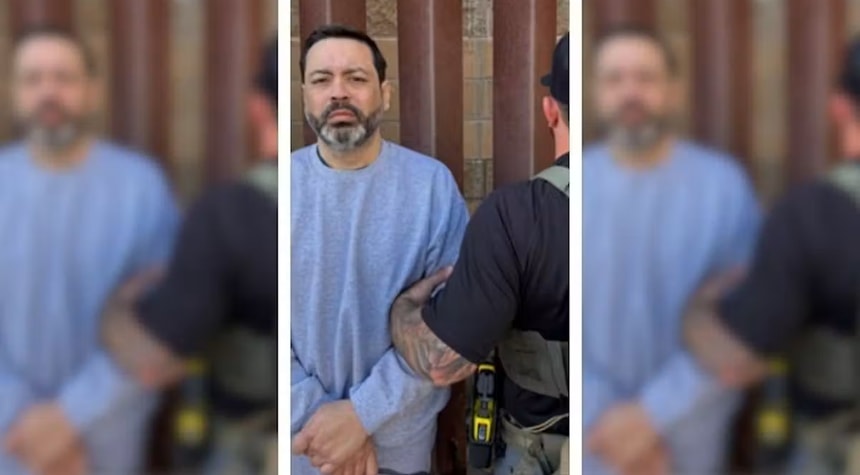
The Trump administration successfully deported a Mexican national wanted for attempted femicide after Coast Guard officials intercepted his illegal entry via smuggling vessel off the California coast, highlighting the persistent threats along America’s maritime borders.
Octavio Jorge Cortes-Jiminez fled Mexico with an active warrant for attempted murder and crammed himself onto a panga-style boat with eight other illegal immigrants. The vessel landed in American waters near San Diego on August 12, where Coast Guard personnel apprehended the group. Border Patrol agents subsequently took custody and discovered Cortes-Jiminez’s outstanding warrant. Immigration and Customs Enforcement handed him over to Mexican authorities on October 16.
The facts here are straightforward. A violent criminal attempted to evade justice by exploiting America’s maritime vulnerabilities, and federal authorities did their job by catching him and returning him to face prosecution. This represents precisely how immigration enforcement should function when agencies have the resources and political will to execute their mandates.
Jesus Rocha, acting Field Office Director for ICE Enforcement and Removal Operations in San Diego, emphasized the agency’s commitment to removing illegal aliens wanted for serious criminal charges abroad. The coordination between domestic and international law enforcement partners, Rocha noted, protects communities and ensures fugitives face justice.
White House border czar Tom Homan recently addressed the maritime border challenge during a Miami press conference, warning that significant work remains to secure American waterways. Many migrants are staging operations from the Bahamas and British Virgin Islands before attempting illegal entry, Homan explained.
The pattern was predictable. Once the administration tightened security at the Southern land border, smugglers and illegal immigrants shifted tactics to waterways, air routes, and the Canadian border. This represents basic economics. When you increase enforcement costs at one entry point, illegal actors seek alternative routes with lower barriers.
The numbers support these concerns. Between October 2021 and September 2023, the Coast Guard recorded the highest maritime migration levels in more than three decades, according to Government Accountability Office data. The agency interdicted approximately 12,500 migrants in fiscal year 2022 and another 12,500 in fiscal year 2023.
Fiscal year 2025 saw a decrease to 4,228 interdictions between October 2024 and September 2025. While this reduction suggests some progress, officials correctly recognize that vulnerabilities persist.
Homan acknowledged these gaps plainly. The maritime border lacks the security infrastructure present at the Southern land border. The administration plans to dedicate substantial resources, technology, and personnel over the next two years to address these weaknesses and establish comparable security measures for maritime and air approaches.
The broader implication remains clear. Border security requires comprehensive enforcement across all entry vectors. Smuggling operations adapt quickly to enforcement patterns, exploiting wherever defenses prove weakest. Half measures produce predictable results: criminals like Cortes-Jiminez gaming the system to evade justice.
The deportation of a violent criminal wanted for attempted murder represents a win, but isolated successes cannot substitute for systematic security. Every sovereign nation possesses the right and responsibility to control who enters its territory. When that control falters, communities bear the consequences through increased crime and overwhelmed social services.
The Trump administration’s approach recognizes this fundamental reality. Secure borders require resources, coordination, and unwavering enforcement. The maritime dimension demands the same attention previously directed toward the Southern land border. Anything less invites continued exploitation by smugglers and criminals seeking to circumvent American law.
Related: AOC’s Instagram Civics Class Reveals America’s Education Crisis and Her Own Blind Spots