
The National Institutes of Health has been exposed for funneling millions of taxpayer dollars into foreign animal research facilities plagued by catastrophic biosafety failures, inadequate containment protocols, and virtually nonexistent federal oversight. Federal records obtained through Freedom of Information Act requests reveal a pattern of reckless spending and administrative negligence that should alarm every American concerned about both biosecurity and fiscal responsibility.
Here are the facts. The NIH funded research on Hendra virus, a lethal bat-borne pathogen, at the Australian Centre for Disease Preparedness. The project was abruptly suspended after the facility’s own Animal Ethics Committee discovered serious operational failures including insufficient trained personnel, absent contingency planning, unclear protocols, and inadequate containment measures. When a single flying fox tested positive for Hendra virus, staff were forced to kill all eight bats housed together because the room could not be elevated to the necessary Biosafety Level 4 containment. A ninth bat housed separately also tested positive and was subsequently killed.
The timeline here is crucial. The primary investigator alerted the NIH to these infections in May 2023. The ethics board suspended the study weeks later. Yet the NIH’s Office of Laboratory Animal Welfare did not receive even a preliminary report until April 2024, more than ten months after the shutdown. This represents either staggering incompetence or willful negligence, neither of which is acceptable when dealing with deadly pathogens and taxpayer money.
This Australian disaster was not an isolated incident. At Newcastle University in the United Kingdom, researchers conducted NIH-funded brain and stroke research on nonhuman primates despite inadequate personal protective equipment standards, insufficient tuberculosis screening, and deficient emergency procedures for testing potential human exposures to the deadly Herpes B virus. A 2025 federal review ordered the facility to reevaluate these standards, raising the obvious question of why these deficiencies were not identified before federal dollars started flowing.
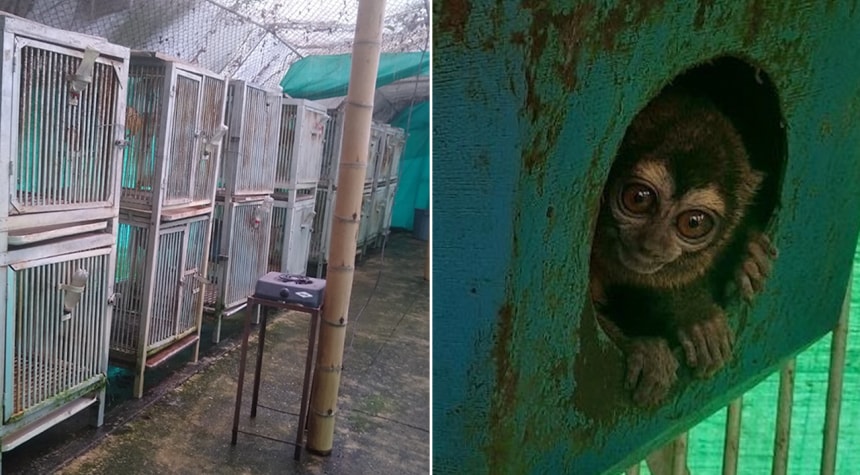
The NIH claims it implemented enhanced oversight of foreign institutions following previous scandals, including a shuttered Colombian facility that received seventeen million dollars in American funding while keeping monkeys in squalor. But a review of 124 federal files tells a different story. The NIH’s supposed oversight relies almost entirely on self-reporting and scripted virtual site visits announced months in advance.
Consider the absurdity. Newcastle University received notice in May 2025 for a virtual visit that did not occur until December. Notification letters outlined prearranged planning sessions, document reviews, and camera tours where foreign personnel controlled what government monitors could see on screen. Federal regulators had no ability to conduct unannounced inspections, examine arbitrary rooms, review records in real time, or conduct confidential staff interviews. Out of 70 annual reports examined regarding active NIH-backed animal research across foreign labs between 2023 and 2025, 67 self-reported zero violations. This is a system built on the honor system with foreign entities who have precisely zero incentive to report their own failures.
The administrative failures compound the biosafety concerns. The NIH awarded a thirteen million dollar tuberculosis vaccine contract to the University of Sydney in 2022, but the animal testing was outsourced to the Centenary Institute in Australia, an entity lacking the required NIH Foreign Animal Welfare Assurance. This unauthorized arrangement went unnoticed for years until the university inquired about a dead experimental mouse in 2025.
The NIH also confirmed it could find no records of assurance for multiple foreign entities carrying out American-funded animal studies, including Australian biotech firm Kinoxis Therapeutics, which conducted opioid withdrawal experiments on 80 dogs, 314 rats, and 1,485 mice under a grant active through May 2026. Similar record absences occurred for grants involving animal testing at institutions in Canada, Kenya, and Israel.
The bipartisan CARGO Act, which would permanently prohibit the NIH from bankrolling animal experiments in foreign countries, deserves immediate passage. The case for this legislation is overwhelming. American taxpayers should not be funding research at facilities we cannot properly inspect, operating under standards we cannot verify, in countries where our regulatory authority is effectively ceremonial. The NIH has demonstrated it lacks both the capability and apparently the will to ensure basic safety and oversight standards at foreign facilities. This is not merely an animal welfare issue or a fiscal responsibility issue. This is a national security issue involving deadly pathogens and inadequate containment protocols at facilities receiving American money but operating beyond meaningful American oversight.
The solution is straightforward. If the NIH cannot guarantee proper oversight and biosafety compliance, American tax dollars should not flow to these foreign facilities. Period.
Related: Trump Administration Admits Wrongful Deportation of US Citizen After Months of Denial