
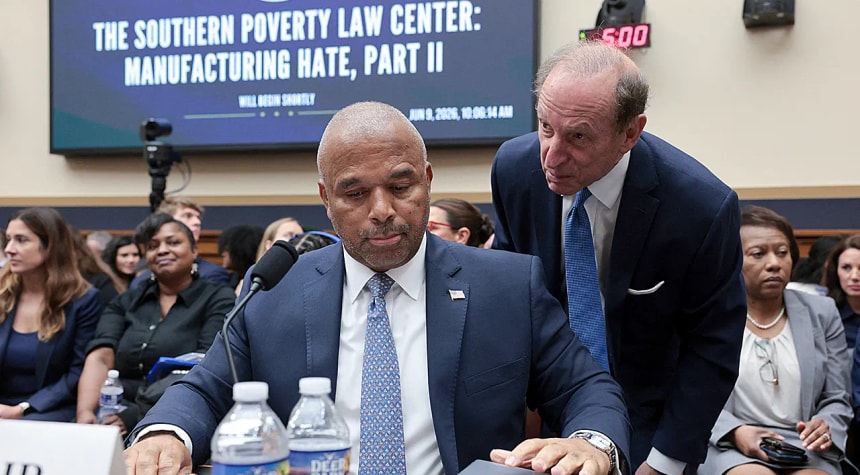
The facts are now on the record, and they paint a disturbing picture of institutional capture at one of America’s most influential so-called civil rights organizations. A former Southern Poverty Law Center intelligence director told FBI agents that the organization underwent what he described as a "long-term coup" by extreme leftists who systematically purged Christians and conservatives from the staff after his 2013 departure.
The unnamed former director’s testimony, revealed in FBI interview transcripts filed in federal court, confirms what conservatives have suspected for years. The SPLC’s notorious "Hate Map," which audaciously lists mainstream conservative organizations alongside Ku Klux Klan chapters, is not the product of objective analysis but rather ideological warfare dressed up as civil rights work.
According to the transcripts, this former director ran the SPLC’s intelligence project and repeatedly attempted to bring ideological balance to the organization’s hate group tracking. He pushed, over internal resistance, to include left-wing extremist groups on the map, specifically citing violent animal rights activists and radical environmental groups. The fact that he faced opposition to including actual violent extremists while conservative policy organizations made the cut tells you everything you need to know about the SPLC’s priorities.
The former director succeeded in one area, convincing staff to list Black separatist groups alongside White supremacist organizations, a logical equivalence that apparently required persuasion at an organization supposedly dedicated to fighting hate. But his broader efforts to maintain nonpartisan standards failed, and after his departure, the organization transformed entirely.
Here is where the story becomes particularly revealing. The former director told FBI Special Agents David McDaniel and Parker Still that after he left, new leaders were appointed to the SPLC’s board as "figureheads" who eventually gained enough voting power to execute a takeover. Of his approximately seventeen-person team, only one or two data-entry staff remained. The rest were systematically replaced.
When asked why this happened, the former director was blunt. "That’s who they ran off first were the Christians and conservatives," he said. "Then they just replaced with people they liked, you know, that agreed with them politically."
This testimony emerged in court filings from Dr. Heidi Beirich, a former SPLC official now facing federal charges alongside the organization in a case alleging a scheme to mislead donors and banks about donations used to pay informants associated with violent extremist groups. Beirich’s lawyers argue the prosecution is politically motivated, pointing to these FBI interviews as evidence that investigators focused on her alleged role in targeting conservative organizations.
The former director was remarkably candid about the SPLC’s methodology under the new regime. He criticized the "Hate Map" for listing local chapters of organizations separately to inflate the total count of extremist groups, a statistical sleight of hand designed to manufacture a crisis. He characterized his own tenure as "very nonpartisan" and "middle of the road," but suggested that Beirich’s actions were political in nature, accusing some liberals at the center of harboring "a good degree of hatred" for conservatism.
The implications here are significant. The SPLC wields enormous influence over how hate groups are defined in America. Major corporations, media organizations, and even government entities have relied on its designations to make decisions about platforms, funding, and partnerships. If the organization’s methodology is driven not by objective standards but by ideological animus against mainstream conservatism, then every one of those decisions is tainted.
The SPLC has long positioned itself as the arbiter of hate in America, but these FBI transcripts suggest something far different. They reveal an organization that underwent ideological purification, replacing Christians and conservatives with true believers willing to weaponize the language of civil rights against political opponents. That is not civil rights work. That is political activism masquerading as moral authority, and it deserves to be treated with the skepticism it has always warranted.
Related: Medea Benjamin’s $54 Million Foundation Back in Business After Years of Missed Filings