
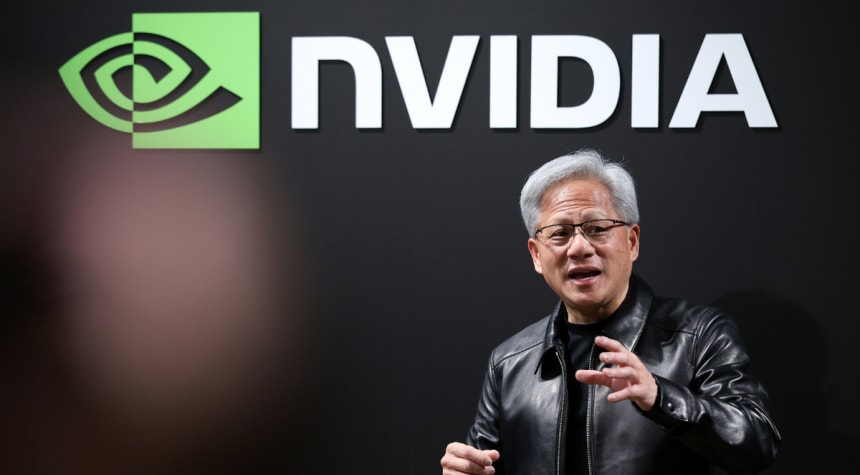
The facts are straightforward. President Trump and Vice President Vance intervened to restore Jensen Huang to his position as Nvidia CEO while multiple federal investigations into his conduct remained ongoing. This decision has exposed what appears to be a fundamental fracture in the administration’s approach to China policy, pitting Commerce Secretary Howard Lutnick against Treasury Secretary Scott Bessent in a dispute that cuts to the heart of American national security.
Here is what we know. Huang resigned following revelations about his relationship with Alice Huang, a former executive at Singapore-based Megaspeed who allegedly maintains ties to Chinese intelligence. Federal investigators have been examining whether advanced American semiconductor technology found its way to the Chinese Communist Party through Megaspeed, and whether Jensen Huang’s personal relationship played any role in that potential diversion.
Vice President Vance reportedly worked directly with Nvidia’s board over the weekend to facilitate Huang’s return. The company claims it received assurances from senior officials that reinstating Huang posed no national security risk. Yet Attorney General Todd Blanche, when asked directly whether Huang had been cleared of national security concerns or violations of federal law, declined to provide that confirmation. He only stated that Trump told him the government had no evidence of unlawful conduct.
This distinction matters enormously. No evidence of unlawful conduct is not the same as clearance from national security concerns. The investigations into both Megaspeed and Alice Huang remain active, as Director of National Intelligence Jay Clayton confirmed Sunday. The administration appears to have made a consequential decision before allowing those investigations to reach their conclusions.
The timing raises additional questions. Commerce added Megaspeed to its Entity List on Monday, the same day Nvidia announced Huang’s return. This designation requires licenses for covered exports to the company, with a presumption of denial. But according to Bessent, Treasury, State, Defense, and the U.S. Trade Representative had been pushing for months to blacklist Megaspeed while Commerce held the pen and apparently declined to act.
Trump himself acknowledged that Lutnick may have delayed action to avoid what he called a "blowup with China." If accurate, this admission is damning. American export control policy cannot be held hostage to concerns about angering Beijing, particularly when the technology in question represents the cutting edge of American semiconductor supremacy and has direct military applications.
Republican lawmakers are rightfully demanding answers. Senator John Curtis asked the essential questions: Who in the government weighed in? What did they tell the board? On what basis did the board conclude there was no risk? Representative Pat Harrigan warned that Huang’s reinstatement could "whitewash" unresolved national security questions. The chairmen of the House committees on Intelligence, Foreign Affairs, and China made clear that Nvidia’s brief internal investigation does not erase the threats they are investigating.
Max Meizlish of the Foundation for Defense of Democracies assessed the situation correctly. The administration is "sending the wrong message" by restoring Huang while investigations remain incomplete. The company has questions to answer, particularly regarding how its chips may have reached China and what role, if any, executive relationships played in potential violations of export controls.
This case reveals a troubling pattern. When economic interests conflict with national security concerns involving China, some officials appear willing to prioritize corporate relationships over security imperatives. Nvidia is an enormously valuable company, and Huang is widely regarded as a visionary leader in artificial intelligence technology. These facts do not change the reality that American semiconductor technology represents a strategic asset that the Chinese Communist Party desperately wants to acquire.
The congressional hearings scheduled for December 1 and 2, where Huang and Nvidia general counsel Tim Teter will appear for transcribed interviews, cannot come soon enough. America deserves answers about what happened here, who made what decisions, and on what basis those decisions were made. The administration’s China policy must be coherent, consistent, and uncompromising when it comes to protecting American technological supremacy. This episode suggests it is currently none of those things.
Related: White House Escalates Trade War with 45 Percent Total Tariffs on Chinese Goods