
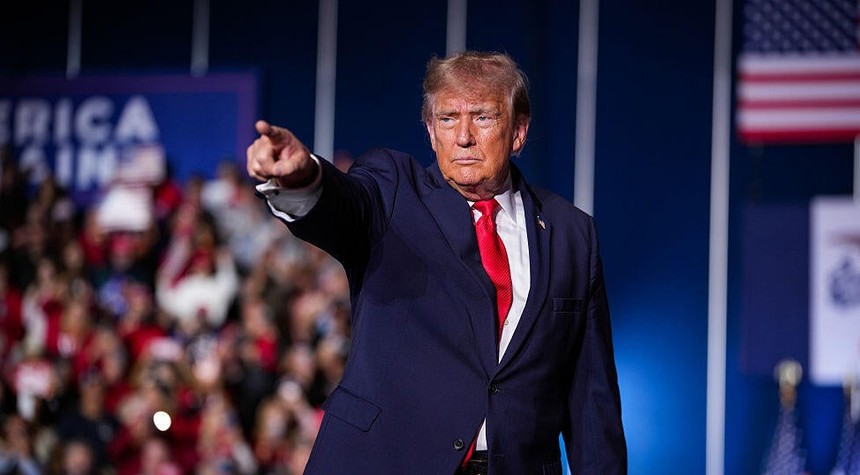
Donald Trump isn’t losing sleep over the prospect of Democrats taking Congress. He’s got other plans.
In an exclusive interview before polls closed on Tuesday, the president made something abundantly clear: he believes he holds more cards than anyone realizes. And he’s ready to play them. The veto pen, executive authority turbocharged by recent Supreme Court rulings, and what he describes as unprecedented presidential power. That’s his arsenal for the next two years, regardless of which party controls Capitol Hill.
“I have the ultimate power. It’s called ‘veto,'” Trump told CBS News, embracing the potential nickname “Mr. Veto” with the same enthusiasm he brought to every other label critics thought would sting. You know what? He might wear it like a badge. Because in Trump’s calculus, vetoing Democratic legislation isn’t obstruction. It’s leverage. A forcing mechanism. “Historically, you veto for a couple of months and then they come and say, ‘We’ve got to make a deal,'” he explained.
Here’s where things get interesting. Trump cited Trump v. Slaughter, a Supreme Court decision from earlier this year that let him fire Rebecca Slaughter from the Federal Trade Commission. That 6-3 ruling, he argues, hands him sweeping authority over federal agencies, boards, and commissions. Powers that transcend whatever majorities exist in the House or Senate. “We won the Slaughter case and the Slaughter case gives the president tremendous powers that it never had before,” Trump said.
This isn’t bluster. Two sources close to the president, speaking anonymously, confirmed that White House discussions about ramped up executive actions have been happening for weeks. Deputy Chief of Staff Stephen Miller and Office of Management and Budget Director Russell Vought are leading those conversations. Immigration and trade top the list of areas where Trump plans to flex this muscle.
Think about what that means. A Democratic House could pass legislation after legislation, hold hearings, demand accountability, subpoena witnesses. And Trump’s response could be a shrug, a veto, and executive orders drafted in the shadows of the West Wing. One person close to the president put it bluntly: “While Democrats may win power,” Trump will “keep the power to do almost everything he wants” on trade, the border, managing the federal government, and handling foreign policy and national security.
The presidency, Trump believes, has become a “strong presidency” under his watch. “You can do a lot,” he said, and honestly, recent history supports that claim more than constitutional purists would like to admit. Executive power has been expanding for decades under presidents of both parties, but Trump’s willingness to test every boundary makes previous administrations look timid by comparison.
What we’re staring down is a constitutional showdown. Not the kind that gets resolved in polite committee rooms, but the messy, grinding conflict that defines whether Congress remains a coequal branch or becomes a legislative suggestion box the president can ignore. If Democrats sweep the House and possibly the Senate, they’ll arrive in January armed with subpoenas and investigations. Trump will counter with vetoes and executive orders backed by a conservative Supreme Court majority that seems inclined to side with presidential authority.
Trump also took credit for turning what pollsters predicted as a blue wave into something more competitive. Whether that’s true remains to be seen once votes are tallied, but his confidence reflects a broader truth about his approach to politics. He doesn’t accept losing as inevitable. He fights, pivots, and declares victory regardless of the scoreboard.
The coming two years could redefine how much power one branch can seize when the others try to push back. And Trump sounds ready for that fight.