
When Principles Collide With Power
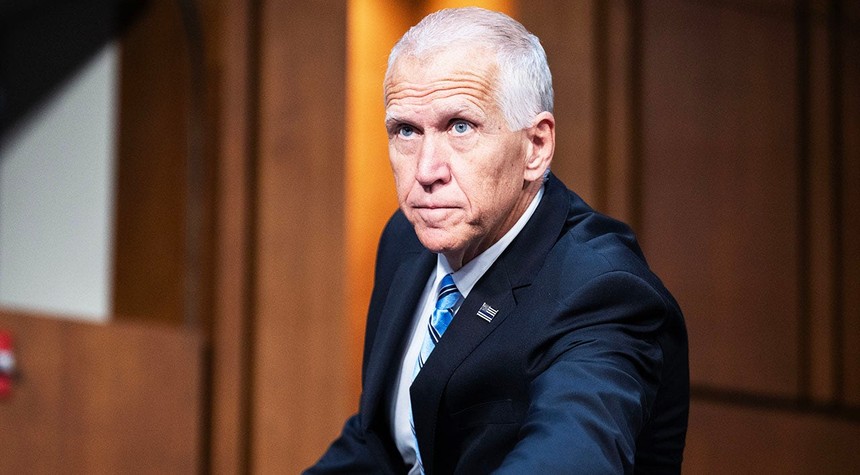
Here’s something you don’t see every day. A Republican senator, one who’s already announced he won’t seek reelection, just parked himself squarely in front of the Trump administration’s plans for the Federal Reserve. Sen. Thom Tillis of North Carolina said Friday he’ll block Kevin Warsh’s nomination to chair the Fed until the Justice Department drops its criminal investigation into current Chairman Jerome Powell.
Let that sink in for a moment.
Tillis isn’t some never-Trumper looking for cable news hits. He’s been a reliable conservative voice who’s supported the president on most major issues. But he’s drawn a line here, and it’s worth understanding why this matters beyond the usual Washington theater.
“Kevin Warsh is a qualified nominee with a deep understanding of monetary policy,” Tillis wrote on X. That’s the polite part. Then comes the hammer: “However, the Department of Justice continues to pursue a criminal investigation into Chairman Jerome Powell based on committee testimony that no reasonable person could construe as possessing criminal intent.”
No reasonable person. Those three words carry weight.
The Bigger Picture Nobody’s Talking About
The Federal Reserve isn’t supposed to operate like a political football. Yeah, I know, everything in Washington becomes political eventually. But the Fed’s independence matters more than most people realize. When central bankers start looking over their shoulders wondering if their testimony to Congress might land them in criminal jeopardy, that changes the entire dynamic of how monetary policy gets made.
Powell testified before Congress. He answered questions. Apparently, something in that testimony triggered a DOJ probe. Tillis is essentially saying this whole thing looks like an attempt to intimidate or punish Powell for decisions the administration didn’t like. And he’s not having it.
This touches on something conservatives should care deeply about: the rule of law applied fairly, not weaponized for political ends. We spent years rightfully criticizing the Obama administration and then the Biden administration for what looked like politically motivated investigations. You can’t turn around and cheer when your guy does the same thing. That’s not principle. That’s just team sports.
A Lame Duck With Teeth
Tillis won’t be running for reelection. That frees him up considerably. He doesn’t need to worry about primary challenges or whether the base will turn on him. He can vote his conscience without calculating the political fallout. Some might call that courage. Others might say it’s just easier to be brave when you’re already walking out the door.
Either way, it matters. The Senate confirmation process gives individual senators real leverage, especially in tight votes. Tillis is using that leverage to force a conversation the administration probably doesn’t want to have.
Kevin Warsh, by most accounts, is genuinely qualified for the job. He served on the Fed’s Board of Governors from 2006 to 2011, navigating the financial crisis. He understands markets and monetary policy. Under normal circumstances, he’d likely sail through confirmation. But these aren’t normal circumstances.
What Happens Next
Tillis is demanding the DOJ inquiry be “fully and transparently resolved” before he’ll support any Fed nominee. That’s a significant roadblock. The administration has options, sure. They could try to ram the nomination through anyway. They could negotiate. They could drop the Powell investigation.
Each choice sends a message about how this administration views institutional independence. The Federal Reserve has weathered political pressure before. Paul Volcker faced intense criticism in the early 1980s for jacking up interest rates to break inflation. He did it anyway because he believed it was necessary. That independence, that ability to make unpopular decisions without fear of retaliation, is what makes the Fed work.
When you start investigating Fed chairs for their testimony, you erode that independence. Future chairs will be more cautious, more political, less willing to deliver hard truths. That’s bad for everyone, regardless of party affiliation.
The Conservative Case for Institutional Boundaries
Here’s where some on the right might push back. They’ll say Powell kept rates too low for too long, fueling inflation. They’ll say he deserves scrutiny. And you know what? Maybe they’re right about the policy critique. But there’s a difference between criticizing someone’s decisions and launching a criminal investigation into their congressional testimony.
Limited government means government power gets constrained by rules and norms, not just when it’s convenient. Free markets require stable, predictable institutions. You can’t have capitalism without confidence in the system’s basic fairness and independence.
Tillis gets this. He’s not defending Powell’s policy choices. He’s defending the process, the boundaries that keep government power in check. That’s a conservative position, even if it puts him at odds with a Republican administration.
Sometimes the hardest thing to do is tell your own side they’ve gone too far. Tillis just did that. Whether it changes anything remains to be seen.
Related: Graham to Johnson: You Crossed the Line and I Won’t Forget It