
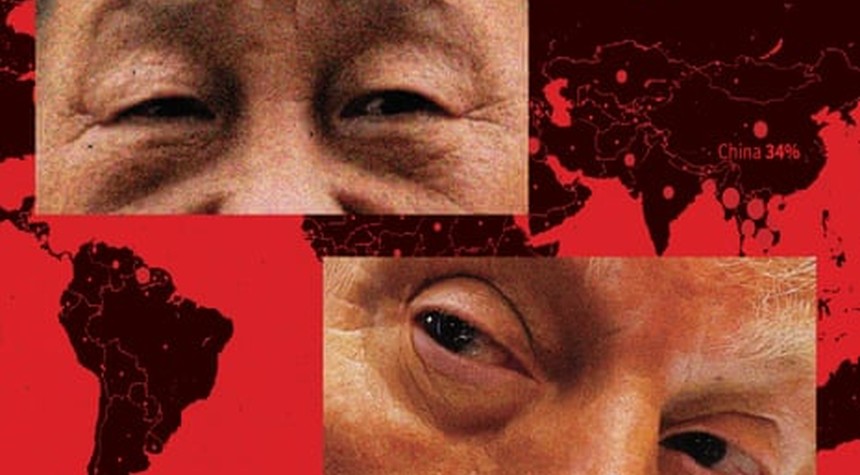
Donald Trump identified the problem correctly. China’s stranglehold on global manufacturing represents a genuine strategic threat to American interests and economic security. The communist regime in Beijing has spent decades building near monopolies on everything from pharmaceutical ingredients to rare earth minerals to the semiconductors that power modern life. That’s not free market competition. That’s economic warfare dressed up in trade agreements.
But identifying a problem and solving it are two different things entirely. And Trump’s approach to countering China looks less like strategic thinking and more like a toddler throwing dinner plates against the wall to see what sticks.
The tariff volleys that began on what the administration cheerfully called Liberation Day last year have accomplished something remarkable. They’ve managed to alienate every country we’d need as an ally in confronting China’s export juggernaut while simultaneously failing to articulate a coherent vision for what comes next. Canada’s prime minister is now courting Beijing. The European Union rushed to finalize trade deals with South America that had been gathering dust for years. China and Southeast Asian nations are deepening their own partnerships. You know what that is? That’s the opposite of effective diplomacy.
Here’s the thing about trade wars. They require allies, coordination, and a strategy that extends beyond next week’s news cycle. China accounts for roughly a third of global manufacturing output now, up from a mere 5% just a generation ago. That dominance didn’t happen by accident. It resulted from deliberate policy choices by Beijing and equally deliberate neglect by previous American administrations who convinced themselves that economic engagement would somehow liberalize China’s authoritarian government. Spoiler alert: it didn’t.
The threat is real and it’s growing. China has demonstrated repeatedly that it will weaponize its control over critical supply chains. When countries cross Beijing on Taiwan or human rights or technology transfers, suddenly shipments of essential components get delayed or cut off entirely. That’s not hypothetical. That’s documented behavior. Any serious strategy to counter China needs to account for this reality and build resilient alternative supply chains with partners who share our interest in preventing Chinese economic hegemony.
Instead, Trump opted for scattershot protectionism that treats friendly democracies like adversaries and raises costs for American manufacturers and consumers without a clear endgame. Tariffs can be useful tools when deployed strategically. But blanket tariffs with no apparent logic behind them? That’s just expensive noise.
The conservative case for confronting China has always been about preserving American sovereignty and protecting free markets from authoritarian manipulation. Free market capitalism requires actual freedom and actual markets. What China practices is state directed mercantilism designed to create dependencies that Beijing can exploit for geopolitical leverage. Opposing that system aligns perfectly with conservative principles of individual liberty and limited government. You can’t have either when a foreign dictatorship controls the supply chains your economy depends on.
But winning this fight requires the kind of patient coalition building and strategic discipline that seems entirely absent from current policy. We need Europe, Japan, South Korea, Australia, and other democracies working together to create alternatives to Chinese manufacturing dominance. We need coordinated investment in domestic production of critical goods. We need export controls that actually prevent sensitive technology from flowing to Beijing. And we need trade agreements with reliable partners that create genuine alternatives to Chinese suppliers.
What we don’t need is the current hot mess of random tariffs and burnt bridges with natural allies. The next administration, whether Republican or Democrat, will inherit this chaos and need to bring actual strategic thinking to the table. The fight against China’s economic aggression is necessary and right. The way we’re currently conducting that fight is neither.
Global trade won’t return to the open architecture we had before. That system failed to account for bad faith actors like China who exploited openness while maintaining closed markets at home. But the alternative doesn’t have to be isolation and economic self harm. It can be a coalition of free nations building resilient supply chains and holding China accountable for its predatory practices.
Trump picked the right battle. China’s export juggernism and monopolistic control over strategic inputs needed confronting. But strategy matters as much as conviction. Maybe more. And right now, American trade policy resembles a bar fight more than a chess match. We deserve better. Our economy deserves better. And if we’re serious about countering China’s threat to free markets and American sovereignty, we need to start acting like it.
Related: The Hunger Strike That Wasn’t: How Snack Sales Expose the Delaney Hall Deception