
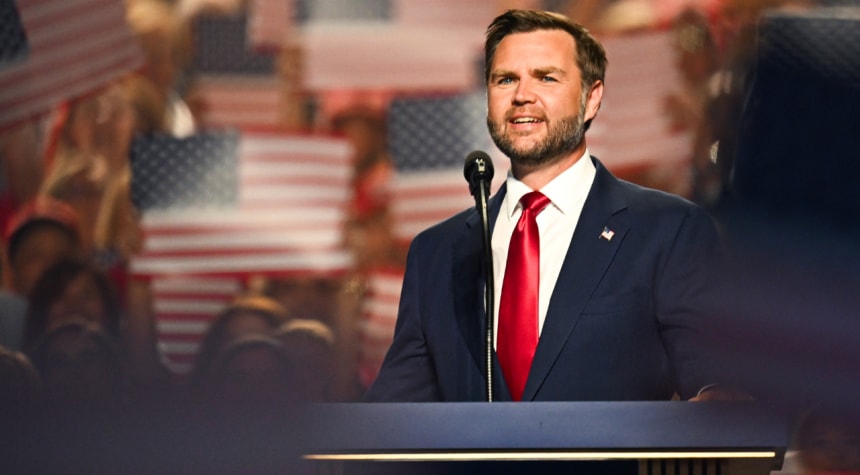
The Republican Party just got handed its head on a platter, and JD Vance isn’t pretending otherwise. While other GOP leaders fumble for excuses or retreat into comfortable denial, the vice president did something remarkable Wednesday morning. He told the truth.
"The reason we lost is the war," Vance wrote. Simple. Direct. Devastating.
He’s talking about Iran, of course. The conflict that dragged on longer than anyone predicted and cost far more than anyone imagined, both in blood and political capital. The war that Trump’s own pollsters warned would be poison at the ballot box. The war that just handed Democrats control of the Senate with a margin so wide it’ll take Republicans until 2034 to even dream about clawing it back.
Think about that for a second. Texas went blue. Kansas, ruby red Kansas, flipped. South Carolina teetered. This wasn’t a loss. It was a rout, a bloodbath, a political extinction event. And Vance isn’t interested in pretending it was anything else.
What’s fascinating here isn’t just that Vance broke from Trump on foreign policy. It’s how calculated this move appears to be. Sources say there was a White House meeting Wednesday morning, ostensibly about aligning everyone on post-midterm messaging. One source called it a regular senior staff meeting. Another suggested it was damage control after the electoral carnage.
Either way, Vance walked out of that room and promptly staked his claim to what insiders are calling the "new right." This isn’t Mike Pence denouncing Trump after January 6th. This is something far more sophisticated and, frankly, more dangerous to Trump’s legacy. Vance is courting Trump voters, not abandoning them. He’s telling them what they already believe but were afraid to say out loud: that Trump got it wrong on Israel, that the war in Iran was a catastrophic mistake, that America First means staying out of Middle Eastern quagmires.
The four tasks Vance outlined read like a manifesto for disaffected Trump supporters. End the war in Iran. Focus on the cost of living and inflation. Put America first. Change our relationship with Israel.
That last one cuts deep. Trump’s friendship with Benjamin Netanyahu has been ironclad, unshakeable, almost bizarrely personal. But a significant chunk of the Republican base, especially younger voters who came up during Trump’s 2016 insurgency, never signed up for what they see as endless support for Israeli foreign policy adventures. They wanted closed borders and good jobs, not another generation of American entanglement in the Middle East.
Vance understands this better than almost anyone in Republican politics. He’s spent two years largely toeing the White House line, playing the loyal vice president, keeping his head down. But he’s also been one of the few administration voices expressing skepticism about the Iran conflict from the start. Trump himself admitted earlier this year that Vance was "maybe less enthusiastic" about attacking Iran. That qualifier, "maybe," is doing some heavy lifting there.
Now Vance is positioning himself as the heir to Trump’s movement, but a smarter, more disciplined version. One that learns from mistakes instead of doubling down on them. One that actually delivers on America First instead of just talking about it while launching military operations that cost Republicans the Senate.
The timing matters enormously. Vance is widely considered a top contender for 2028, along with Secretary of State Marco Rubio. But Rubio is tied to the administration’s foreign policy in ways Vance is now actively distancing himself from. Rubio can’t credibly claim he opposed the Iran war. Vance can, and he’s making sure everyone knows it.
You know what’s really interesting? The message Vance is sending isn’t "I’m better than Trump." It’s "I’m the real Trump, the Trump you voted for in 2016 before he got captured by the Washington foreign policy establishment." That’s a powerful argument, especially after a midterm wipeout that saw Democrats take 54 Senate seats to the GOP’s 44, with Alaska still counting votes and likely to push that margin even wider.
Trump couldn’t transfer the love of his supporters to down-ballot Republicans. That much is obvious now. But Vance is betting he can capture that love for himself by promising to deliver what Trump couldn’t: an actual end to foreign wars, a real focus on working families struggling with inflation, and borders that mean something.
This is a gamble. Breaking with a sitting president you serve as vice president is risky business, even when you’re doing it carefully. But Vance clearly believes the GOP base is ready for this message. More than ready. Desperate for it, actually.
The Republican Party is staring into an abyss right now. They just lost seats they thought were safe for generations. They’re facing six years in the Senate minority, maybe more. They need someone who can articulate why this happened and, more importantly, how to fix it.
Vance is stepping into that void with both feet. He’s telling Republican voters: I see you, I hear you, and I know why you’re angry. The war was a mistake. The establishment led us astray. But there’s a path forward, and it starts with admitting the truth about what went wrong.
Whether that message resonates broadly enough to carry Vance to the presidency in 2028 remains to be seen. But one thing’s certain: the fight for the soul of the Republican Party just got a lot more interesting, and JD Vance just announced he’s in it to win it.
Related: Trump’s Loyalty to Hegseth Faces Its Biggest Test After Midterm Bloodbath