
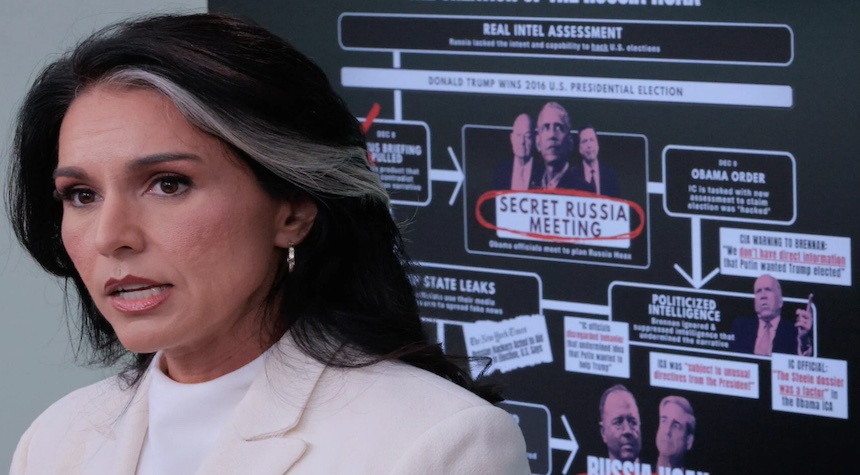
The Director of National Intelligence under the Trump administration, Tulsi Gabbard, intends to substantially reduce her office’s workforce. Reports indicate a decrease of 40% and a budget cut of $700 million.
To understand this fully, we should note that Gabbard’s reasoning is based on her belief that over the past two decades, the Office of the Director of National Intelligence (ODNI) has expanded excessively, become inefficient, and been plagued with unauthorized leaks of classified intelligence and a misuse of power.
Must Read: Security Fears Soar as 536 Drones Appear at German Military Bases
The significance becomes clear when we consider Gabbard’s statement that the ODNI and the intelligence community “must make serious changes to fulfill its responsibility to the American people and the U.S. Constitution by focusing on our core mission: Find the truth and provide objective, unbiased, timely intelligence to the President and policymakers.” Thus, the envisioned overhaul aims to streamline operations and align them with the office’s primary mission.

Critics worry about the possible impact on intelligence operations, while proponents argue for efficiency and cost-saving measures. The ODNI was established in the wake of the Sept. 11, 2001, attacks to enhance intelligence sharing and operations. In a letter to her staff, Gabbard described the future vision for the ODNI as “a leaner, faster, and more agile institution refocused on integrating the IC [intelligence community], upholding tradecraft standards, and delivering timely, unbiased intelligence to the president and policymakers,” according to ABC News.
This indicates a growing concern about the ODNI’s size and operation. There seems to be a significant reshaping of the national intelligence framework unfolding in front of us. This is a story that undoubtedly will continue to unfold and warrants our attention.