
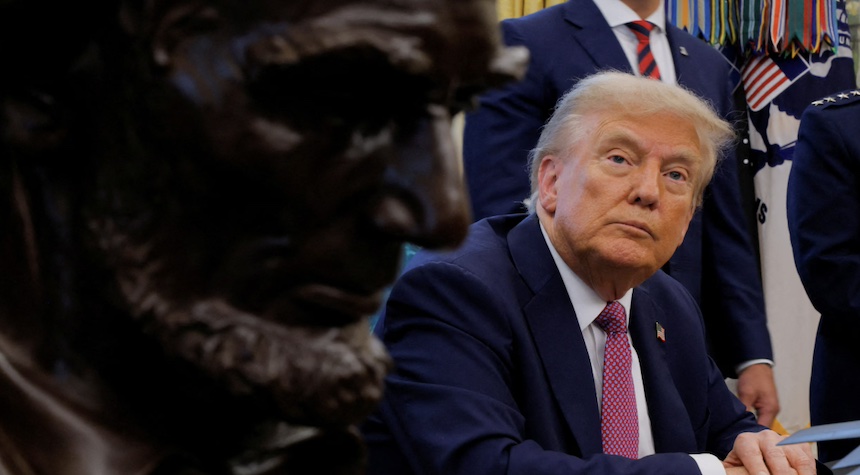
U.S. President Donald Trump, as we understand today, has signed an executive order. This order offers tariff exemptions to trading partners who make deals on industrial exports such as nickel, gold, as well as pharmaceutical compounds and chemicals. The exemptions are set to commence at 12:01 a.m. EDT/0401 GMT on Monday.
For the past seven months, Trump has focused his efforts on enforcing significant tariff increases. This strategy is aimed at reshaping the global trading system, reducing the U.S. trade deficit, and gaining concessions from trading partner countries during negotiations.
Also Read: House Oversight to Finally Unseal Epstein’s Secrets in Unredacted Files
The new executive order identifies over 45 categories for zero import tariffs from “aligned partners” who secure framework agreements to reduce Trump’s “reciprocal” tariffs and duties. These duties are imposed under the Section 232 national security statute. The new order brings U.S. tariffs in line with its commitments in existing framework deals, including those with allies such as Japan and the European Union.
The tariff reductions cover items that cannot be grown, mined, or naturally produced in the United States, or items that cannot be produced in sufficient volume to meet domestic demand. This development follows earlier reports that a White House official highlighted new carve-outs for some agricultural products, aircraft and parts, and non-patented articles for pharmaceutical use.
According to reliable sources, in cases where a country has negotiated a “reciprocal” trade deal with the United States, this will enable the U.S. Trade Representative, the Commerce Department, and customs to forgo tariffs on covered imports without a new executive order from Trump.
The order identifies zero-tariff items such as graphite, various forms of nickel, which is a pivotal ingredient in stainless steel manufacturing and electric vehicle batteries. Also included are compounds used in generic pharmaceuticals, including the anesthetic lidocaine and reagents used in medical diagnostic tests. The order also allows for the removal of tariffs on natural graphite, neodymium magnets, light-emitting diodes (LEDs), and eliminates prior tariff exemptions on certain plastics and polysilicon, a crucial component of solar panels.
In conclusion, the new executive order is a significant development in U.S. trade policy, as it offers certain exemptions to trading partners under specific conditions. This move can potentially reshape the nature of the U.S.’s trading relationships and the overall global trading system. However, some questions remain unanswered, and it will be interesting to see how these changes impact the U.S. trade deficit and the country’s trading relationships.