
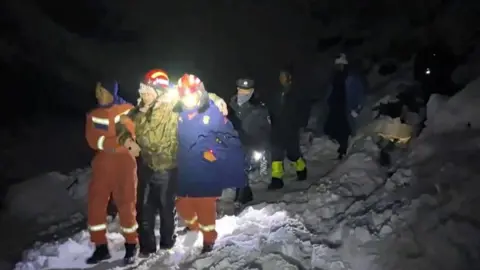
In a testament to both human resilience and the raw power of nature, Chinese authorities successfully orchestrated the rescue of 580 hikers who found themselves trapped by a devastating blizzard near Mount Everest. The operation, which concluded Tuesday, stands as a stark reminder of nature’s unpredictability and the critical importance of robust emergency response systems.
The crisis unfolded during China’s Golden Week holiday when hundreds of adventurous tourists, drawn by October’s typically favorable conditions, ventured onto the Karma Valley hiking trail. What began as a standard trek quickly deteriorated into a life-threatening situation as unprecedented snowfall buried the eastern slopes of Everest, stranding hikers at a perilous altitude of 4,900 meters (16,000 feet).
Let’s be clear about the facts: This wasn’t merely an inconvenient weather event. The severity of the situation became evident as experienced mountaineers, including those with dozens of Himalayan expeditions under their belts, reported never witnessing such extreme conditions. The snow accumulated to depths of one meter, creating potentially lethal circumstances for even well-prepared hikers.
The rescue effort, mobilizing police, firefighters, and hundreds of local Tibetan volunteers, demonstrated the effectiveness of swift, coordinated action. Along with the tourists, 300 support staff, including local guides and yak handlers, were safely evacuated to the township of Qudang and surrounding areas.
Multiple firsthand accounts underscore the gravity of the situation. Dong Shuchang, 27, reported several members of his 20-person group showing signs of hypothermia. Another survivor, Eric Wen, described the desperate measures required to prevent their tents from collapsing, necessitating snow removal every 10 minutes throughout the night.
This incident raises serious questions about weather monitoring systems and tourism management during traditionally “safe” seasons. While October has historically provided ideal hiking conditions, this event suggests a potentially dangerous shift in weather patterns that demands attention from both authorities and adventure tourism operators.
The broader regional impact cannot be ignored. In nearby Qinghai province, one hiker succumbed to hypothermia and altitude sickness, while 137 others required emergency evacuation. Meanwhile, Nepal reported over 50 casualties from related severe weather events, including flooding and landslides.
This successful rescue operation, while commendable, serves as a sobering reminder of the risks inherent in mountain tourism and the absolute necessity of maintaining robust emergency response capabilities. It also highlights the critical importance of personal responsibility and proper preparation when undertaking such ambitious outdoor adventures.
The facts are clear: While human ingenuity and determination prevailed in this instance, nature remains an unpredictable and formidable force that demands our utmost respect and preparation. As we celebrate this successful rescue, we must also learn from it to prevent future tragedies.