
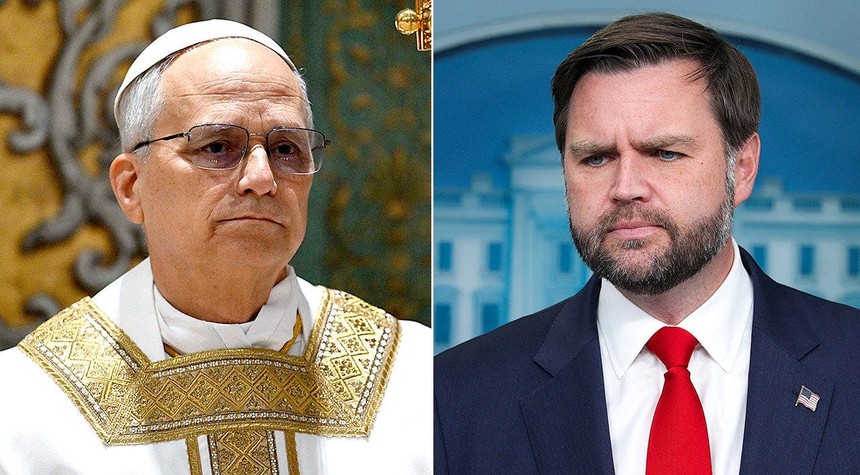
JD Vance just said what needed saying. The Vice President told Pope Leo XIV to stick to matters of morality and let the President of the United States handle American public policy. Simple as that. And honestly, it’s refreshing to hear someone draw such a clean line between spiritual authority and national sovereignty.
The first American pope has been running his mouth about Trump administration policies on immigration and the conflict with Iran. Over the weekend, Trump fired back on Truth Social, calling Pope Leo weak on crime and terrible for foreign policy. The president added that he doesn’t want a pope who thinks it’s okay for Iran to have a nuclear weapon. You know what? Fair point.
Vance appeared on Special Report with Bret Baier Monday night and didn’t mince words. “I certainly think that in some cases, it would be best for the Vatican to stick to matters of morality,” he said. “And let the President of the United States stick to dictating American public policy.” It’s a statement that cuts through all the diplomatic niceties and gets right to the heart of the matter. The pope has his job. The president has his. They’re not the same job.
Now, the Catholic Church has every right to preach peace. Blessed are the peacemakers and all that. Pope Leo insists he’s not trying to be political, that he’s just delivering the message of the Gospel. Fine. But when you start weighing in on specific foreign policy decisions, when you criticize how America handles Iran or secures its borders, you’ve crossed from spiritual guidance into the political arena whether you admit it or not.
Vance, who converted to Catholicism and has been open about his faith journey, didn’t seem particularly bothered by the tension. “When they’re in conflict, they’re in conflict. I don’t worry about it too much, Bret. I think it’s a natural thing,” he said. He’s right. These are two powerful men with different responsibilities and different perspectives. Sometimes they’ll clash. The world won’t end because of it.
The vice president made clear that the White House respects the religious authority of Pope Leo and maintains a strong relationship with the Vatican. But respect doesn’t mean blind agreement. It doesn’t mean America outsources its national security decisions to Rome. We can have a good relationship with the Vatican while disagreeing on substantive questions from time to time. That’s called being adults.
This whole controversy also touches on something bigger. We’ve gotten so used to deferring to various authorities, whether they’re tech executives or international organizations or religious leaders, that we’ve forgotten something fundamental. America makes its own decisions. We don’t need approval from global institutions to protect our interests. We don’t need permission from foreign voices, even respected ones, to secure our borders or confront threats like Iran.
The media also tried stirring up drama over an AI-generated image Trump shared and later deleted that supposedly depicted him as Jesus. Vance dismissed it as a joke that people misunderstood. The whole thing feels like manufactured outrage designed to distract from the real issue, which is whether the pope should be lecturing America on how to conduct its affairs.
Here’s the thing about Pope Leo being the first American pope. Some people thought it would create this special bond with the United States, that he’d understand our perspective better. Instead, we’re seeing the opposite. Maybe distance provided clarity. Maybe being an American pope means he feels extra pressure to prove his independence from American interests. Either way, his nationality doesn’t give him special insight into what’s best for U.S. foreign policy.
Vance noted this isn’t the first time these two leaders have disagreed and it won’t be the last. That’s probably the healthiest approach. No drama. No hand-wringing. Just an acknowledgment that different institutions serve different purposes and sometimes those purposes don’t align perfectly.
The Vatican can advocate for peace. The White House has to ensure security. Those aren’t always compatible goals, especially when dealing with a regime like Iran that’s been working toward nuclear weapons while chanting death to America. Peacemaking sounds beautiful in theory. In practice, it sometimes requires strength and the willingness to confront evil rather than accommodate it.
This is where conservative principles matter most. Individual liberty means Americans get to chart their own course. Limited government means we don’t bow to external authorities trying to dictate our policies. Strong national defense means we take threats seriously even when others counsel weakness. Traditional values include respecting religious institutions without surrendering our sovereignty to them.
Vance handled this exactly right. Respectful but firm. He didn’t attack the pope’s spiritual role. He simply reminded everyone that American public policy belongs in American hands. That’s not controversial. That’s common sense. And it’s about time someone said it plainly.
Related: The Biden DOJ Built Cases Against Pro-Life Americans With Help From Abortion Activists