
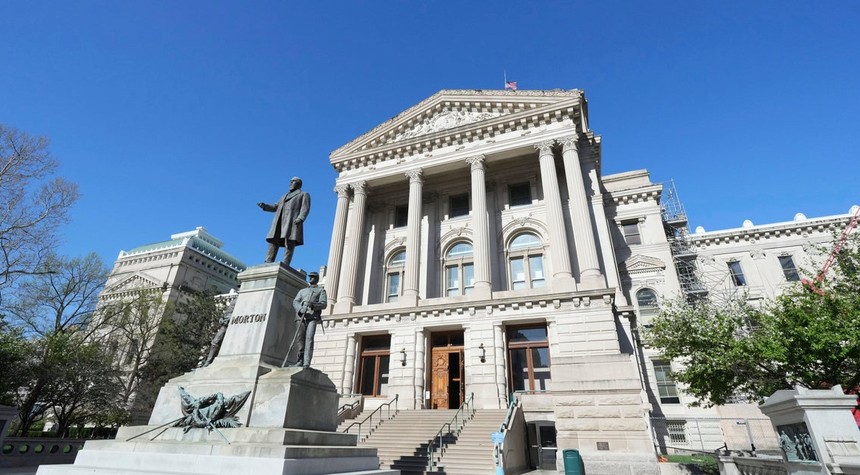
Indiana’s Republican legislative leaders announced Tuesday they will reconvene next week to consider a redistricting plan that could eliminate Democrats entirely from the state’s congressional delegation, marking a complete reversal after months of resistance to pressure from President Trump.
House Speaker Todd Huston stated the lower chamber would reconvene Monday to take up redrawing the state’s congressional map. State Senate President Pro Tem Rodric Bray announced the Senate would reconvene December 8 to make a final decision on any redistricting proposal from the House.
Let us be clear about what happened here. This is not normal legislative procedure. This is capitulation following a sustained pressure campaign that allegedly included harassment and threats against state legislators and their families.
President Trump congratulated Indiana Republicans, posting on social media that he was “glad to hear the Indiana House is stepping up to do the right thing.” The president won Indiana by 19 points, and the state currently sends seven Republicans and two Democrats to Congress. The proposed redistricting would likely add two more Republican seats by redrawing districts currently held by Democrats.
Here is where this gets problematic. Governor Mike Braun called for a special session last month after pressure from Trump and his administration. But when the legislature convened in November, Bray insisted the votes were not there, and lawmakers simply agreed to meet again in January for the regular session.
What changed between November and now? According to multiple reports, the president and his allies stepped up attacks on Republican legislators, with Trump calling some out by name on social media and promising primary challenges. Indiana Republicans have reported being victims of harassment and swatting attempts. State Senator Andy Zay confirmed a bomb threat was called in to his business. Braun himself acknowledged that threats to lawmakers, including those received by him and his family, “need to stop.”
Bray acknowledged Tuesday that the redistricting issue “has received a lot of attention and is causing strife here in our state.” That is quite the understatement.
Now, let us address the substantive policy question. Redistricting normally occurs every ten years following the decennial census. This is how it has been done for generations, and there are good reasons for that stability. Republicans hold a narrow majority in the House going into the 2026 midterm elections, and Trump has been pushing Republican-led states to undertake mid-decade redistricting to draw more favorable districts.
Texas Republicans convened this summer to redraw congressional maps to potentially gain up to five more seats. That effort prompted California Governor Gavin Newsom to push forward with a ballot initiative to redraw California’s map to net up to five seats for Democrats, which voters overwhelmingly approved on November 4.
This is a dangerous precedent regardless of which party benefits. If mid-decade redistricting becomes normalized, every state with unified party control will simply redraw maps whenever politically convenient. This transforms redistricting from a once-per-decade process based on population changes into a perpetual partisan weapon.
The facts are these: Indiana Republicans initially resisted this pressure because they understood the problematic nature of mid-decade redistricting. They reversed course only after sustained attacks and alleged threats. That is not principled governance. That is submission to political intimidation.
Republicans should win seats by advancing better policies and winning elections fairly under existing rules, not by changing the rules mid-game when convenient. This approach will invite retaliation and escalation, creating a redistricting arms race that undermines public confidence in the electoral process itself.
Related: Trump Jokes Biden’s Turkey Pardons Were Invalid Due to Autopen Use