The Trump administration has designated Colombia’s Gulf Clan as a foreign terrorist organization, marking a significant escalation in efforts to dismantle Latin American drug cartels that continue flooding American streets with cocaine.
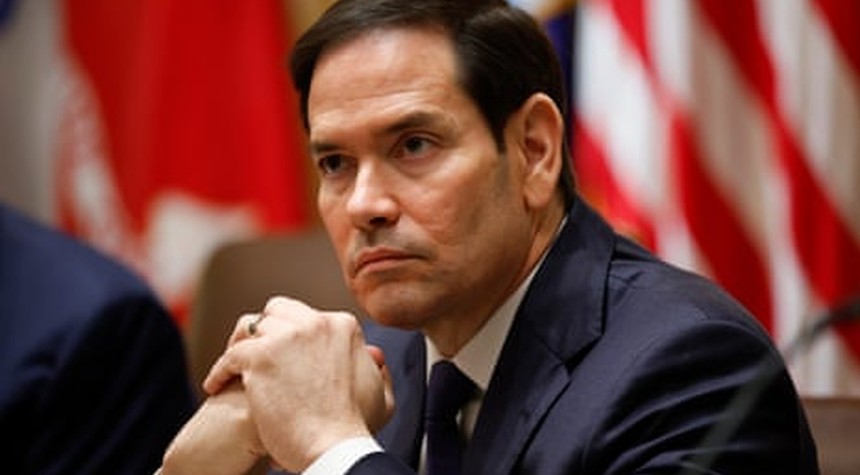
Secretary of State Marco Rubio announced the designation on Tuesday, describing the Gulf Clan as a “violent and powerful criminal organisation with thousands of members” whose primary revenue stream is cocaine trafficking used to fund violent criminal activities. The facts are clear: this is not a political movement. This is a ruthless criminal enterprise masquerading as something more legitimate.
The Gulf Clan, which operates under the name Gaitanist Self-Defense Forces of Colombia, represents Colombia’s largest and most powerful illegal armed group. The organization maintains a presence in at least 20 Colombian departments and controls critical drug and human smuggling routes through the Darién Gap. These are the same routes facilitating illegal immigration into the United States, creating a dual threat to American national security.
Here is what matters: the Gulf Clan’s roots trace back to far-right paramilitary forces, and despite recent attempts to rebrand itself as a political movement similar to Colombian insurgent factions, the organization lacks any coherent political ideology. This transparent effort to gain legitimacy and secure favorable conditions at potential peace negotiations should fool nobody. When your primary business model involves trafficking cocaine and controlling smuggling routes, you are not a political movement. You are a criminal enterprise, period.
The designation represents the first such action under the current Trump administration, which has already targeted six cartels in Mexico and two in Venezuela. This aggressive approach reflects a fundamental recognition that the war on drugs requires treating these organizations as the terrorist threats they are.
The move will likely intensify already strained relations between President Trump and Colombian President Gustavo Petro, a leftist leader who has strongly opposed Trump’s pressure campaign against Venezuela and criticized recent US airstrikes that have killed more than 90 people off Colombia’s Pacific and Caribbean coasts. The two leaders have engaged in increasingly heated public exchanges for weeks.
Trump warned last week that Petro “is going to have himself some big problems if he doesn’t wise up” after singling out Colombia as a potential target in the drug war. Petro responded with his own threat, warning Trump not to “wake the jaguar” with military action threats.
The fundamental disagreement centers on methodology. The Trump administration has justified airstrikes on vessels allegedly transporting drug shipments as legitimate actions in the war on drugs. Petro has characterized these attacks as “murder.” On Tuesday morning, US Southern Command announced new strikes on three vessels near Colombia’s Pacific coast, resulting in eight deaths.
This represents a critical divergence in approach. Either nations cooperate in dismantling drug cartels destroying American communities, or they become obstacles to that mission. The Trump administration has made clear which side of that equation it prefers.
Other Colombian criminal organizations, including the National Liberation Army and dissident factions of the Revolutionary Armed Forces of Colombia, have appeared on the US foreign terrorist organizations list for years. The Gulf Clan’s addition simply acknowledges reality: these are not freedom fighters or political movements. They are narco-terrorists whose operations directly threaten American lives and national security.
The designation carries significant legal and financial implications, enabling enhanced prosecution tools and asset seizures while sending an unmistakable message to criminal organizations throughout Latin America.
Related: Pentagon Escalates Investigation Into Senator Mark Kelly Over Military Conduct Allegations