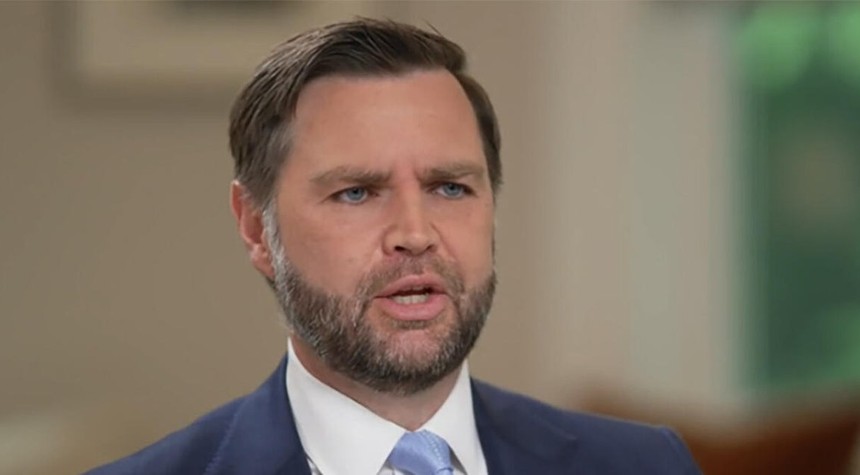
JD Vance spent Monday morning doing what vice presidents do best: damage control on a deal most Americans haven’t even seen yet. The Trump administration’s Iran agreement, announced Sunday with all the fanfare of a major diplomatic breakthrough, is already generating the kind of confusion that makes you wonder if anyone actually knows what they signed up for.
Here’s the setup. Vance went on CBS and flatly denied that Iran would receive billions of dollars in assets as part of this new arrangement. “When people say that billions of dollars of assets will be released, that’s not true,” he said with the kind of certainty that should inspire confidence. Except there’s a problem. Iran’s Revolutionary Guard, those charming folks who run half the country’s economy and most of its regional terror operations, came out the same day claiming they’re getting $24 billion in frozen funds. Half of that supposedly arrives before final negotiations even begin.
You know what’s fascinating about this disconnect? It’s not new. We’ve been down this road before with Iran, and the scenery never changes. The Obama administration gave us the JCPOA, that magnificent piece of diplomatic theater that somehow managed to both restrict and enable Iran’s nuclear ambitions. They promised accountability and delivered pallets of cash in the dead of night. The Iranians smiled, took the money, and kept building centrifuges in mountain bunkers while funding Hezbollah’s summer camps.
Now we’re supposed to believe this time is different. Vance insists the $24 billion figure “just doesn’t appear anywhere in any of the texts” they’ve discussed with the Iranians. He’s quick to point out that hardliners in Tehran will misrepresent the deal to sell it domestically. Fair enough. Iranian politics makes Washington look like a church picnic. But here’s the thing that sticks in your throat: if there’s such a massive discrepancy between what we say the deal contains and what they say it contains, maybe we shouldn’t be signing anything until we figure out who’s lying.
The vice president did acknowledge they’re open to unfreezing assets, just not $24 billion worth. The real prize, according to Vance, is unsanctioning Iran’s economy. That’s the carrot dangling in front of the mullahs, the promise of rejoining the world economy if they just promise, pinky swear, to give up their nuclear weapons program. Because nothing says “trustworthy partner” like a theocratic regime that’s been chanting “Death to America” since 1979.
Let’s talk about what this deal supposedly accomplishes. Vance claims it ensures Iran will never have a nuclear weapon while opening the Strait of Hormuz. That’s a big deal, actually. The Strait handles about 21 percent of global petroleum liquids. When Iran gets frisky and starts seizing tankers or laying mines, oil prices jump and Americans feel it at the pump. So keeping that waterway open matters for our economy and our allies. The question is whether we’re paying too high a price for that access.
The enforcement mechanism sounds like it was drafted by people who’ve never dealt with Iranian negotiators. Vance didn’t rule out using U.S. military forces to ensure compliance, though he doesn’t think it’ll be necessary. They’re planning to work with the U.N. nuclear watchdog to destroy Iran’s enriched uranium stockpile. The technical details, he says, will get sorted out in talks starting Friday. Whether America plays an observer role or something more active remains to be seen.
This is where conservative principles should guide our thinking. We believe in peace through strength, not peace through wishful thinking. Ronald Reagan trusted but verified with the Soviets, and even that took years of hard negotiation backed by military superiority the Russians couldn’t match. Iran isn’t the Soviet Union. It’s a regional power with asymmetric capabilities and a religious ideology that views martyrdom as victory. You can’t negotiate with that the same way you’d negotiate a trade deal.
The Trump administration promises to release the full text of the agreement this week. Vance says they want the American people to see it, which is refreshing compared to the usual diplomatic secrecy. There are technical protocols to work through, he explains, but transparency is the goal. We’ll see if that actually happens. Washington has a funny habit of promising openness while burying the details in classified annexes and technical appendices that require security clearances to read.
What bothers me most isn’t the specific terms, which we still don’t fully know. It’s the pattern. We keep approaching Iran like they’re a normal country that responds to normal incentives. They’re not. This is a regime that spends billions supporting terrorist proxies from Yemen to Lebanon while its own people protest in the streets over economic conditions. They’ve been playing Western negotiators for decades, extracting concessions while never fully delivering on promises. Every time we think we’ve found the magic formula, they find another way to game the system.
The stakes here couldn’t be higher. A nuclear Iran doesn’t just threaten Israel, though that’s reason enough to prevent it. It destabilizes the entire Middle East, triggers a regional arms race, and puts nuclear materials within reach of terrorist organizations. The Saudis have already said they’ll pursue their own nuclear program if Iran gets the bomb. Egypt might follow. Turkey’s not far behind. Suddenly you’ve got the world’s most volatile region bristling with nuclear weapons, and we’re supposed to trust that cooler heads will prevail.
Maybe this deal really is different. Maybe Vance is right and the Iranians are just posturing for their domestic audience. Maybe the verification protocols will actually work this time, and we’ll have real-time intelligence on every centrifuge and every gram of enriched uranium. Maybe opening their economy will moderate their behavior and strengthen reformist elements. Maybe pigs will fly formations over Tehran.
Or maybe we’re about to learn the same lesson we’ve learned before: that deals with dishonest brokers aren’t worth the paper they’re printed on, no matter how many diplomats smile for the cameras.
Related: Jeffries Gave Away the Game When He Refused to Say No on Impeachment