
When Good Ideas Win Anyway
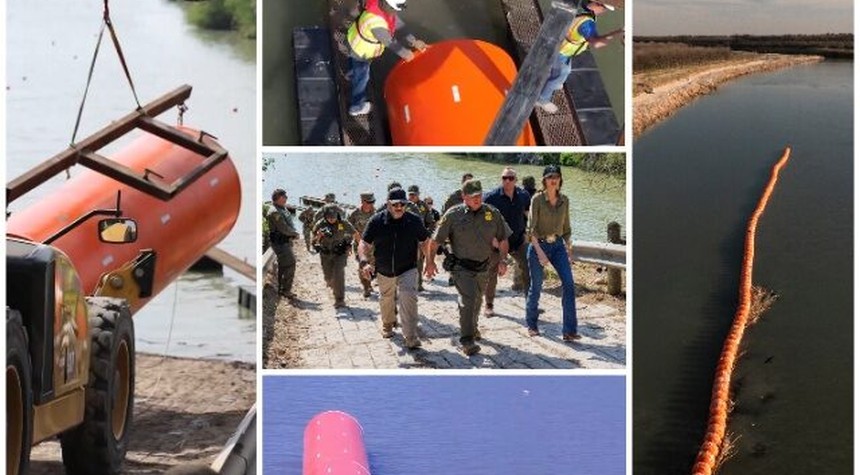
There’s something almost poetic about watching the federal government adopt the exact same border security strategy it spent years fighting in court. The Department of Homeland Security just announced it’s installing 500 miles of floating buoy barriers along the Texas-Mexico border. Sound familiar? It should. Governor Greg Abbott pioneered this approach under Operation Lone Star, and the Biden administration fought him tooth and nail over it.
Now the guy running the federal program is Michael Banks, who used to be Abbott’s Border Czar. You can’t make this stuff up.
Banks announced Friday that U.S. Customs and Border Protection started dropping these floating barriers into the Rio Grande in South Texas. He called them “Game Changers!” on social media, which feels about right. The plan calls for more than 500 miles of these things, stretching across some of the most vulnerable sections of our southern border.
Here’s what makes this whole situation so frustrating and so validating at the same time. Texas proved the concept worked. Abbott’s team deployed a few thousand feet of buoys, and they did exactly what common sense said they would do. They stopped illegal crossings cold in those areas. The barriers work because they’re genuinely intimidating and physically effective. One commenter on social media put it plainly: “No sane person would go near these buoys! They are formidable! And, No, you cannot swim underneath them!”
The Technology That Wasn’t Supposed to Work
Remember when critics said these buoys were dangerous, inhumane, possibly illegal? The lawsuit machinery cranked up. Environmental concerns got thrown around. There were questions about jurisdiction and international waterways. All the usual roadblocks appeared whenever someone tries something that might actually secure the border.
But the technology worked anyway. And now it’s federal policy.
President Trump ordered the first 17 miles installed back in January. The funding came from an unlikely source too. The FY21 CBP budget, money that sat unused during the Biden years, is now paying for barriers that Biden’s Justice Department once tried to remove. The pilot program went into the Rio Grande Valley Sector near Cameron County, and it’s expanding from there.
This isn’t just about buoys, though. It’s about what happens when states are forced to solve problems the federal government won’t touch. Texas spent state money, faced federal lawsuits, weathered media criticism, and built something that worked. Now Washington is scaling it up nationwide because reality has a way of winning arguments that politics can’t.
The broader lesson matters here. Border security isn’t complicated when you’re allowed to actually secure the border. Physical barriers work. Technology works. Enforcement works. These aren’t radical concepts. They’re basic governance.
What Abbott Started, Trump Finished
The transition from state innovation to federal adoption happened because personnel is policy. Michael Banks didn’t just switch jobs. He brought institutional knowledge and proven strategies with him. He knows these buoy systems work because he oversaw their deployment when Texas was doing this alone.
That continuity matters more than people realize. How many good ideas die because nobody in power understands them well enough to implement them? How many effective programs get abandoned because the people who made them work move on and nobody bothers learning what they did?
Banks kept the knowledge alive. Now it’s going nationwide.
The Big Beautiful Bill that passed Congress earlier this year provided additional funding for border security measures beyond the buoys. We’re seeing a comprehensive approach finally take shape. Barriers in the water, technology on the ground, personnel where they’re needed. It’s almost like having a strategy works better than pretending the problem doesn’t exist.
Texas taxpayers funded the research and development phase of this program whether they meant to or not. The state took the political heat, fought the legal battles, and proved the concept. Now the federal government gets to benefit from all that groundwork.
Some might call that unfair. I call it vindication.
The politics of border security have always been absurd. One administration sues a state for putting barriers in the river. The next administration installs 500 miles of the same barriers. Meanwhile, the border itself doesn’t care about election cycles or party platforms. It just sits there, either secured or not secured.
For years now, we’ve watched this pattern repeat. States try to protect their own borders because Washington won’t. Washington sues the states. Courts argue about jurisdiction. Nothing gets better. Then finally, someone with actual authority decides to govern instead of posture, and suddenly the impossible becomes routine.
These buoys won’t solve everything. No single measure ever does. But they’ll stop illegal crossings in 500 miles of river that were previously wide open. That’s 500 miles where Border Patrol agents can focus on other threats instead of water rescues and processing. That’s 500 miles where cartels lose revenue and operational flexibility.
It’s a start. A real one.
Related: Eric Swalwell’s Governor Bid Gets Cash From Beijing-Linked Lawyers