
When Defiance Becomes Obstruction
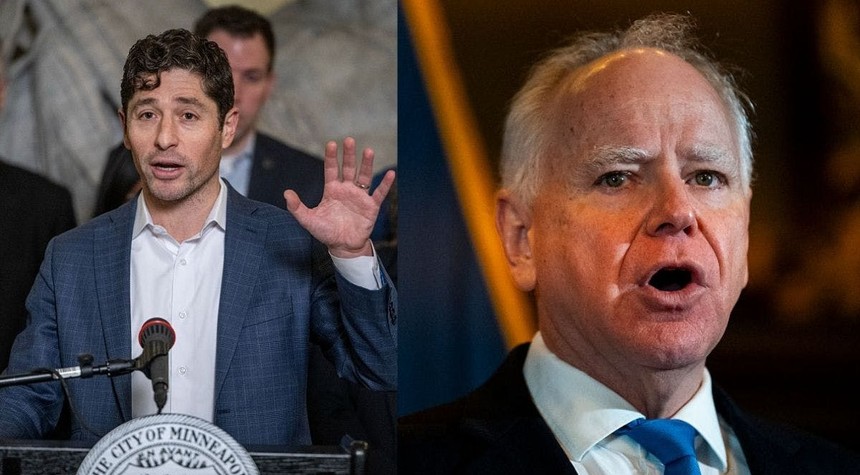
Here’s what happens when elected officials forget they don’t get to pick which federal laws they’ll allow to be enforced: the Justice Department comes knocking. Minnesota Governor Tim Walz and Minneapolis Mayor Jacob Frey are learning this lesson the hard way. They’re now under federal investigation for allegedly conspiring to obstruct Immigration and Customs Enforcement operations in their state.
Let that sink in for a moment. We’re not talking about policy disagreements anymore. We’re talking about potential criminal conspiracy.
The DOJ is examining whether Walz and Frey violated 18 U.S.C. Section 372, a federal statute that makes it illegal for two or more people to use force, intimidation, or threats to prevent federal officers from doing their jobs. According to CBS News, investigators are scrutinizing inflammatory statements both men made about ICE agents during the Trump administration’s immigration enforcement surge in Minnesota.
Deputy Attorney General Todd Blanche didn’t mince words Wednesday when he called out what he termed the “Minnesota insurrection.” He said it was a direct result of a failed governor and terrible mayor encouraging violence against law enforcement. Then he made it personal: “Walz and Frey, I’m focused on stopping YOU from your terrorism by whatever means necessary. This is not a threat. It’s a promise.”
That’s not typical government speak. That’s a line in the sand.
The Rhetoric That Got Them Here
You know what’s fascinating about this situation? It illustrates perfectly how the left’s sanctuary state obsession has evolved from simple noncompliance into active resistance. There’s a difference between declining to help federal agents and actively working to prevent them from executing lawful operations. One is arguably within a state’s rights (though morally questionable). The other crosses into criminal territory.
Both Walz and Frey have built their political brands on opposing Trump’s immigration policies. That’s their prerogative in a free country. But somewhere along the way, opposition morphed into obstruction. Their statements weren’t just expressing disagreement. According to federal investigators, they were potentially inciting interference with federal law enforcement.
This matters beyond Minnesota’s borders. Every governor and mayor watching this investigation needs to understand where the legal line sits. You can disagree with federal policy. You can refuse to dedicate state resources to federal enforcement. You can even be publicly critical. But you cannot conspire to physically prevent federal agents from carrying out their lawful duties.
Why This Investigation Matters
The broader principle here transcends immigration entirely. Imagine if a conservative governor decided federal gun regulations didn’t apply in his state and organized efforts to physically block ATF agents from enforcing those laws. The media would rightfully lose its mind. Federal law enforcement can’t function if state and local officials actively work to obstruct it.
We’ve watched for years as certain Democratic strongholds treated federal immigration law like a suggestion rather than settled statute. Sanctuary policies proliferated. Officials bragged about non-cooperation. Some even tipped off illegal immigrants about upcoming ICE operations. Each step normalized a little more defiance.
But this investigation represents a potential inflection point. The Trump administration is signaling that resistance has limits, and those limits are defined by criminal statutes, not political preferences.
The timing is notable too. Trump’s team has made immigration enforcement a centerpiece of its agenda. They’re not interested in symbolic gestures or half measures. They want results, and they’re willing to use every legal tool available to achieve them. That includes holding accountable state and local officials who actively undermine federal operations.
What Comes Next
Will charges actually be filed? That remains to be seen. Federal investigations don’t always result in indictments, and prosecutors will need to prove that Walz and Frey’s statements crossed from protected political speech into criminal conspiracy. That’s a high bar.
But the investigation itself sends a message. The era of consequence-free obstruction may be ending. State officials who’ve treated federal immigration enforcement as optional might want to consult with their attorneys about where exactly the legal boundaries lie.
Because apparently, the Justice Department is done asking nicely.
Related: JD Vance Returns to March for Life, Keeping His Promise to the Movement