
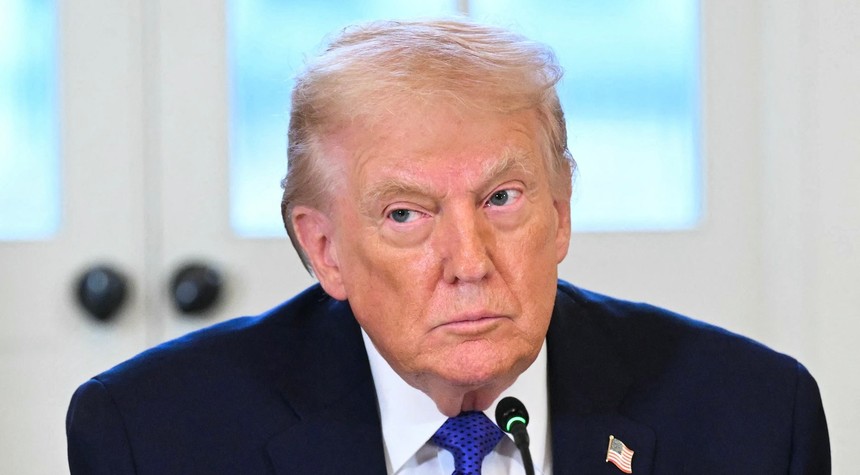
President Donald Trump escalated his campaign for American control of Greenland on Friday, declaring that the United States will pursue the strategic territory “whether they like it or not.” The statement represents the most forceful articulation yet of an administration policy that has generated significant controversy both domestically and internationally.
The facts are straightforward. Greenland occupies a position of extraordinary strategic importance in an era of renewed great power competition. The island sits astride critical Arctic shipping lanes and contains vast mineral deposits essential for modern technology and defense systems. Trump’s reasoning follows a clear logical chain: if America does not secure Greenland, either Russia or China will fill the vacuum.
“If we don’t do it, Russia or China will take over Greenland, and we’re not going to have Russia or China as a neighbor,” Trump stated during a White House meeting with oil executives focused on Venezuelan investments.
This represents sound strategic thinking. China has already demonstrated aggressive interest in Arctic territories, investing heavily in infrastructure projects across the region. Russia maintains substantial military presence in Arctic waters and has expanded its northern fleet capabilities. The notion that these authoritarian powers would simply ignore Greenland’s strategic value defies basic geopolitical logic.
Yet the opposition has been fierce and, frankly, short-sighted. Greenland’s head of representation to the United States, Jacob Isbosethsen, reiterated the territory’s position following a Thursday meeting with congressional members: “Greenland is not for sale. Our country belongs to the Greenlandic people.”
This response misses the point entirely. Nobody disputes Greenland’s right to self-determination. The question is whether that self-determination is best served by remaining under Danish sovereignty while China and Russia circle, or by aligning more formally with the United States, which has defended Greenland and maintained military installations there since World War II.
When pressed on financial details, Trump remained characteristically flexible on tactics while firm on objectives. “I would like to make a deal, you know, the easy way. But if we don’t do it the easy way, we’re going to do it the hard way,” he stated.
The congressional response has been predictably timid. Senator Roger Wicker, the top Republican on the Senate Armed Services Committee, essentially accepted Denmark’s position at face value. Democratic Senator Jeanne Shaheen offered platitudes about shared values and cooperation, as though warm feelings substitute for strategic necessity.
House Speaker Mike Johnson dismissed military action as unserious, stating, “I don’t think anybody’s seriously considering that.” Yet Vice President JD Vance provided the appropriate counterpoint, advising European leaders to “take the president of the United States seriously” on the matter.
The fundamental question remains unanswered by Trump’s critics: what is their alternative strategy for preventing Chinese or Russian control of Greenland? Hoping that Denmark, a nation with minimal military capability, will somehow deter Beijing or Moscow is not a strategy. It is wishful thinking dressed up as diplomacy.
The United States maintains legitimate security interests in Greenland, operates Thule Air Base on the island, and has defended the territory for decades. The current arrangement may have sufficed during the Cold War, but the strategic landscape has shifted dramatically. China’s Belt and Road Initiative actively targets Arctic territories. Russian military modernization focuses heavily on northern capabilities.
Trump’s approach may be unconventional, but the underlying logic is sound. American control of Greenland serves both American interests and, ultimately, Greenland’s own security and prosperity. The real question is whether Washington has the strategic courage to secure vital national interests, or whether it will continue prioritizing diplomatic niceties over national security imperatives.
Related: Republican Senator Blocks Homeland Security Nominees Over Noem’s Refusal to Testify