
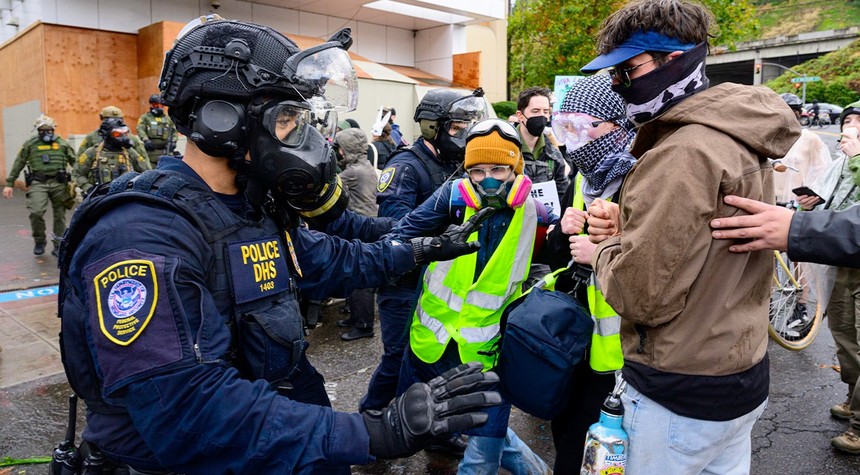
When the Law Gets in the Way of Enforcement
A federal judge in Oregon just decided that protecting illegal immigrants from arrest matters more than protecting American communities. U.S. District Judge Mustafa Kasubhai granted a preliminary injunction Wednesday that essentially handcuffs ICE agents, requiring them to jump through bureaucratic hoops before arresting people who’ve already broken our immigration laws. Let that sink in for a moment.
The ruling bars the Department of Homeland Security from conducting warrantless immigration arrests in Oregon without what the court calls “individualized assessments of flight risk.” Because apparently, we need to carefully evaluate whether someone who entered our country illegally might decide to skip town. It’s almost funny if it weren’t so dangerous.
Here’s what really happened. Judge Kasubhai found that federal agents “likely violated the law through a pattern of unlawful arrests.” The court concluded that ICE routinely arrested people for immigration violations without warrants and without determining flight risk. Now agents must document every warrantless arrest with detailed, case-specific justifications and report them regularly to the court.
This is what overreach looks like when judges forget their lane.
The Sanctuary State Playbook
Oregon’s been playing this game for years. The state’s essentially become a safe haven for illegal immigration, and now the federal judiciary is backing that play. You’ve got DHS Secretary Kristi Noem trying to navigate de-escalation as cities erupt in protest and Congress threatens another government shutdown over DHS funding. Meanwhile, federal judges are tying her hands behind her back.
Think about the practical reality here. ICE agents encounter someone they have probable cause to believe violated immigration law. That person has already demonstrated a willingness to circumvent legal processes by entering or remaining in the country illegally. But now agents must pause, assess flight risk, and potentially let that person walk while they pursue a warrant. What could possibly go wrong?
The court’s logic rests on a fundamental misunderstanding of what immigration enforcement actually requires. These aren’t cases where we’re talking about citizens with constitutional protections being violated. We’re discussing people who shouldn’t be here in the first place, who’ve made a conscious choice to break our laws.
When Process Becomes the Punishment
The preliminary injunction requires DHS to notify all immigration officers, employees, agents, and contractors of the ruling. That’s not just paperwork. That’s a chilling effect on enforcement. Every agent now has to second-guess their training and experience, wondering if some judge three states over might find their reasonable assessment insufficient.
This connects to a broader pattern we’re seeing across the country. Activist judges using preliminary injunctions to impose their policy preferences on immigration enforcement. They’re not interpreting law anymore. They’re making it.
Secretary Noem’s got an impossible job right now. She’s supposed to secure the border and enforce immigration law while federal courts systematically dismantle the tools her agents need. The interview she gave to Digital reveals the tightrope she’s walking. De-escalate operations to calm the protests, but don’t abandon enforcement entirely. Thread that needle while Congress plays politics with your funding.
You know what’s missing from this entire judicial analysis? Any consideration of the American communities dealing with the consequences of unenforced immigration law. The judge weighed the rights of illegal immigrants against the administrative burden of obtaining warrants. He didn’t weigh the safety of American citizens or the rule of law itself.
The Real Flight Risk
Here’s the uncomfortable truth nobody wants to say out loud. Flight risk assessments for immigration violations are theater. Someone who entered illegally has already proven they’ll operate outside legal frameworks. Someone who overstayed a visa has already demonstrated disregard for our processes. The idea that ICE agents can reliably predict whether such individuals will appear for future proceedings is absurd on its face.
But that’s not really what this ruling is about anyway. It’s about making immigration enforcement so cumbersome, so legally fraught, that agents simply stop doing it. Mission accomplished in Oregon.
The preliminary injunction is just that. Preliminary. This case will move forward, and maybe cooler heads will prevail at higher levels. But don’t count on it. The Ninth Circuit isn’t exactly known for its common sense approach to immigration law.
Meanwhile, ICE agents in Oregon are left wondering how to do their jobs. American communities are left wondering why their laws don’t seem to matter. And illegal immigrants are left with a very clear message: Oregon’s got your back, even when you break the law.
That’s not justice. That’s not even mercy. It’s just another brick in the wall that sanctuary jurisdictions have built between federal immigration law and its enforcement. Judge Kasubhai just added his name to the mortar.
Related: House Republicans Expose How Chinese Paper Mills Are Hijacking Your Tax Dollars