
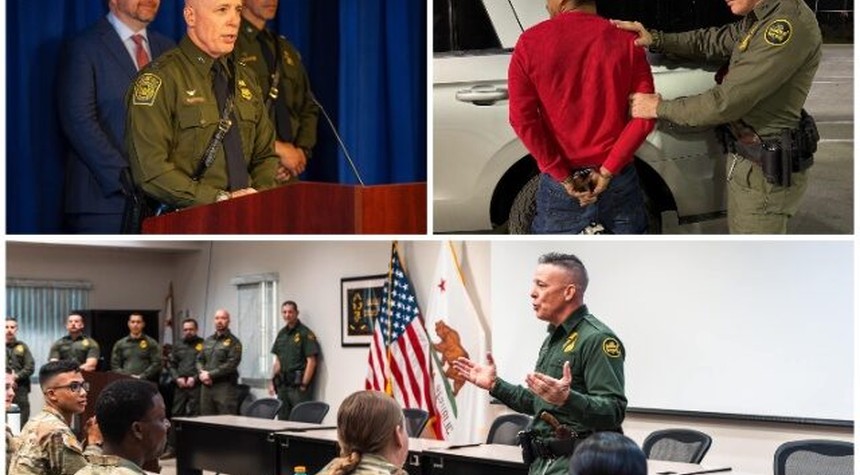
Gregory Bovino is hanging up his badge at the end of March, and with it goes nearly three decades of Border Patrol service that culminated in something this country hadn’t seen before. Not just operations along the southern border where you’d expect agents to be working, but sweeping enforcement actions deep in America’s heartland. Chicago. Los Angeles. Minneapolis. Places where federal immigration enforcement had become more theoretical than actual, at least until Bovino showed up.
The chief patrol agent and CBP operations commander became the face of President Trump’s interior enforcement strategy, the kind that made sanctuary city mayors lose sleep and activists organize counter operations. He led his agents into metropolitan areas where the welcome mat wasn’t just absent but set on fire. And he did it anyway, because that’s what the law required and what his oath demanded.
Think about what that actually means for a second. Border Patrol agents traditionally work the border. It’s right there in the name. But under Bovino’s command, they became an interior force, conducting operations miles and sometimes hundreds of miles from any international boundary. This wasn’t mission creep. This was mission evolution, driven by the reality that illegal immigration doesn’t stop at the border and neither should enforcement.
Bovino told Breitbart Texas something that cuts through all the political noise. He called it the greatest honor of his life to work alongside Border Patrol agents in what he described as some of the most challenging conditions the agency has ever faced. That’s not bureaucratic speak. That’s a man who led from the front lines, who was there during the nighttime raids and the confrontations with local officials who wanted federal law enforced everywhere except their jurisdictions.
The operations netted thousands of apprehensions. Gang members. Criminal aliens. People who’d been ordered deported and decided that order was more of a suggestion. These weren’t random sweeps grabbing anyone who looked foreign. These were targeted enforcement actions against individuals who’d already been through the system and lost their cases.
But here’s where it gets uncomfortable, and uncomfortable truths matter more than comfortable lies. Bovino’s agents faced violence that Border Patrol hadn’t encountered before, at least not in American cities. Activists in Los Angeles threw rocks and projectiles at federal agents. Some used vehicles as weapons. One fired a handgun at agents who had just rescued 14 children from marijuana grow sites in California. Read that again. Someone shot at federal agents who’d rescued kids from drug operations.
The attacks weren’t isolated incidents but sustained campaigns against law enforcement doing their jobs. Bovino faced off with politicians and city leaders who were furious that federal agents had the audacity to enforce federal law in their cities. He stood his ground, saying operations would continue until the agency decided to move on. That phrase “turn and burn” became his signature, a promise that enforcement wouldn’t stop just because it made people uncomfortable.
You know what’s missing from most coverage of immigration enforcement? The actual danger involved. Bovino’s agents weren’t processing paperwork in air conditioned offices. They were conducting nighttime operations in hostile environments where activists had been mobilized against them and local officials often provided more obstruction than assistance. The violence reached levels the Border Patrol hadn’t experienced before, and that’s saying something for an agency that regularly works in cartel territory.
The traditional role of Border Patrol was shifting under Bovino’s leadership, and that shift reflected a basic truth about modern immigration enforcement. When you have sanctuary policies that actively prevent local cooperation with federal authorities, when you have jurisdictions that release criminal aliens rather than honor detainers, enforcement has to adapt. It has to go where the problem exists, not where it’s most convenient or politically palatable.
Charlotte, New Orleans, Minneapolis. These operations weren’t about optics or sending messages. They were about enforcing the law against people who’d exhausted their legal options and decided to stay anyway. Some of those people were dangerous. The gang members and criminal aliens weren’t theoretical threats but actual public safety concerns that local jurisdictions were ignoring because immigration enforcement had become politically toxic.
Bovino’s retirement marks the end of an era that may not come again, at least not anytime soon. The kind of aggressive interior enforcement he commanded requires political will at the highest levels and agents willing to face violence and vilification for doing their jobs. It requires a chief who’ll stand in front of cameras and hostile crowds and say the work continues regardless of local opposition.
After nearly 30 years, he’s leaving with what he called immense pride. He should. The man led the largest interior immigration operations in U.S. history according to DHS, operations that proved federal law could still be enforced even in sanctuary jurisdictions if you had the spine to do it. Whether you loved or hated what Bovino represented, you couldn’t question his commitment or his courage.
The agents he led faced dangers most Americans will never understand and criticism from people who benefit from the security those agents provide. They gave everything in environments that were often more hostile than the border itself. And they did it because one man was willing to lead them there and stand with them when things got dangerous.
That’s the legacy walking out the door at the end of March.
Related: Female Republican Candidates Challenge Democrats’ Grip on Women Voters